Across Asia Pacific, energy systems face mounting pressure. Rising demand, ageing infrastructure and increasing system complexity are key factors influencing how countries can keep energy secure, reliable and resilient. At the same time, renewables are scaling rapidly, digital technologies are enhancing real-time grid management, and energy storage is advancing at pace.
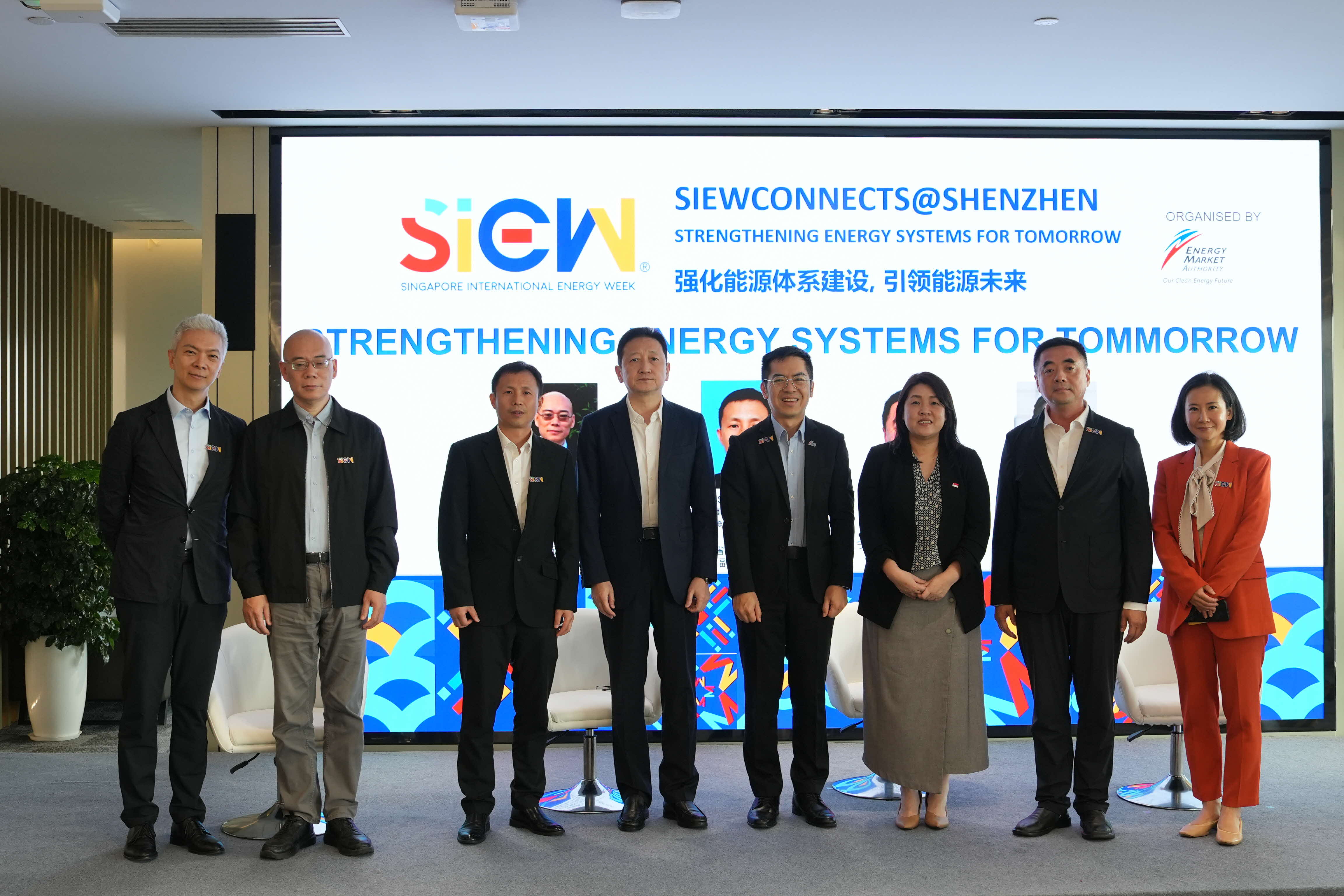
This was the focus at SIEWConnects@Shenzhen, held on 26 May. Over 120 senior energy, technology and finance leaders exchanged perspectives on how digitalisation, energy storage and innovative financing solutions can strengthen the energy systems needed for tomorrow. The session also highlighted the importance of public-private partnerships in accelerating the energy transition.
The event brought the Singapore International Energy Week (SIEW) 2026 theme, "Connecting Energy Systems, Powering Tomorrow", into sharper focus. Recent energy developments in China have shown how renewables can scale rapidly. The next task is to connect the infrastructure, markets and capital needed to deliver cleaner energy reliably and at scale.
Grids as the backbone of the energy transition
Mr Puah Kok Keong, Chief Executive, Energy Market Authority (EMA), outlined the clean energy advances and grid infrastructure developments shaping the global energy transition. In the past year alone, Mr Puah noted that China added over 430 gigawatts of new wind and solar capacity, accounting for more than half of global additions.
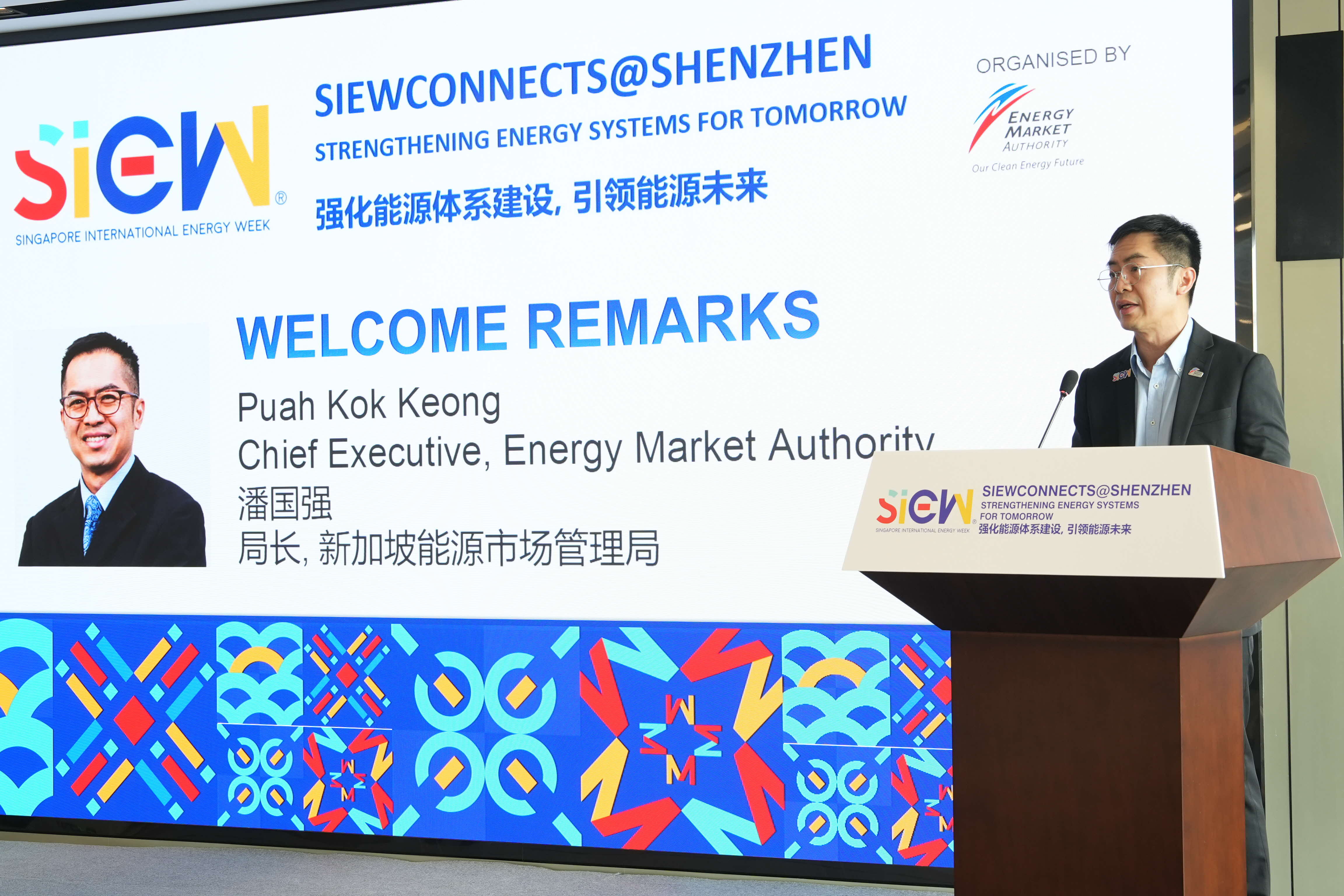
Yet, scale is only one part of the transition. As more renewables enter the system, grids must be able to integrate cleaner energy, manage complexity and connect storage, distributed resources, and cross-border energy flows. As Mr Puah noted in his opening: "Grids are no longer just transmission infrastructure. They are the backbone of the energy transition, enabling the integration of renewables, storage, and distributed energy resources at scale."
For Singapore, this has direct relevance. Natural gas will continue to play an important role in its energy mix. At the same time, the country is accelerating solar deployment, exploring low-carbon electricity imports, and studying emerging technologies such as hydrogen, advanced geothermal and nuclear energy. These pathways will depend on stronger regional interconnections, including high-voltage direct current (HVDC) links and more integrated power grids.
Digital grids for system readiness
Mr Li Rui, Deputy General Manager, China Southern Power Grid (CSG), reinforced the growing role of grid companies as the electrification of energy systems continues to take shape. He pointed to CSG's capabilities in ultra high-voltage transmission, energy storage and digital grids. Its interconnections with Laos, Myanmar and Vietnam offer a practical reference for Southeast Asia’s cross-border power ambitions.
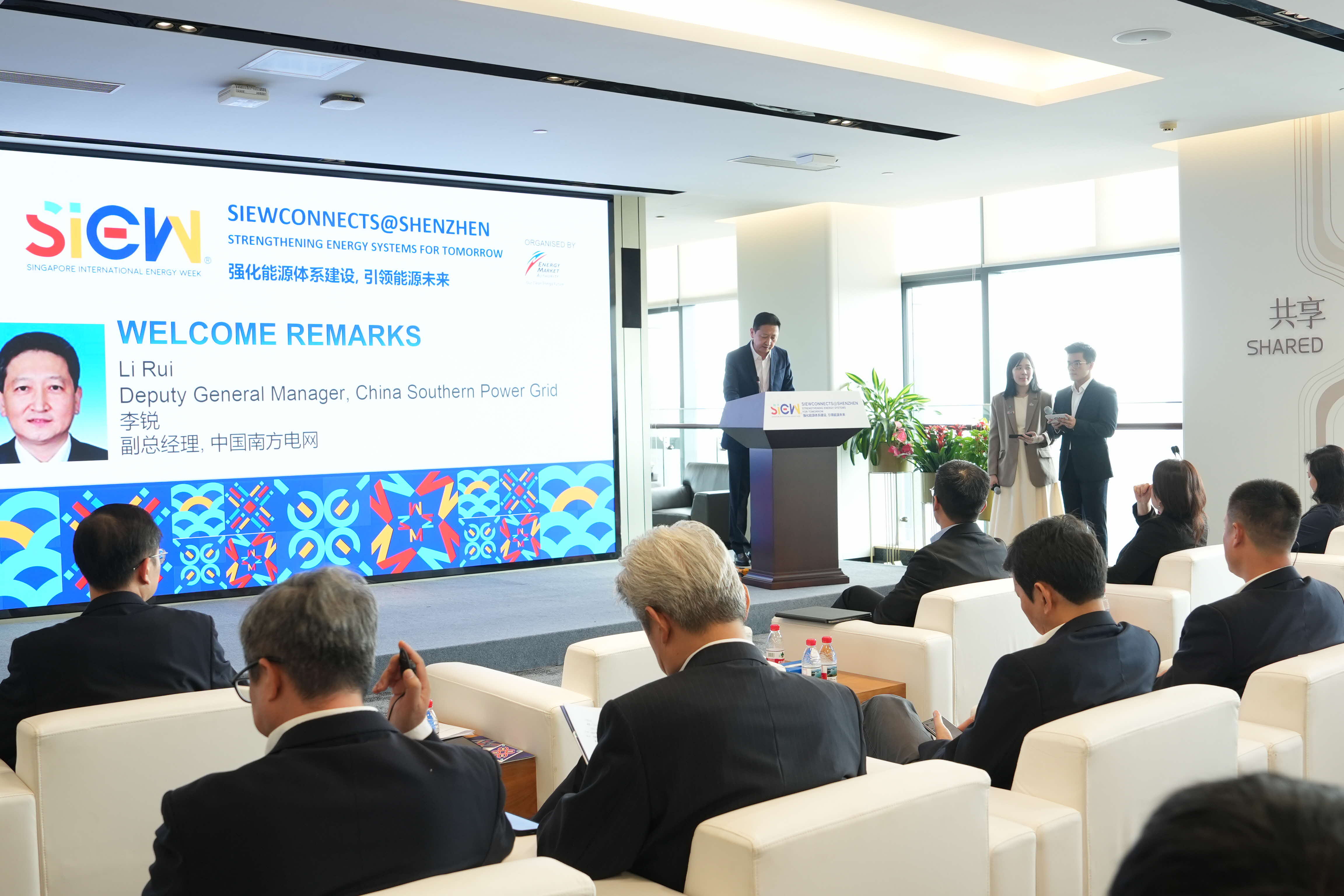
As Southeast Asia works towards more integrated power systems, grid companies will play a larger role in enabling cross-border electricity flows and strengthening energy resilience.
Mr Huang Anzi, Power Grid Digitalisation Expert, CSG, Shenzhen Power Supply Bureau, then showed how these capabilities apply to city-scale power grids. His presentation on artificial intelligence (AI)-enabled digital power grids demonstrated how digital tools can reduce reliance on manual grid inspections and strengthen wide-area protection.
In Shenzhen, the digital grid platform brings power grid and municipal spatial data across 600,000 buildings into one view. AI applications are already helping to identify around half of grid risks and hazards, giving utilities clearer visibility across complex urban networks.
Participants saw this in practice during a technical visit to the Lotus Hill Supercharging Station. The station brings together ultra-fast charging, solar-storage integration and vehicle-to-grid interaction in a "source-grid-load-storage" ecosystem.
Regional cooperation builds resilience
Ms Cindy Wee, Consul-General of Consulate-General, Republic of Singapore in Guangzhou, placed the discussion in the context of energy security. She noted that price volatility and supply disruptions have reinforced the need for secure and stable energy systems.
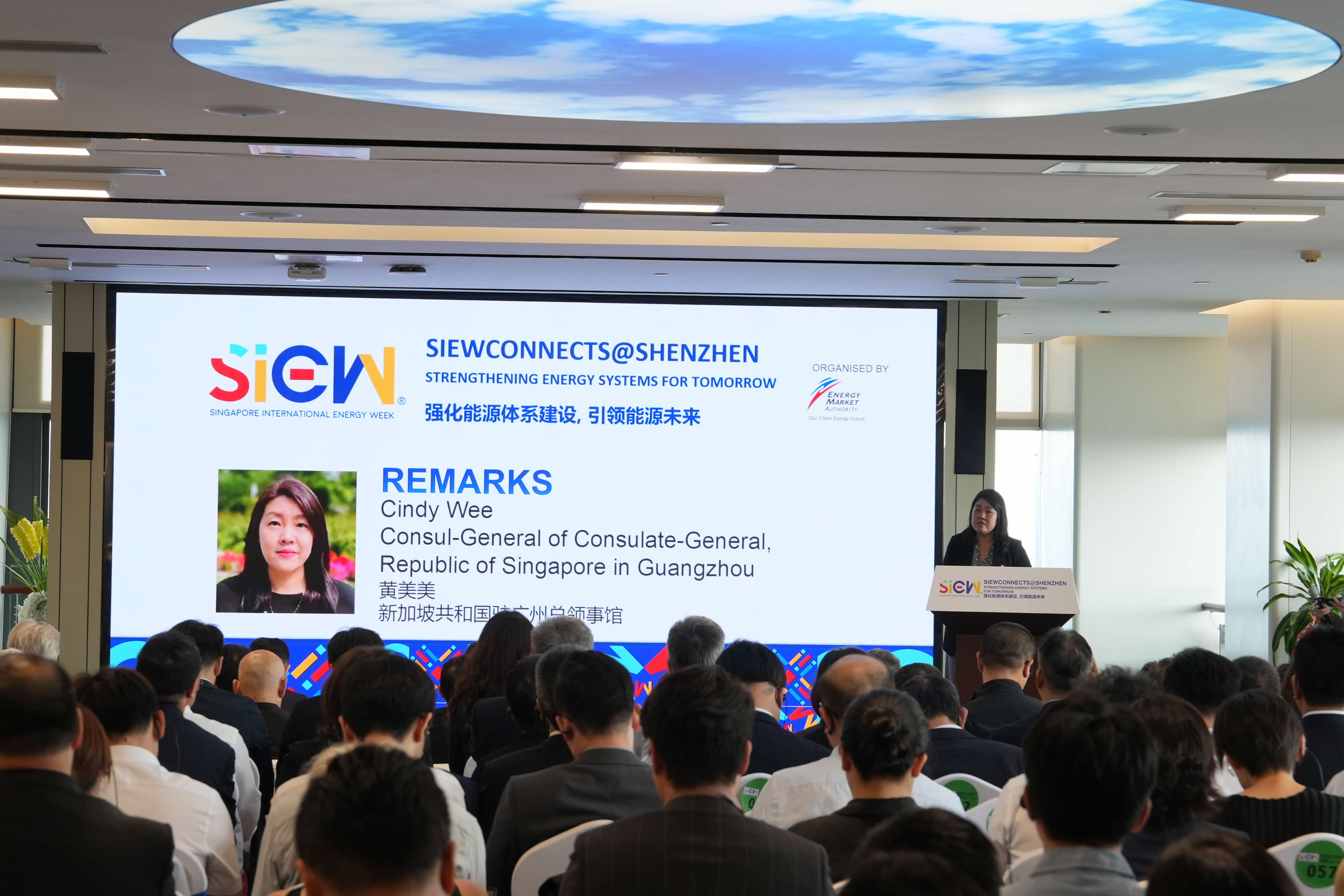
This makes regional cooperation critical to energy resilience, especially for Singapore and Southeast Asia. Singapore faces natural constraints as a small, resource-limited country, while many economies in the region remain vulnerable to market volatility and supply disruptions.
Ms Wee cited the ASEAN Petroleum Security Agreement and the ASEAN Power Grid as examples of cooperation in practice. Together, these initiatives can strengthen emergency coordination, support cross-border electricity trading and enhance resilience to future supply shocks.
Her remarks also pointed to the role Singapore plays in linking regional energy security, cross-border electricity trade and practical partnerships. This includes city-level cooperation such as district cooling solutions in the Sino-Singapore Guangzhou Knowledge City.
Making renewables work at system level
Mr Frank Mei, Head of Trusted Consulting, KPMG China, shifted the focus from renewable capacity growth to its effective use. His key point was that capacity additions alone will not be enough if energy systems cannot integrate clean energy, dispatch it efficiently and store it when needed.
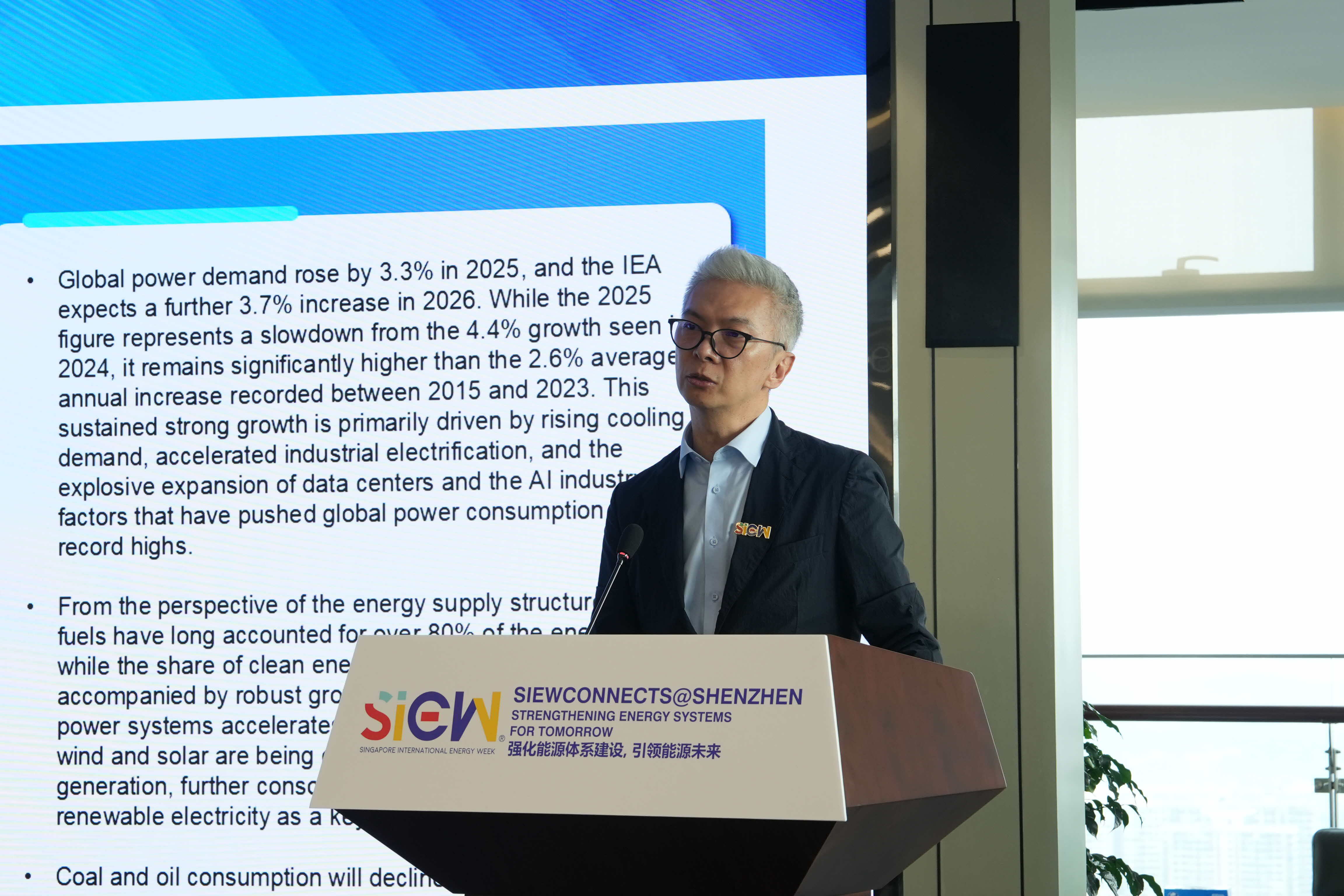
China's experience illustrates the gap. While non-fossil sources account for about 43 percent of China's installed capacity, coal still generates 54 percent of actual electricity output.
For Mr Mei, this points to a wider systems challenge. Grids, market mechanisms and demand-side optimisation must align so that clean energy can be used more effectively. He highlighted China's "source-grid-load-storage" framework, which brings generation, transmission, demand management and storage into a more coordinated system. Energy storage is also becoming more commercially important as market rules evolve. This creates revenue opportunities through capacity rental, energy arbitrage and ancillary grid services.
Flexibility for future energy systems
During the panel discussion, moderator Ms Ziwei Liao, Senior Investment Officer, Asian Infrastructure Investment Bank (AIIB), steered the dialogue towards future system resilience. A clear thread ran through the discussion. Future energy systems will need flexibility across supply, storage and demand, supported by financing.
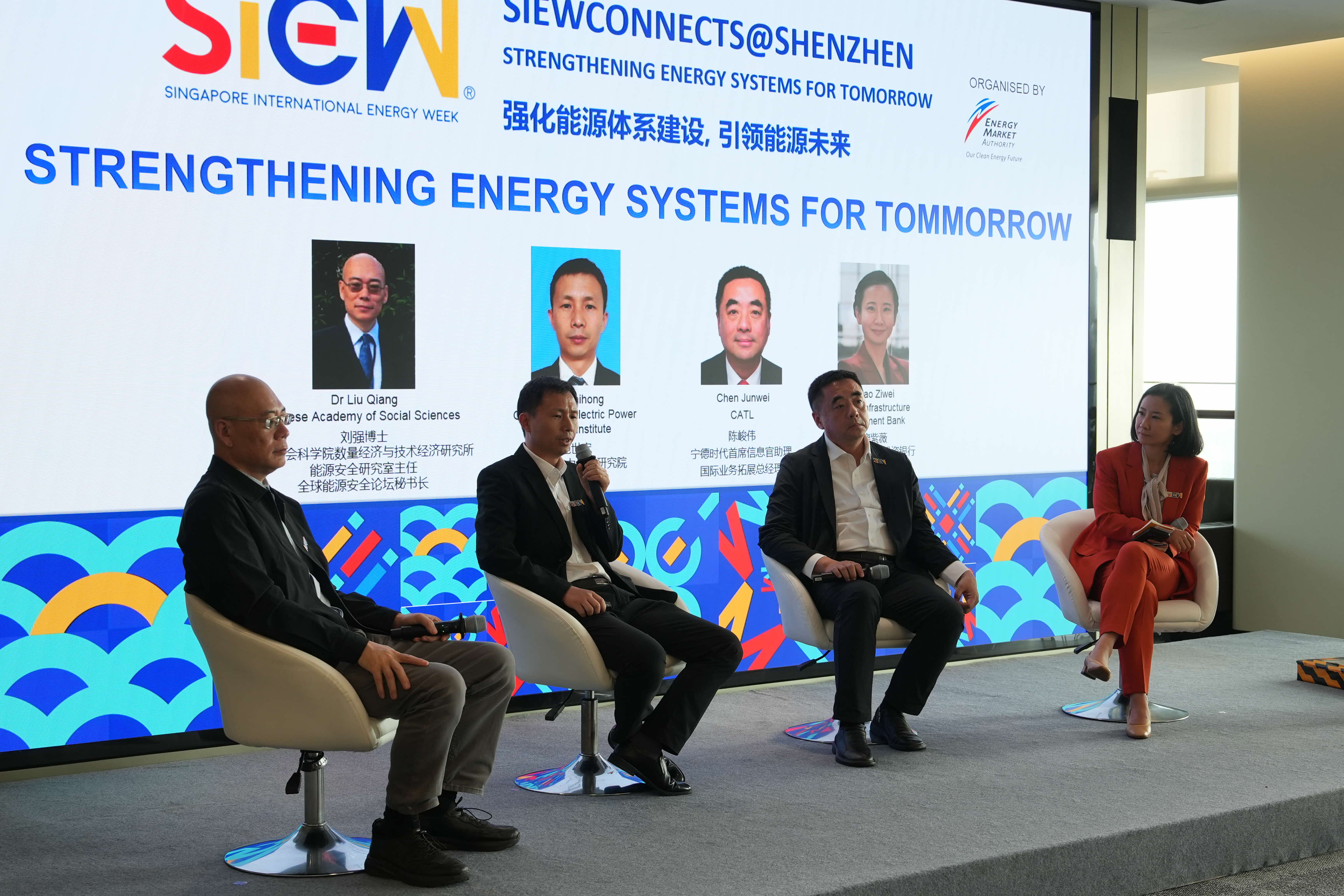
Energy security remains a key concern. Dr Liu Qiang, Director of Energy Security Studies, Institute of Quantitative & Technological Economics and Secretary General of Global Forum on Energy Security, Chinese Academy of Social Sciences (CASS), noted that supply shocks continue to pose risks. He highlighted that as electricity demand rises and supply chains become more complex, diversification will become more important.
Energy storage is an important lever. Mr Shi Shi Hong, Deputy Chief Engineer, Guangdong Electric Power Design Institute (GEDI), underscored its role in helping grids manage renewable energy fluctuations, support weaker networks and aid power recovery during disruptions.
AI demand added another dimension. Mr Junwei Chen, Assistant CIO, General Manager of International Corporate Development, CATL, said AI data centres are becoming a new class of electricity demand. He noted that their scale and reliability needs differ from traditional users. At the same time, energy systems will increasingly require AI to manage dispatch, load patterns and renewable variability.
The session closed on the need for financing to keep pace with system change. As energy technologies evolve, financial systems must account for different risk factors, revenue models and return cycles.
Connecting the systems that will power tomorrow
The discussions at SIEWConnects@Shenzhen underscored that the next phase of the energy transition will depend not only on generation capacity, but also on the integration, coordination and financing of increasingly complex energy systems.
SIEW 2026 will take place from 26 to 30 October in Singapore. Join global energy leaders for discussions on the partnerships, policies and solutions needed to connect energy systems and power tomorrow. Register your interest now.