There is a scene in the documentary filmGasLandwhere a man leans over the kitchen sink, lighter in hand.[1] He turns on the tap, flicks his lighter, and fire erupts from it instead of water--a scene both comical and nightmarish. What turned his faucet into a flamethrower"fracking" or "fracing" for short.
Put simply, fracking employs pressurised fluids to create artificial fissures in subterranean rocks and release the gas trapped within. Energy commentators credit the technology for ushering in a golden age of gas. Activists paint a picture of irresponsible tampering with the sub-surface, resulting in toxic substances entering the water supply and leaks of gas to the surface. But both these narratives mask the fact that fracking is only one component of a much larger innovation landscape for shale gas and other unconventional sources. This article outlines the exploration and characterisation technologies that come into play before the boreholes are drilled and the gas is induced to flow.
The Barnett Shale Formation is located in Texas. Covering some 13,000 square kilometers, it may be the largest onshore natural gas field in the United States.
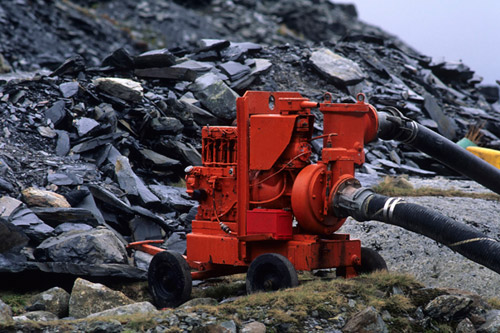
(Photo credit: iStockPhoto)
No two shales are alike
What constitutes a shale"vast" 6,622 trillion cubic feet (tcf). The caveat to this report was that EIA estimates made no account for cost of production and/or local impact, which would require detailed, on-the-ground data.
Certainly, not all shales can replicate the productivity of the Barnett Shale, the current showcase for shale gas production.[4] Illustrating this is a formation situated very near to the Barnett at the Texas-Louisiana border but formed about 100 million years later: The Haynesville. Gas from the Haynesville Shale is inherently more problematic to extract due to the basin's depth below the surface (3-4km) and highly laminated nature. This requires drilling and production equipment able to withstand higher temperatures/pressures. Extraction is also a more water-intensive process than in the Barnett (Halliburton, 2008). The economic payoffs here are less certain and the environmental implications weightier.
Such heterogeneity in the global family of shale formations means that trial-and-error drilling (known as "wildcatting") is not a viable strategy. Instead, identification and development take place using a suite of technologies, each contributing towards minimised risk, an extension of the lifespan of the resource and in the long run, increased return on investment.
Cradle to rebirth--stages in the shale gas lifecycle
The life of a potential hydrocarbon resource, known as a "play", is an eventful one. It can be divided into five broad stages, each involving different innovative approaches.[5]
Exploration. This stage begins with an understanding of the ancient setting in which the basin formed, helping the operator to constrain its size, shape and properties. Three-dimensional seismic surveys and other geophysical methods, ubiquitous in the conventional oil and gas industry, are indispensable for complex, unconventional resources. Seismic attributes can provide certain tell-tale indicators of higher productivity (e.g. high total organic content, TOC), although traditional forms of source rock analysis are difficult in shales.[6]
Appraisal. If the first hurdle is crossed, the project enters the next stage. Using data from logging (and rock cores where available), analysts zoom into the small-scale, petrophysical properties of the rocks. These provide an idea of the ease of fracturing, potential performance of wells and guide the strategy for exploiting the potential "reservoir".
Development. Here, operators undertake hydraulic fracturing, commonly in horizontal wells to maximise contact with the reservoir. Geomechanical modelling--taking in the physics of the reservoir's behaviour under stress--allows operators to define the orientation and length of fractures, as well as overall pattern and planned phasing of fractures. As fracking takes place, micro-seismic monitoring is conducted on the fly (with instruments effectively listening to the sound of rocks breaking to determine the success of the process).
It is important to note that technologies for drilling and fracking are not at a developmental standstill. Novel stimulation processes, involving multiple stages and configurations of equipment, as well as different strategies for keeping fractures open, are an area of active research. The objective is to achieve greater control in the extent and pattern of fracturing, with associated improvements in both productivity and environmental integrity.
Production. At this stage, a new set of challenges arises. Many issues are evolutionary and involve maintenance of equipment, e.g. arresting the corrosion of equipment, addressing build-up of deposits on the wellbore, repairing breaches or perforations. Chemicals may be used to control the growth of microbes, inhibit certain reactions or lubricate components.
Rejuvenation. Over time, the reservoir may need a new lease of life, and methods of enhanced recovery may be pursued. This involves a re-tread of technologies/processes used in earlier stages of the lifecycle. Re-assessment of the reservoir, re-fracturing and a re-designed placement of wells are carried out.
The future of shale gas is... green"buy versus build". Broadly, oil service companies have taken up the slack by increasing their innovation activities, but it remains to be seen who will drive technology development in the specific area of unconventional gas.
[1] The American documentary film, GasLand, was written and directed by Josh Fox in 2010. It examines the impact of fracking on US local communities.
[2] US Energy Information Administration. World Shale Gas Resources: An Initial Assessment of 14 Regions Outside the United States. EIA, 2011.
[3] For context, world proven reserves of natural gas stood at 6,609 tcf as of 1 January 2010.
[4]
[5] U. Ahmed. Shale Resource Development: From Exploration to Rejuvenation. 73rd EAGE Conference & Exhibition incorporating SPE EUROPEC 2011, EAGE/SPE, 2011.
[6] G. van Graas, G. Mork, I. Scotchman, J. Murray, L. Atterton and T. Forslund. Night-time Hunting for Furtive Animals: Data Availability Challenges in International Exploration for Partially Understood Shale Resource Plays. 73rd EAGE Conference & Exhibition incorporating SPE EUROPEC 2011. EAGE/SPE, 2011.
[7] See, "Research Partnership to Secure Energy for America", RPSEA 2011 Draft Annual Plan. RPSEA, 2010; and W. H. Neal, M. R. Bell, C. A. Hansen and R. W. Siegfried, Oil and Gas Technology Development - Working Document of the NPC Global Oil and Gas Study. NPC, 2007.
[8] Unconventional Resources Technology Advisory Committee to the Secretary of Energy. URTAC Comments and Recommendations 2011 Annual Plan, 2010.
By : Felicia Shaw, ESI Adjunct Fellow