ESI is the Singapore Energy Summit 2011 Co-Organiser. More details to be found here.
A key challenge for the Association of Southeast Asian Nations (ASEAN) nations in mitigating climate change lies in the question--can economic growth and sustainable development be achieved in tandem.
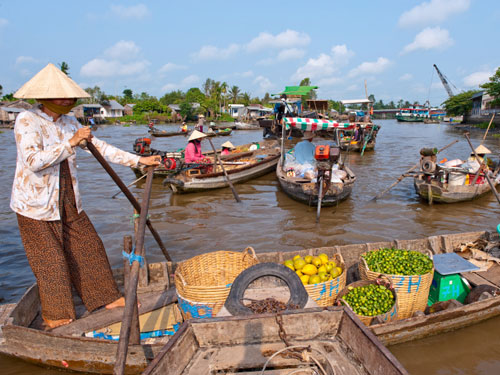
Photo credit: iStock Photos
An abundance of renewable energy
The SEA region has abundant renewable energy sources, notably geothermal energy, solar power, biodiesel and hydropower. Especially spectacular are the hydropower resources of the Mekong River Basin (MRB). Indeed, there have been numerous hydropower dam projects built and planned over the last decade.
Previously known as the Mekong Committee, the Mekong River Commission (MRC), comprising Cambodia, Laos, Thailand and Vietnam, was formed in 1995 to jointly manage the sustainable development of the MRB. Key objectives of the MRC are to protect the shared water resources, and at the same time, develop the economic potential of the river.
Mekong's river of life
The Mekong, the 10th-longest river in the world, flows to Vietnam from the Tibetan Plateau in China. According to the United Nations Environment Programme and WorldFish Center's Blue Harvest 2010 report, there are more than 850 fish species in the 4,909km river, of which 135 migrate within the river to complete their lifecycle.
The estimated annual harvest of 2.1 million tonnes of wild fish is worth up to US$7.6 billion in the retail markets. The Mekong River is therefore a major source of livelihood for the 65 million people on the Mekong River Basin (Thailand, Cambodia, Laos, Myanmar and Vietnam). These people all depend on the Mekong River for drinking water, farming, fishing, transportation, recreation and other industries.
At the same time, the Mekong River has huge renewable energy potential: Some 60,000 megawatts of hydroelectric energy, according to the MRC's State of the Basin Report 2010.
"Battery" of Southeast Asia
The Lao PDR government, which aspires to be the "battery" of Southeast Asia, has announced plans to develop more hydropower dams along the stretch of the Mekong River within its territory. Once completed, in addition to the current ones such as Nam Theun 2 and Nam Ngum 2, they will generate power for export to neighbouring Thailand and Vietnam under long-term purchase contracts.
According to the Asian Development Bank, electricity exports contributed about 10 percent or US$375 million to Laos's gross domestic product in 2010. Market reports from Asia Times forecast that electricity exports could account for up to 30 percent of Laos's GDP in the near future.
Hydro power's allure and dark side
Understandably, Laos is not the only country with a keen interest in generating hydroelectricity. Vietnam, Thailand and Cambodia are also planning to increase their hydroelectric generation capacities. According to the MRC, there are approximately 100 dams already operational, under construction or being considered for future commissioning in the region.
Among the world's poorest countries, both Laos and Cambodia stand to gain the most socio-economic benefits from hydropower export revenues. However, despite its obvious merits, the use of hydropower to generate electricity is not without its critics. Non-Governmental Organisations (NGOs) have long argued about its impact on food security, human security, water security and environmental degradation particularly on marine biodiversity.
NGOs blame dams for the decline in fisheries and marine biodiversity. The World Wide Fund for Nature and International Rivers contends that Laos' hydropower dam projects have adversely affected fish migration and threatened the habitat of four of the world's largest freshwater fish. Additionally, there have been several reported cases of forced migration and resettlement of villages due to dam construction projects. As a consequence, villagers have had to move inland into areas that have already been inhabited by other villages, resulting in conflicts and other problems.
Not a zero sum game
Notwithstanding these issues, it appears that for several reasons more hydropower dam construction will go ahead. First, for the power exporting countries of Laos and Cambodia, these hydropower dams contribute considerably to economic growth and development.
Second, for the importing countries, namely, Thailand and Vietnam, the power helps satiate their rapidly growing energy demand, and therefore enhances their energy security. Thirdly, from a strategic security perspective, the dams bring the region closer together. A region in which the states are economically interconnected and interdependent would enjoy enhanced human security through closer diplomatic ties and dialogue.
The pursuit for regional energy security and economic development does not have to be a zero sum game in relation to the environment. In fact, sustainable development can be achieved if environmental considerations are built into the core of each nation's socio-economic policies and security strategies.
The security threat posed by a deteriorating environment and global climate change can no longer be considered as peripheral to the traditional security discourse. Since the end of the Cold War, the security literature observes that rather than wars, states have become increasingly vulnerable to the risks of non-traditional security threats such as energy security, cross-border conflicts, pandemics and cyber security. Perhaps it is time to add environmental security to the list.
Environmental security a key factor
Allenby Braden, in his paper on Environmental Security: Concept and Measurement, wrote that at its most basic conception, "environmental security" refers to the 'intersection of environmental and national security considerations at a national policy level'. He and other green and security theorists believe that states and regional inter-state organisations should recognise and formally introduce environmental security as a factor in their security and economic policy frameworks.
In conclusion, ASEAN's energy needs will continue to increase as the region's economy expands further in the coming decades. It remains uncertain whether economic growth can be achieved without further jeopardising human security, the environment and the global climate even if the region continues to increase its use of renewable energy. Unless environmental security is factored into the SEA states' security and economic paradigm, the region will continue to face an energy security-sustainable development conundrum.
By : Nur Azha Putra, ESI Research Associate