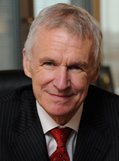
Philip Lowe took up his current appointment as Director-General of the Energy DG in February 2010. He joined the European Commission in 1973 and held a range of senior posts as Chef de Cabinet and Director in the fields of regional development, agriculture, transport and administration. In 1997, he became Director-General of the Development DG, after which in September 2002, he was Director-General of the Competition DG. He read Politics, Philosophy and Economics at St John's College, Oxford and has an MSc from London Business School.
Q1. Europe has made great strides in the renewables space. Can you share some of the successful policies as well as what some of the economic benefits are for countries furthering growth in renewable energy sources?
Q2. With Europe split over the future of nuclear power post-Fukushima, what does this portend for nuclear as a clean source of energy for the world?
Q3. What are some of the strategies employed by the EU to reduce consumer demand/usage of energy, and what energy efficiency lessons can Singapore and the rest of Asia learn from the EU?
Q4. How would the current economic crisis in EU impact cleantech investment and R&D?
Q5. Given the EU's energy market integration and regulatory convergence experience, what advice do you have for ASEAN, which is looking to establish an integrated energy market as a long-term goal?
PL: The process of opening and integrating Europe's energy markets started more than 10 years ago. It has been a step-by-step process, accompanied by several legislative packages.
We believe that creating a fully integrated market of 500 million EU consumers where electricity and gas can be traded freely across the borders will help us ensure the security of supply, create good conditions to invest in infrastructure and new technologies, boost the development of renewables. Open and fair competition gives more choice and better services to the consumers and helps keep the prices down. In addition, it will give us more muscle to promote our policies and defend our positions at the negotiations on international arena.
ASEAN countries have 600 million consumers and by opening up their markets they could gain similar benefits.
I believe energy is one of the most complex challenges in the world today. You cannot create a functioning single market if there is no infrastructure to transport electricity and gas across the national borders. You cannot find investments in the infrastructure if market barriers are in the way of fair trade across the borders. You cannot develop solar and wind energy to their full potential if the infrastructure and market rules are not able to take into account the variable nature of the renewables. The costs of renewables will go down making low-carbon energy competitive only when the markets are big enough to allow large-scale use of renewables.
Today, ASEAN countries have very different market models. I think that to integrate these models is a long and time-consuming process which will involve a lot of regulatory work. I also believe that involving all the stakeholders from the beginning, especially when you take technical decisions is of key importance.
By: Energy Market Authority (Singapore)