(Picture credit: EMA)
So what exactly is a gas trading hub Current LNG trade and its evolvement
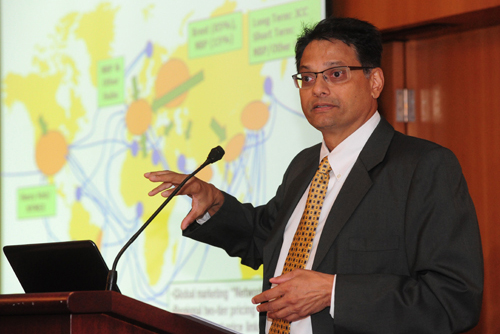
Mr Roa further shared at the EMART Asia session that there are growing LNG re-export activities from US terminals with reloading facilities. Currently, there are healthy levels of commodity trading taking place and significant multi-directional flow of LNG around the globe compared with the one-directional flow from the Middle East to North Asia in the past.
Although improvements can be seen in the level of international trade, there is no price convergence and different prices are established globally. Asia presents a perfect opportunity to further develop LNG trading because the region consumes about 50 percent of the flexible quantities of LNG traded.
Moving forward, new Asian terminals will further facilitate regional trading in Asia, especially by 2018 with increasing demand and tightening supply conditions.
The price and texture of regional flows matter to the development of an LNG trading hub. With the prospect of five to eight new terminals coming up by 2020, there would be sufficient aggregated capacity on the supply side to create a new and transient Asian market. However, the level of cooperation between Asian buyers has important impact because power price affordability in developing markets will impact the market size for flexible quantities traded.
Potential for Singapore to be an Asian hub
What is the potential for Singapore to be an Asian hub for LNG trading Potential implications of a regional LNG hub
Regional power producers would be able to sanction more projects because more flexible LNG supply deals are available. To successfully develop a regional LNG hub, flexibility in addition to pricing are the keys as contracts need to provide sufficient variations to cater to buyers and sellers. Moving forward, interest in financial trades is expected to increase as physical trade grows.
BY : Chua Shen Hwee, EMA staff