
Catalysing low-carbon growth across Asia's energy corridor
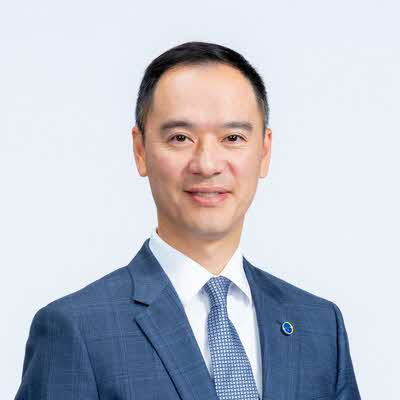
For Mr Joseph Law, Managing Director of CLP Power Hong Kong and President of AESIEAP, energy security and decarbonisation do not belong in separate boxes. A successful transition must deliver both, and the grid is where the two meet. In this interview, he sets out why electricity should be treated as Strategic Economic Infrastructure. Power, in his view, must be ready before growth arrives. The same thinking guides him from Hong Kong's next growth engines to Asia's emerging energy corridors.
1. What are Asia's utilities focusing on to strengthen energy security amid growing demand?
Diversification is key. We need the right mix of local generation, clean-energy imports, stronger grids and sufficient flexibility, rather than relying too heavily on any single energy source, technology or supply route. This is a core focus for Hong Kong in maintaining a resilient power system.
We also need to plan ahead of demand. Artificial intelligence (AI), data centres and electrification are changing both the scale and location of electricity demand. SIEW 2026 highlights these as major drivers of rising power demand.
In Hong Kong, our view is that electricity is increasingly regarded as Strategic Economic Infrastructure. To support new economic growth engines such as the Northern Metropolis, AI and advanced manufacturing, the power infrastructure behind them needs to be ready at the right time. This principle sits at the heart of CLP's recommendations for Hong Kong's First Five-Year Plan.
2. Where is digitalisation adding the most flexibility to Asia's grids?
The greatest value lies in turning data into better and faster decisions. That applies across forecasting, predictive maintenance and the real-time management of increasingly complex grids. As we add renewables, storage, electric vehicles (EVs) and large data centres, digitalisation can help utilities coordinate supply and demand more effectively. It can also help them get more out of existing infrastructure.
For Hong Kong, another dimension is connecting energy planning with economic planning. We have proposed a "Computing-Electricity Co-ordination" mechanism. Under this mechanism, major computing infrastructure and the electricity network could be planned together.
3. How can Asia's utilities strengthen resilience to supply shocks even as renewables scale up?
Don’t put resilience and decarbonisation in separate boxes. A successful energy transition has to deliver both. As variable renewables increase, we need the supporting system around them. That means stronger grids, storage, regional interconnection, and sufficient firm and flexible capacity.
Diversification remains fundamental. In Hong Kong, that includes greater access to clean energy from Guangdong, while retaining appropriate and complementary local generation.
Resilience also goes beyond the utility. We are calling for broader cross-sector climate resilience that covers critical infrastructure and customer facilities.
4. How can utilities weigh investment across grids, storage and low-carbon sources?
Start with the system need, not the technology. Is the challenge capacity, intermittency, congestion, resilience, decarbonisation or readiness for new economic growth?
Increasingly, the grid is the common denominator. Renewables need connections, storage needs networks, EVs and data centres need capacity, and cross-boundary clean energy needs transmission infrastructure.
However, that does not mean simply building everything in advance. In Hong Kong, we favour investment that is forward-looking but prudent. It is phased against credible demand signals and linked to clear economic and customer outcomes. We also coordinate closely with the government and customers throughout. Our business and strategic planning highlights the need to balance investment readiness with tariff stability, decarbonisation and resilience.
5. SIEW 2026's theme is "Connecting Energy Systems, Powering Tomorrow". What will help Asia's utilities scale up multilateral power trade?
Physical interconnection is only the starting point. We need greater alignment of market rules, technical arrangements and long-term policy frameworks.
Regional connectivity can give countries access to more diverse energy resources and potentially greater resilience, which is exactly why SIEW 2026 is placing such emphasis on interconnected energy systems.
For Hong Kong, we see significant value in deeper regional energy cooperation. Our business planning and strategy includes additional clean-energy supply from Guangdong and early development of the necessary cross-boundary infrastructure.
The greater opportunity is to think beyond simply the movement of electrons. Regional grids can connect clean-energy resources with Asia's major economic and digital growth centres.
About Joseph Law, Managing Director, CLP Power Hong Kong Ltd
Mr Joseph Law is the Managing Director of CLP Power Hong Kong (CLP Power) and a member of the CLP Group Executive Committee. He has overall responsibility for the operations of CLP's regulated business in Hong Kong. This includes a vertically integrated electricity utility serving more than six million people in Kowloon, the New Territories and most of the outlying islands.
Before joining CLP in 2001, Mr Law worked in banking. He became Chief Operating Officer of CLP Power in 2021. From 2022 to 2023, he was Managing Director – China of CLP Holdings, overseeing CLP's business in the Chinese Mainland. His experience in the energy business covers finance, renewable energy development, fuel procurement, strategic planning, commercial development, operations, digital transformation and customer services.
Beyond CLP, he serves as President of AESIEAP from 2026 to 2027. He is Vice Chairman of the Hong Kong General Chamber of Commerce and of its Real Estate and Infrastructure Committee. He is also a member of the Council of the Hong Kong Management Association and a member of the Canadian Chamber of Commerce in Hong Kong. In education, he sits on the Local Advisory Committee of the Division of Environment and Sustainability for Hong Kong University of Science and Technology.
A graduate of the University of British Columbia, Mr Law holds an MBA in Finance and a Bachelor of Commerce in Accounting. Certified Public Accountant and Chartered Financial Analyst, he is also an Adjunct Fellow of the Hong Kong Institution of Engineers and a Fellow of the Energy Institute.