Natural gas is expected to remain an important part of the energy mix, but its role is evolving. As renewable energy deployment expands, gas-fired generation is increasingly valued for supporting electricity systems during prolonged periods of low renewable output. This shift raises questions about infrastructure readiness, investment and energy security.
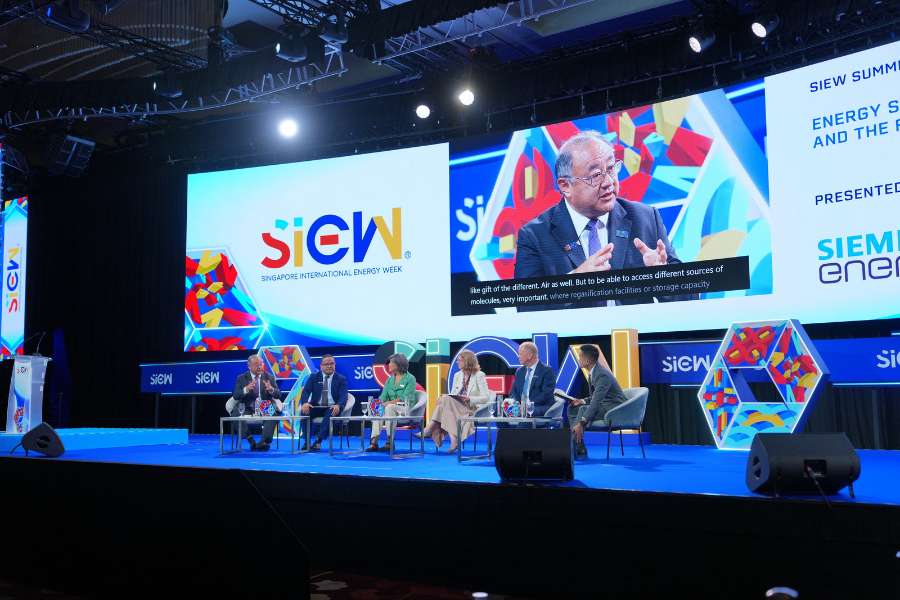
At SIEW Summit Session 2: Energy Security and the Future of Gas panellists Thorbjörn Fors of Siemens Energy, Leong Wei Hung of SLNG, Anna Collyer of the Australian Energy Market Commission, Judy Chang of the United States Federal Energy Regulatory Commission, and Carlos Alves of Autoridade Nacional do Petróleo explored these challenges. The discussion was moderated by Kenneth Foo, Global Director, Gas and LNG Price Reporting, S&P Global Energy.
From baseload generation to flexible capacity
Leong Wei Hung, CEO, SLNG, highlighted the importance of natural gas in providing reliable baseload power as Asia's energy demand grows. While renewables have an increasingly important role to play, he expects gas to remain a significant part of the region's energy mix.
This longer-term role extends beyond meeting baseload demand. Thorbjörn Fors, Group Senior Vice President and President Asia Pacific, Siemens Energy, outlined how gas could support this evolving energy mix. He identified three roles for gas. It can help meet rising electricity demand and balance fluctuations in renewable generation. Switching from coal to gas can also support decarbonisation.
The balance between baseload and flexible generation varies across energy systems. Australia offers one example of this shift. Anna Collyer, Chair, Australian Energy Market Commission (AEMC), explained that batteries are increasingly meeting short-duration flexibility needs. Gas-fired generation, however, remains important during prolonged periods of low renewable output.
This shift raises a financing challenge. Ms Collyer noted that gas-fired plants may operate infrequently but must remain available when needed. She highlighted the resulting challenge of financing capacity that is essential for reliability but used less often. Securing affordable fuel supply and transportation is another consideration.
Building resilience through flexible infrastructure
The need for flexibility extends to liquefied natural gas (LNG) infrastructure. Mr Leong emphasised that diversifying gas suppliers is only one part of the solution. LNG facilities must accommodate cargoes from different sources and manage variations in gas quality. They must also be able to respond quickly to changing demand.
Mr Leong highlighted the importance of preparing LNG infrastructure to meet unexpected supply requirements. Regional cooperation, including cross-border electricity transmission, could further strengthen resilience.
Mr Fors broadened this perspective to the relationship between gas and electricity networks. He saw gas infrastructure and electricity interconnections as complementary. He also pointed to opportunities to improve existing assets' efficiency and develop technologies capable of using alternative fuels.
Balancing domestic and export needs
Gas-producing countries face additional considerations in securing supply. Carlos Alves, Vice President of the ANP for Legal, Commercial, and Downstream Affairs and Board Member of Autoridade Nacional do Petróleo, I.P., highlighted natural gas's role in supporting Timor-Leste's economic development.
He emphasised affordable domestic energy access and the need to balance domestic supply with existing contractual commitments. National development priorities, he added, must also be considered in the energy transition.
Australia illustrates the challenges of balancing domestic requirements with international supply commitments. Ms Collyer noted that the country remains exposed to global supply disruptions and price volatility. Being a major gas exporter does not insulate Australia from international market pressures. She emphasised the importance of honouring international commitments while meeting domestic energy needs. Infrastructure must also be able to deliver gas where it is needed.
Regulatory and coordination bolster resilience
Maintaining reliable supply also depends on predictable regulation and investment. Judy Chang, Commissioner, United States Federal Energy Regulatory Commission (FERC), highlighted the importance of regulatory certainty in supporting private-sector investment in gas infrastructure.
She noted that permitting processes must account for economic, environmental and community considerations. Clear and predictable regulation can help sustain investor confidence.
Reliable supply also requires coordination between gas and electricity systems. Ms Chang pointed to the pressures that extreme weather can place on gas infrastructure when demand from different users increases. Better communication and planning between the two sectors can help anticipate potential supply constraints.
Keeping gas reliable as energy systems evolve
The challenge is to finance gas-fired plants that may run less frequently but are still needed during prolonged shortfalls in renewable generation. Their continued availability will be important to maintaining reliable electricity supply as energy systems evolve.
Stay tuned as the conversation evolves throughout the day. Follow @SIEW_sg on Telegram and X (formerly Twitter) for the latest insights.