By Derek Chua
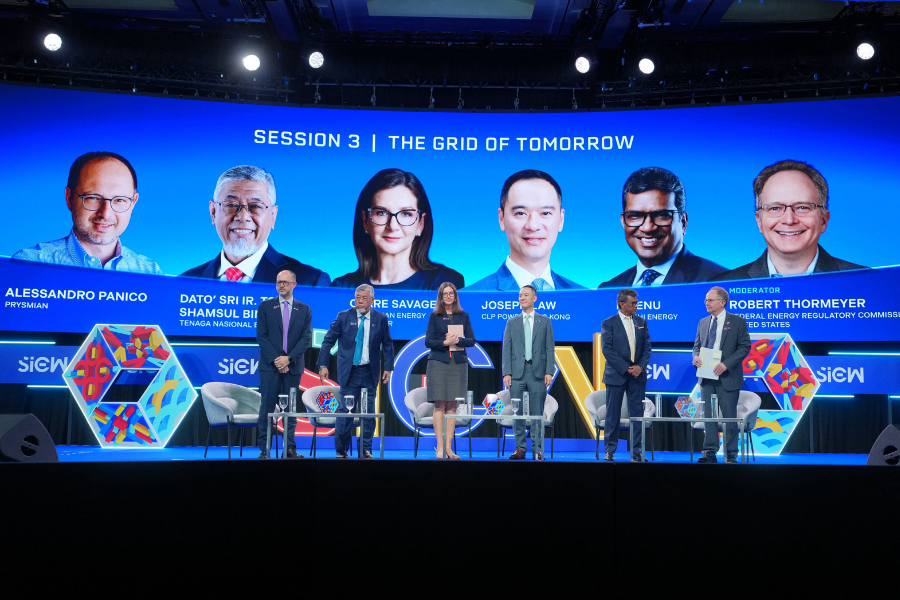
SIEW Summit Session 3: The Grid of Tomorrow brought together regulators, utilities and industry leaders to explore how technological innovation, forward-looking infrastructure planning and regional collaboration can support the energy transition, while ensuring reliable and affordable electricity for consumers.
Anticipating future electricity demand through coordinated planning
Moderated by Robert Thormeyer, Director of the State, International and Tribal Affairs Division at the United States Federal Energy Regulatory Commission, the discussion examined how electricity grids can keep pace with rising demand without compromising reliability or affordability.
Clare Savage, Chair of the Australian Energy Regulator, outlined the scale of Australia's grid investment challenge. With electricity demand projected to double, the country will need to expand its generation, storage and transmission capacity significantly. Yet rising supply chain costs, project delays and community opposition to new infrastructure are making delivery more difficult.
She called for better use of existing grid infrastructure, long-term planning and a clearer allocation of risks between governments, businesses and consumers.
Joseph Law, Managing Director of CLP Power Hong Kong, highlighted the importance of planning ahead for new sources of electricity demand, particularly data centres. In Hong Kong, this means coordinating decisions on where data centres are located and when they are developed, alongside the electricity, water and telecommunications infrastructure needed to support them.
Such early coordination between governments, utilities and industry, he explained, could help avoid costly infrastructure bottlenecks and ensure more efficient development.
Harnessing technological innovation and industry collaboration
Venu Nuguri, Managing Director and CEO for India and the Asia-Pacific Region at Hitachi Energy, pointed to the growing complexity of electricity grids as renewable energy, decentralised generation and new sources of demand reshape power systems. Advanced technologies can improve grid visibility and resilience but deploying them at scale will require closer collaboration between governments, regulators and industry.
He also called for a shift from planning individual infrastructure projects to coordinating larger programmes of investment. This could reduce engineering costs, improve efficiency and give manufacturers greater certainty to expand capacity. Developing the skilled workforce needed to support these technologies will be equally important.
Alessandro Panico, Chief Commercial Officer for Transmission at Prysmian, said the transmission industry faces two priorities: expanding manufacturing capacity to meet growing demand and developing technologies that can transmit more electricity at lower costs.
He stressed that manufacturers need greater certainty over infrastructure project pipelines to justify investments in new capacity. Clear regulatory frameworks and predictable project timelines would help strengthen supply chains and support more cost-effective delivery.
Strengthening regional interconnectivity and cross-border cooperation
Dato’ Sri Ir. Ts. Shamsul Bin Ahmad, President and Chief Executive Officer of Tenaga Nasional Berhad, pointed to the growing momentum behind the ASEAN Power Grid, with countries increasingly pursuing bilateral and regional electricity trading arrangements.
However, connecting national grids will require more than infrastructure investment. He stressed the need for closer coordination among ASEAN governments, utilities and regulators to align policies, regulatory frameworks and technical standards.
By connecting countries with complementary energy resources, regional interconnectivity could strengthen energy security and support a more reliable and sustainable electricity supply. Dato’ Sri Ir. Ts. Shamsul Bin Ahmad emphasised that early planning, supportive policies and faster project execution would be critical to turning these ambitions into reality.
Stay tuned as the conversation evolves throughout the day. Follow @SIEW_sg on Telegram and X (formerly Twitter) for the latest insights.