Stronger partnerships and regional connectivity can help countries withstand energy supply disruptions. At the Ministerial Keynote Address during SIEW 2026, two ministers outlined their approaches to strengthening energy security.
H.R.H. Prince Abdulaziz bin Salman Al-Saud, Minister of Energy, Kingdom of Saudi Arabia, focused on supply preparedness and cooperation with Singapore. YAB Datuk Amar Haji Fadillah bin Haji Yusof, Deputy Prime Minister and Minister of Energy Transition and Water Transformation, Malaysia, emphasised regional electricity connectivity and investment.
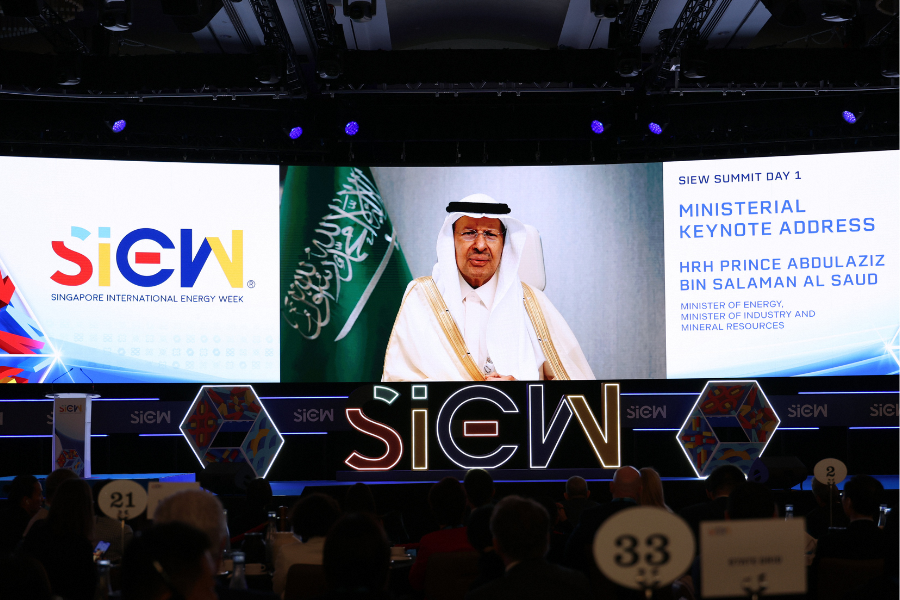
Saudi Arabia: Strengthening supply resilience
H.R.H. Prince Abdulaziz highlighted Singapore's refining, trading and shipping capabilities as a basis for closer energy cooperation. He referred to ongoing discussions between Saudi Arabia and Singapore on storing Saudi crude oil at Jurong Rock Caverns.
H.R.H. Prince Abdulaziz said bringing supplies closer to Asian markets could improve supply flexibility and Singapore's preparedness for disruptions. He also saw potential to expand this cooperation over time.
Saudi Arabia's East-West pipeline, strategic facilities and domestic supply chains have strengthened its ability to respond to disruptions, he said. The country is also investing in gas, renewables and electricity networks. H.R.H. Prince Abdulaziz called for producers and consumers to work together to protect energy infrastructure and supply routes.
Malaysia: Advancing regional power links
YAB Datuk Amar Fadillah placed the ASEAN Power Grid at the centre of regional energy security.
During Malaysia's ASEAN Chairmanship in 2025, the country worked with partners to advance the enhanced ASEAN Power Grid Memorandum of Understanding. The Lao People's Democratic Republic-Thailand-Malaysia-Singapore Power Integration Project has demonstrated that multilateral electricity trading is possible.
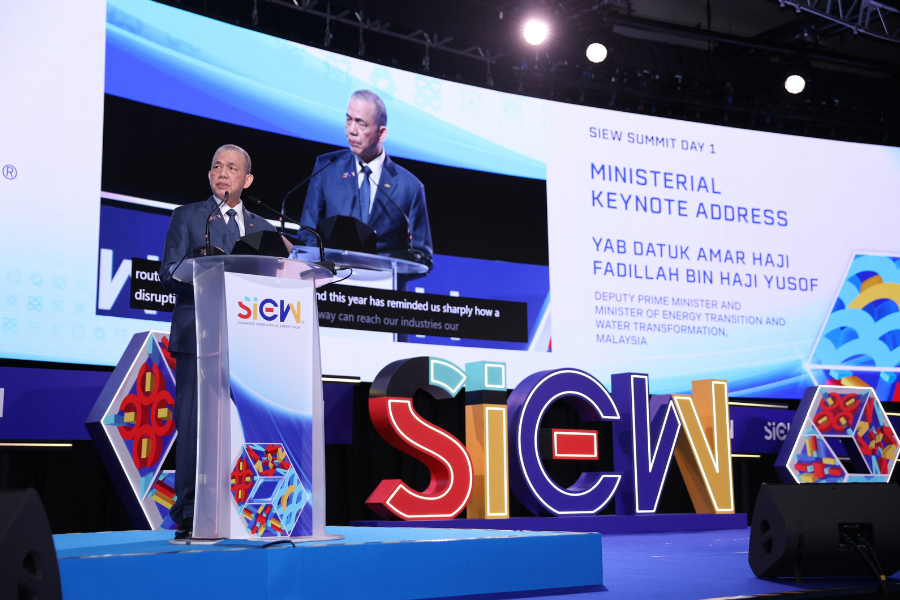
Malaysia and Singapore are pursuing greater cross-border electricity trade and interconnection. Stronger grids could support renewable energy integration and offer additional supply options during disruptions, he said.
Malaysia aims for renewable energy to reach 70 percent of installed capacity by 2050 under its National Energy Transition Roadmap. YAB Datuk Amar Fadillah said expanding renewable capacity would require stronger grids, storage and flexible power systems. Artificial intelligence could help forecast demand and optimise networks.
YAB Datuk Amar Fadillah highlighted the ASEAN Power Grid Financing Initiative as a means of turning regional plans into investable projects. The initiative is supported by the Asian Development Bank and World Bank. Predictable policies, transparent regulation and private investment would be important to mobilising capital, he added.
While the two ministers approached energy security from different perspectives, both emphasised the need for greater cooperation. Turning that cooperation into stronger energy resilience will require sustained investment in infrastructure and closer partnerships across borders.
Stay tuned as the conversation evolves throughout the day. Follow @SIEW_sg on Telegram and X (formerly Twitter) for the latest insights.