Growing interest in nuclear energy is creating opportunities to expand reliable, low-carbon power, including through emerging reactor technologies. But turning that interest into new projects will require supportive policies, effective regulation and sustainable financing.
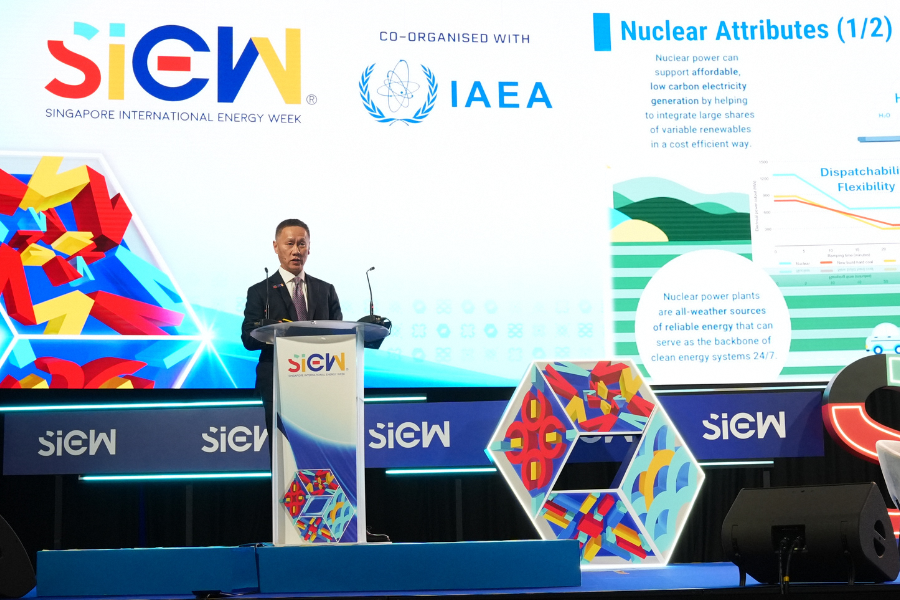
At the IAEA@SIEW Forum, Wei Huang examined developments in global nuclear energy and what countries need to consider as they explore its potential. Mr Huang is Director, Division of Planning, Information and Knowledge Management, Department of Nuclear Energy, International Atomic Energy Agency (IAEA).
Global nuclear capacity and newcomer interest
Nuclear power currently supplies over 20 percent of global low-carbon electricity, according to Mr Huang. Operational capacity stands at nearly 380 gigawatts (GW) across 31 countries, with another 78 reactors under construction in 17 countries.
Beyond existing capacity, nuclear power could complement renewables by providing round-the-clock electricity as demand rises. Applications such as industrial heat, hydrogen production and district heating could extend the role of nuclear energy in decarbonisation beyond electricity generation.
Interest is also broadening beyond established markets. However, considering nuclear power does not mean committing to build plants, Mr Huang noted.
Small modular reactors widen the technology landscape
Small modular reactors (SMRs) are among the emerging technologies attracting interest from countries exploring nuclear power. Mr Huang outlined their potential advantages, including lower upfront costs, factory-based modular construction and greater siting flexibility. Interest among newcomer countries has risen from 25 in 2025 to more than 35 in 2026, according to Mr Huang.
Turning momentum into deployment
International political attention has also grown. At COP28 in 2023, participating countries committed to working towards an aspirational goal of tripling global nuclear power capacity by 2050. High-level nuclear energy summits have also brought greater attention to the sector. Yet such momentum does not necessarily translate into new capacity.
Mr Huang emphasised that turning interest into nuclear projects would require long-term, science-informed policies and more streamlined licensing processes. Sustainable financing and public engagement would also be needed. He added that the IAEA stands ready to support Member States as they consider their nuclear energy pathways.
Follow @SIEW_sg on Telegram and X (formerly Twitter) for the latest insights and updates.