Concerns over energy security and the need for cleaner power are renewing interest in nuclear energy across Asia. At the inaugural IAEA@SIEW Forum, this growing interest brought nuclear readiness and regional cooperation into focus.
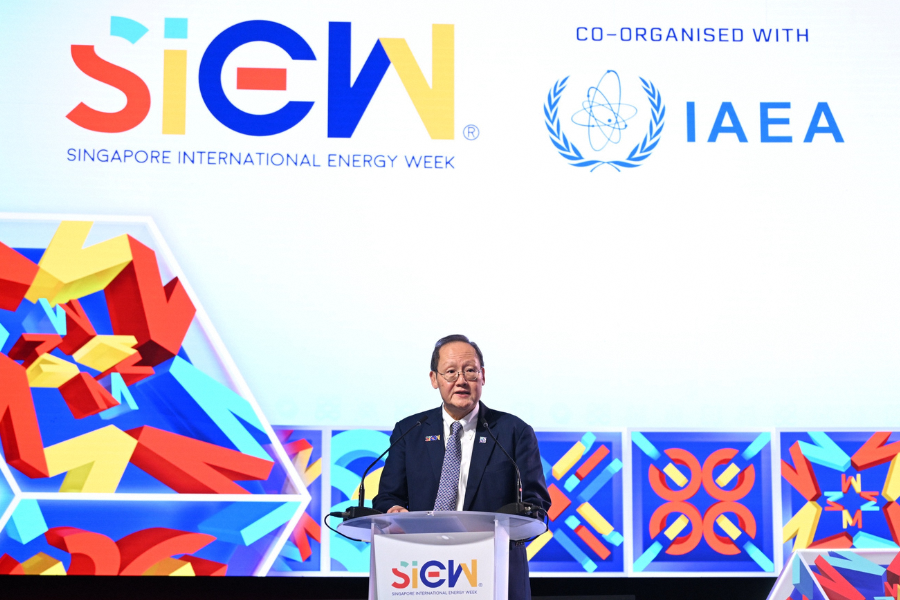
The discussion was framed by welcome remarks from H.E. Dr Tan See Leng, Minister for Energy, Trade and Industry (Energy and Industry), Singapore. It continued with an opening address by Rafael Mariano Grossi, Director General, International Atomic Energy Agency (IAEA).
Singapore outlines next steps on nuclear energy
H.E. Dr Tan announced that Singapore and the Philippines have agreed to explore collaboration in nuclear energy. Such cooperation could help both countries share expertise and develop nuclear capabilities.
As Singapore prepares to assume the ASEAN Chairmanship in 2027, it will also seek to deepen regional discussions on nuclear energy. This will involve the ASEAN Network of Regulatory Bodies on Atomic Energy and the Nuclear Energy Cooperation Sub-Sector Network.
Singapore is also assessing its own readiness for nuclear energy. It is preparing for the IAEA's Integrated Nuclear Infrastructure Review (INIR) Phase 1 Mission starting in 2027. The review will assess whether the country has the institutions and capabilities needed to make an informed decision. No decision has been made to deploy nuclear power.
To help prepare for the review, the Energy Market Authority (EMA) of Singapore has appointed a panel of consultants. They will assess Singapore's nuclear infrastructure readiness across technical, regulatory and organisational areas. The Authority also plans to appoint technical advisers by the end of 2026.
Separately, the National Environment Agency (NEA) has commissioned three studies. These will examine nuclear safety standards, international regulatory requirements and the potential environmental impacts of a nuclear power plant.
On regional cooperation, H.E. Dr Tan also announced that the IAEA@SIEW Forum will become an annual event. It will bring together policymakers, regulators and industry stakeholders to exchange expertise on nuclear energy.
IAEA's Milestones Approach
Singapore's preparations reflect a wider challenge for countries considering nuclear energy. They need the expertise and institutions to assess whether nuclear is a viable option.
Mr Grossi highlighted the IAEA's Milestones Approach. This examines 19 nuclear infrastructure issues, including regulatory independence, financing, workforce development and radioactive waste management. The framework helps countries identify gaps in their preparations before deciding whether to pursue nuclear power.
Advances in small modular reactors (SMRs) are expanding the options countries may need to assess. Mr Grossi noted their potential applications in smaller electricity grids and industrial heat supply. Such developments make technical expertise and regulatory oversight increasingly important.
The IAEA's Nuclear Harmonisation and Standardisation Initiative seeks to align nuclear regulatory approaches across countries. Each country, however, retains responsibility for its own nuclear regulations.
Building investor and public confidence
Mr Grossi emphasised the importance of clear policies and predictable project schedules in attracting investment in nuclear energy. Engagement with international financial institutions could also help finance nuclear projects.
Public confidence is equally important, particularly when addressing concerns about nuclear safety and radioactive waste management.
He also called for closer international cooperation to develop specialist expertise and strengthen emergency preparedness. Sharing regulatory knowledge is one way to support these efforts. Such cooperation can help countries across Asia strengthen their capabilities as they assess nuclear energy's potential for a secure, low-carbon future.
Follow @SIEW_sg on Telegram and X (formerly Twitter) for the latest insights and updates.