A more secure gas supply will depend on diversified sources and flexible contracts. At the Singapore-IEA Forum, supply disruptions and price volatility highlighted energy security vulnerabilities across Southeast Asia. The region must meet growing electricity demand while keeping costs manageable and making room for cleaner energy.
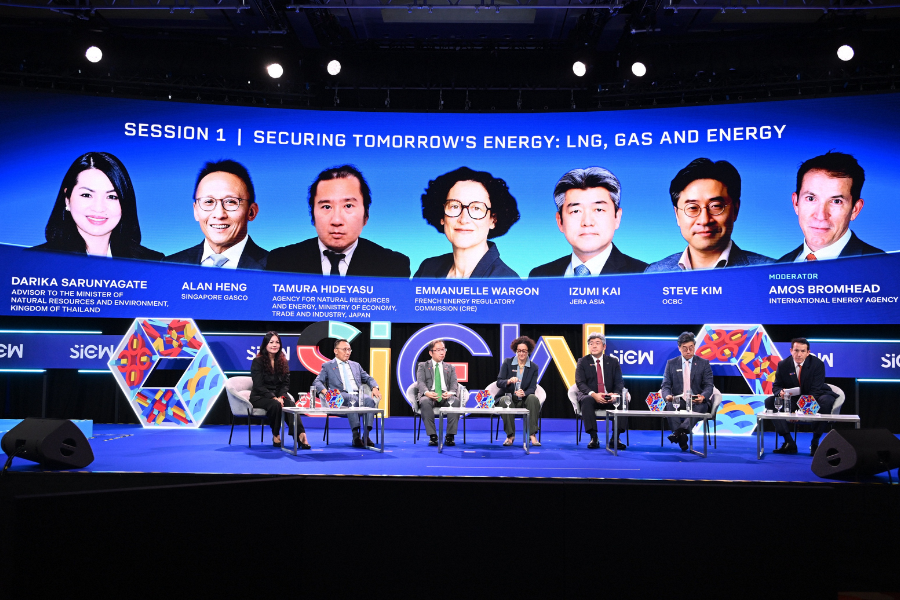
Session 1, on Securing Tomorrow’s Energy: LNG, Gas and Energy Security, featured six panellists, with Amos Bromhead, Chief of Staff at the International Energy Agency (IEA), guiding the discussion. Panellists included:
- Darika Sarunyagate, Advisor to the Minister of Natural Resources and Environment, Kingdom of Thailand
- Emmanuelle Wargon, Chair, French Energy Regulatory Commission (CRE)
- Tamura Hideyasu, Deputy Commissioner for International Affairs from Agency for Natural Resources and Energy, Japan’s Ministry of Economy, Trade and Industry (METI)
- Izumi Kai, Managing Executive Officer, Chief Executive Officer, JERA Asia
- Steve Kim, Head of Structured & Project Finance, Global Corporate Banking, OCBC
- Alan Heng, Chief Executive Officer, Singapore GasCo
Diversifying gas supply to manage volatility
Ms Wargon highlighted the risks of relying too heavily on a single gas supplier, drawing on Europe's experience of major supply disruptions. Europe responded by expanding its import infrastructure and diversifying its sources of supply.
Diversification is also central to Japan's approach to energy security. Mr Tamura pointed to discussions with countries in Africa and South America, including Argentina, about potential sources of stable and affordable natural gas.
For Singapore, managing supply risks also involves how gas is procured. Natural gas accounts for about 95 percent of the country's electricity generation. Mr Heng highlighted how long-term LNG contracts and a mix of gas purchasing arrangements can help manage price volatility and maintain supply reliability.
Balancing gas and cleaner power
As electricity demand grows, gas remains important to Southeast Asia's power system reliability. Mr Izumi identified electrification, economic growth and data centres as key drivers of that demand.
As domestic gas production declines, LNG can help maintain electricity supply. Gas-fired power plants can also balance fluctuations in renewable energy output. To support these roles, he emphasised the need for flexibility in gas procurement, import infrastructure and power generation.
New gas infrastructure must also remain useful as cleaner energy expands. Ms Darika cautioned against overdependence on imported gas and investments that could become underused.
She pointed to Thailand's draft Power Development Plan (PDP) 2026, which includes greater use of renewables, energy storage and smart grids. Gas investments must also align with the country's climate commitments, including its net-zero target for 2050.
Financing flexible gas generation
Keeping gas-fired power plants flexible also depends on how their contracts are structured. Mr Kim highlighted the difficulties created by rigid LNG supply agreements. Under take-or-pay contracts, buyers may have to pay for gas even when their power plants do not need it.
Allowing LNG cargoes to be redirected could help reduce this risk. He also proposed paying power plants to keep capacity available, even when they are not generating electricity. Closer alignment between gas supply contracts and electricity sales agreements could further improve projects' financial viability.
How gas projects are financed will help determine whether Southeast Asia can maintain reliable electricity supplies while adapting its power systems to cleaner energy.
Follow @SIEW_sg on Telegram and X (formerly Twitter) for the latest insights and updates.