Clear legal frameworks, coordinated governance and predictable revenue models could help unlock cross-border subsea power interconnections in the Association of Southeast Asian Nations (ASEAN). These were among the preliminary findings from Phase Two of the Singapore-US Feasibility Study on Regional Energy Connectivity.
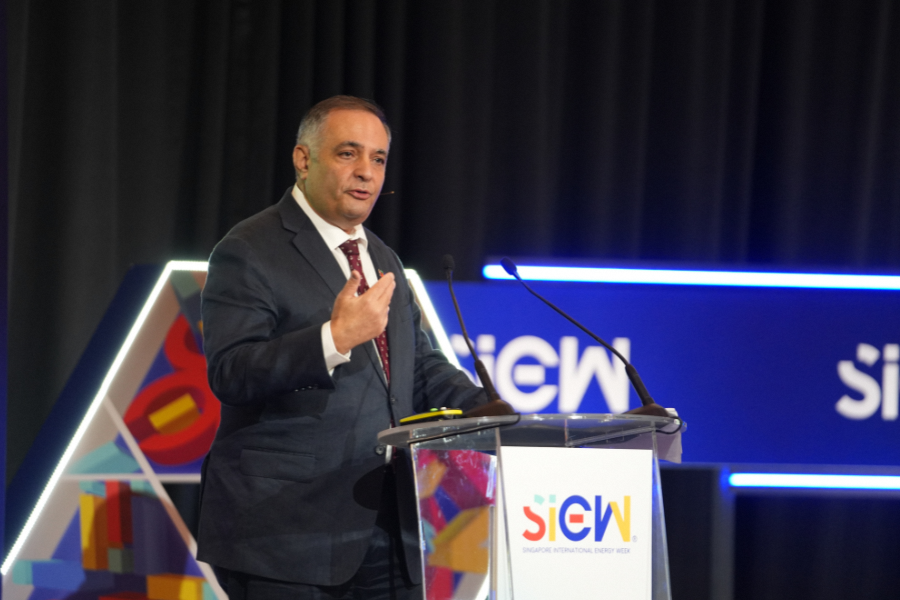
At SIEW Energy Insights, Frank A. Putzu, Senior Advisor, Pacific Northwest National Laboratory, presented findings from the study, conducted by Pacific Northwest National Laboratory and the National Laboratory of the Rockies in collaboration with Singapore's Energy Market Authority (EMA) and the Ministry of Energy, Trade and Industry.
While Phase One assessed the feasibility of subsea cables, Phase Two examines the legal, governance and financing frameworks needed to advance them. The session also featured Dr Roger Fouquet, Principal Research Fellow, Energy Studies Institute, National University of Singapore, as moderator. Key takeaways from the session included:
- International maritime law provides a foundation: Mr Putzu noted that the United Nations Convention on the Law of the Sea (UNCLOS) establishes a legal right to lay subsea cables, subject to due regard for the rights of others. He highlighted ASEAN's emphasis on adherence to international maritime law as a foundation for regional cooperation.
- Regulatory alignment must begin at the national level: Each country has its own legal and governance framework, with responsibilities spanning multiple ministries and agencies. Differing permitting and approval processes can delay projects and deter investment. Mr Putzu highlighted the importance of clarifying national responsibilities before harmonising selected regulatory frameworks across participating countries.
- Financing must address risks at different project stages: Blended finance could help mobilise private investment beyond sovereign and state-owned enterprise balance sheets. Mr Putzu explained that concessional capital could be directed towards early, higher-risk development phases, with commercial capital attracted as projects progress towards operation.
- Predictable revenues and shared ownership could strengthen bankability: Regional cost allocation and transmission tariff methodologies could provide a more consistent alternative to project-specific bilateral negotiations. Sovereign guarantees and availability- or capacity-based revenue models could also help address revenue uncertainty, while joint ventures and special purpose vehicles could enable participating countries to share costs and revenues on multilateral routes.
Mr Putzu emphasised that legal and governance certainty alone would not resolve the financing challenges facing subsea interconnectors. Long development timelines, complex multi-country permitting, marine and technical risks, and revenue uncertainty must also be addressed.
The study team will continue refining its findings with further analysis and stakeholder input, ahead of the final report in 2027. The preliminary findings point to the importance of developing legal, regulatory and commercial frameworks alongside the physical infrastructure needed for regional electricity connectivity.
Stay tuned as the conversation evolves throughout the day. Follow @SIEW_sg on Telegram and X (formerly Twitter) for key insights and the latest updates.