Cross-border electricity trade is advancing, but deeper grid integration requires more than infrastructure. Aligned regulations, stronger institutions and workforce capabilities will be key to sustaining progress.
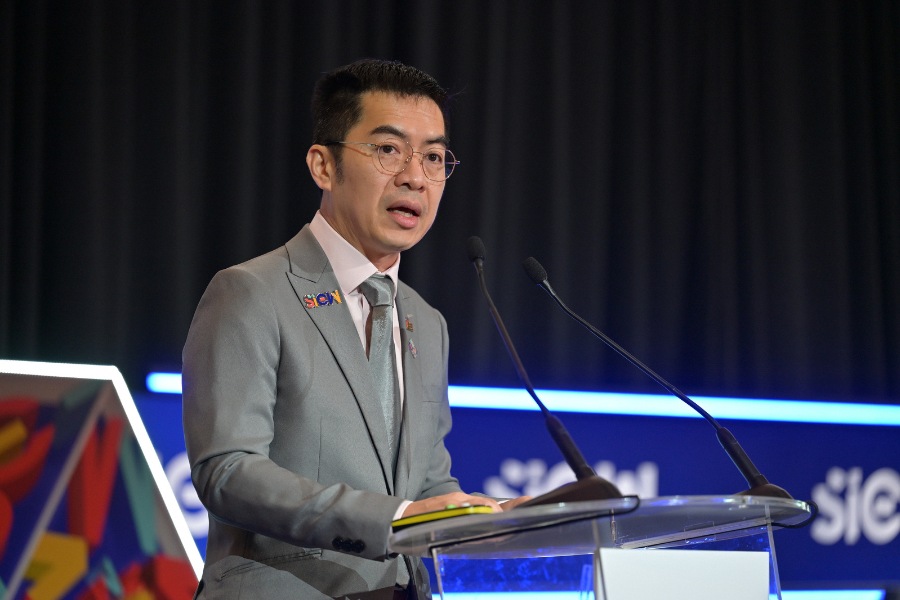
At the opening of SIEW Energy Insights, Puah Kok Keong, Chief Executive, Energy Market Authority (EMA), Singapore, highlighted the country's electricity import plans and regional cooperation. Lin Yang, Deputy Executive Secretary for Programme, United Nations Economic and Social Commission for Asia and the Pacific (ESCAP), outlined a broader approach to energy connectivity. Her vision brought together infrastructure with governance, financing and workforce development.
Expanding regional electricity trade
In his welcome remarks, Mr Puah linked growing energy security concerns to geopolitical disruptions. He also highlighted new pathways for low-carbon electricity imports. EMA has granted Sembcorp Utilities conditional approval to import up to 1.3 gigawatts (GW) of low-carbon electricity from and through Peninsular Malaysia. This follows earlier conditional approvals for two Johor projects totalling 900 megawatts (MW). Singapore is also surveying a route for a proposed second interconnector with Malaysia, with a proposed capacity of up to 2 GW.
Singapore's import plans form part of a wider discussion on regional electricity connectivity. In her keynote address, Ms Yang described how green power corridors could unlock renewable resources, improve grid flexibility and attract investment.
She noted that the Lao PDR–Thailand–Malaysia–Singapore Power Integration Project had expanded from 100 MW to 200 MW. Yet, by her estimate, cross-border electricity accounted for only around 3 percent of regional supply. This highlighted the considerable scope for expanding electricity trade within the region.
Aligning rules for grid integration
Regulatory coordination is becoming an important part of efforts to expand cross-border electricity trade. Mr Puah highlighted the first Singapore–Malaysia joint working group on cross-border renewable energy certificates (RECs). The group was established to examine harmonised tracking and accounting.
He also reported the completion of Phase Two of the Singapore–US Joint Feasibility Study on Regional Energy Connectivity. According to Mr Puah, the study highlighted the importance of regulatory alignment, regional coordination and innovative financing. ASEAN is also developing legal and regulatory guidelines under its Submarine Power Cable Framework, with technical, commercial and governance discussions ongoing.
Ms Yang approached regional integration from a broader governance perspective. She highlighted the need for arrangements covering electricity access, transit charges, grid operations and settlements, alongside carbon certification. She also advocated extending the ASEAN Power Grid's connections towards wider Asia-Pacific networks.
Building long-term energy capabilities
Beyond regulatory coordination, Singapore is strengthening its capacity to assess nuclear energy as a potential future option.
As part of these preparations, the country plans to begin Phase One of the International Atomic Energy Agency's Integrated Nuclear Infrastructure Review in 2027. It is also developing expertise across the agency's 19 milestone areas. Mr Puah reiterated that Singapore has made no decision to deploy nuclear energy.
For regional grid integration, Ms Yang highlighted the importance of workforce capabilities. She called for stronger technical training and closer cooperation among governments, industry and educational institutions.
She also emphasised developing a more inclusive and adaptable workforce through recognition of qualifications, greater opportunities for women and reskilling of workers from carbon-intensive industries. She stressed the importance of implementation capacity and public trust.
Singapore's electricity import initiatives and ESCAP's wider connectivity vision illustrate different aspects of the region's integration agenda. Further progress will depend on regulatory alignment, technical expertise and coordination in cross-border electricity trade.
Stay tuned as the conversation evolves throughout the day. Follow @SIEW_sg on Telegram and X (formerly Twitter) for key insights and the latest updates.