By Alexandrea Ang and Derek Chua
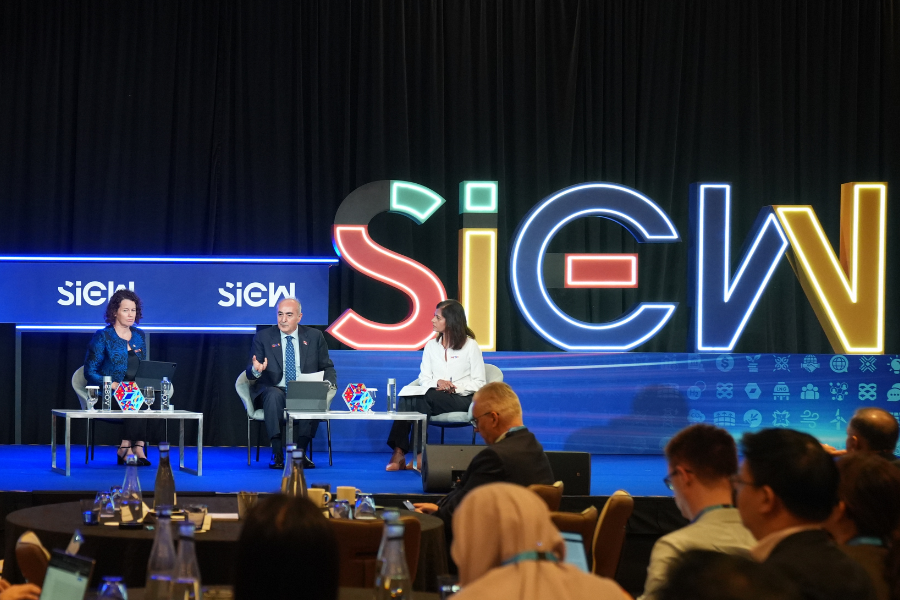
At SIEW Energy Insights, H.E. Amb Sadık Arslan, Ambassador of the Republic of Türkiye to Singapore and Emily Follett, Acting High Commissioner, Australian Department of Foreign Affairs and Trade, discussed how faster electrification, stronger grids and international cooperation could advance climate goals while strengthening energy security.
Moderated by Sunitha Chalam, Partner and Singapore Office Head at Brunswick, the session highlighted three priorities:
COP31's 35 by 35 pledge seeks to accelerate electrification
Ambassador Arslan outlined Türkiye's vision for COP31 as an implementation-focused conference. A central priority is the voluntary 35 by 35 pledge, which aims to increase electricity's share of global final energy consumption to 35 percent by 2035. This would require greater electrification of transport, buildings and industry, supported by cleaner electricity generation, stronger grids and investment.
Ms Follett reinforced Australia's support for the pledge, noting that global electrification must accelerate fourfold to keep the 1.5°C climate goal within reach. She emphasised that the non-binding target recognises countries' different circumstances while establishing a shared direction for reducing fossil fuel dependence.
Electrification offers a pathway to stronger energy security
Both speakers highlighted how geopolitical conflicts and disruptions to energy supply chains have reinforced the need to reduce dependence on fossil fuels.
Ms Follett noted that electrification, supported by renewable energy, modern grids and storage, could strengthen energy sovereignty and economic resilience. Citing IEA estimates, she shared that investments in renewables, electrification and energy efficiency had saved Southeast Asia around US$30 billion in fossil fuel import costs in 2025.
Ambassador Arslan highlighted how ongoing conflicts have damaged energy infrastructure and disrupted supply chains. He cautioned that higher oil and gas prices could also divert funds away from the energy transition, reinforcing the urgency of investing in clean energy and grid infrastructure.
Regional connectivity and investment are key to electrification
Both speakers emphasised that accelerating electrification requires stronger electricity infrastructure and international cooperation.
Ambassador Arslan called for greater cross-border electricity connectivity, including among ASEAN countries, to strengthen regional energy security.
Ms Follett outlined Australia's support for Southeast Asia's clean energy transition through infrastructure investment, improvements to energy policy and regulation, and initiatives including the ASEAN Power Grid and the Asian Development Bank-led Regional Connectivity Fund.
She also highlighted Australia's participation in the Electrify Now campaign, which seeks to mobilise governments, businesses and financial institutions to accelerate electrification globally.
The discussions highlighted the importance of translating global electrification ambitions into practical action. Expanding clean energy deployment, strengthening electricity grids and mobilising investment will be central to advancing both decarbonisation and long-term energy security.
Stay tuned as the conversation evolves throughout the day. Follow @SIEW_sg on Telegram and X (formerly Twitter) for key insights and the latest updates.