By Derek Chua
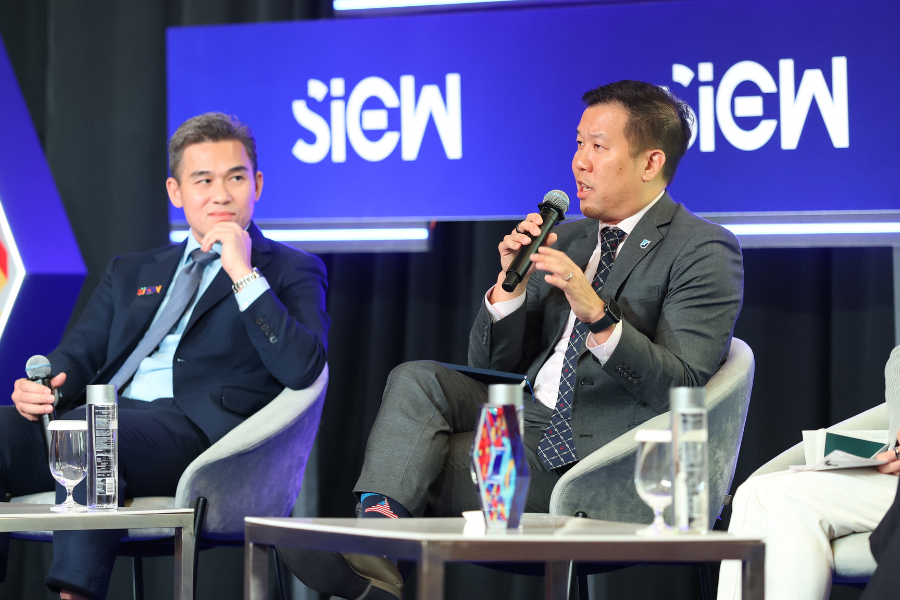
As Asia expands renewable energy capacity, natural gas continues to support power system reliability. Yet recent supply disruptions have exposed the risks of import dependence, raising questions about how countries can secure gas supplies while adapting to a changing electricity mix.
At SIEW Thinktank Roundtable B Session 2, industry leaders and energy experts examined how diversified supply, flexible infrastructure and coordinated investment can strengthen energy security without constraining longer-term energy transition pathways.
Strengthening energy security amid supply disruptions
Moderated by Philip Cornell, Non-resident Senior Fellow, Global Energy Center, Atlantic Council, the discussion explored how natural gas can both strengthen energy security and expose import-dependent economies to supply and price volatility.
Yukari Niwa Yamashita, Managing Director, Institute of Energy Economics, Japan (IEEJ), highlighted how geopolitical disruptions have intensified competition for liquefied natural gas (LNG), creating uncertainty over future supply and prices. She emphasised the need for countries to develop balanced energy mixes and transition pathways that reflect their economic circumstances, domestic resources and affordability constraints.
Derek Wong, Vice President, Asia Pacific, Excelerate Energy, drew on Bangladesh's experience to illustrate the vulnerabilities of LNG-dependent economies. He highlighted how limited regasification capacity and concentrated supply sources can restrict countries' ability to respond to disruptions. Diversifying suppliers and expanding import infrastructure would help strengthen resilience against future shocks.
Building flexibility into Asia's gas infrastructure
James Ooi, Vice President, Throughput Business, Singapore LNG Corporation (SLNG), noted that natural gas accounts for approximately 95 percent of Singapore's electricity generation. With piped gas supplies from neighbouring countries declining, he highlighted the importance of Singapore's LNG ecosystem in securing access to global markets.
Mr Ooi also pointed to SLNG's second LNG terminal, designed around a floating storage and regasification unit (FSRU), as an example of infrastructure that can provide flexibility while supporting long-term energy security.
Yumiko Yao, Chief Executive Officer, Tokyo Gas Asia, discussed opportunities to improve access to Indonesia's domestic gas resources. She outlined plans to use FSRUs and smaller vessels to transport gas to remote islands, where it could replace more expensive diesel-fired generation. Such integrated distribution networks could strengthen energy security while supporting decarbonisation.
Planning for uncertainty and managing investment risks
Professor Pierluigi Mancarella, Program Leader, Energy Systems, Melbourne Energy Institute, explained that gas could remain important in electricity systems with high shares of renewable energy, particularly during prolonged periods of low wind or solar generation.
He called for more integrated modelling of gas and electricity systems, with investment decisions accounting for multiple possible futures rather than relying on fixed demand and technology assumptions. This would allow infrastructure plans to adapt as energy systems evolve.
Panellists also highlighted the importance of coordinating investment across the gas-to-power value chain. Ms Yao emphasised the need for aligned infrastructure contracts and regulatory frameworks that enable risks to be shared among project participants.
SLNG’s Mr Ooi noted that different market structures require tailored approaches to financing and risk allocation.
Excelerate Energy’s Mr Wong highlighted how floating LNG infrastructure and integrated distribution networks could serve smaller, dispersed markets where conventional receiving terminals may not be commercially viable.
Looking ahead, the discussion underscored that securing Asia's gas supply will require more than additional import capacity. Infrastructure must also be adaptable, investment risks appropriately allocated and energy planning aligned with changing demand and generation patterns.
These considerations will be important in determining how natural gas can continue supporting reliable electricity supply as Asia's power systems evolve.
Stay tuned as the conversation evolves throughout the day. Follow @SIEW_sg on Telegram and X (formerly Twitter) for key insights and the latest updates.