As Asia's electricity needs evolve, securing gas supplies is only one part of maintaining reliable and affordable power. How countries plan for changing energy needs will be just as important.
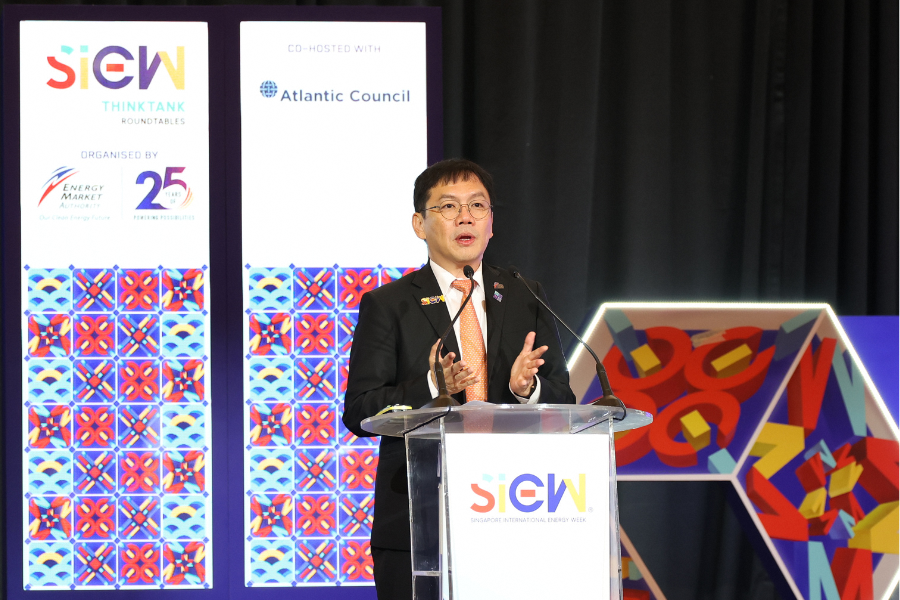
This central message emerged from the welcome remarks by Jonathan Goh, Director, External Relations, Energy Market Authority (EMA) of Singapore, and the keynote by H.E. Felix William B. Fuentebella, Undersecretary of Energy, Republic of the Philippines. Both addresses were delivered at the SIEW Thinktank Roundtable B on Gas, Security, and Transition in an Evolving Energy Landscape.
Singapore expands gas supply capacity
Mr Goh outlined Singapore's efforts to diversify gas supplies. Natural gas accounts for around 95 percent of the country's electricity generation, making supply resilience critical.
Singapore GasCo is now fully operational, aggregating demand to procure diversified supplies. This aims to strengthen Singapore's access to reliable gas imports. Singapore also plans to develop a second liquefied natural gas (LNG) terminal by 2030, which would increase its regasification capacity by 50 percent.
To meet future electricity demand, Singapore is also expanding its generation capacity. Under the country's five-year energy infrastructure plan, five new gas-fired power plants are expected to come online between 2026 and 2031. The plan also aims to retain flexibility for cleaner energy resources.
Balancing LNG costs and supply security
Singapore’s measures illustrate how countries can strengthen supply resilience. The Philippine experience highlights a related challenge: keeping imported gas affordable during market disruptions.
H.E. Mr Fuentebella stressed that fuel availability alone does not ensure energy security. Shipping, insurance and other costs also affect the price paid by consumers.
Disruptions to shipping through the Strait of Hormuz coincided with a more than doubling of spot LNG prices in March. He shared that the Philippines responded by temporarily reducing LNG-fired generation and increasing coal and renewable output to limit costs to consumers.
For H.E. Mr Fuentebella, managing these risks calls for diversifying suppliers and delivery routes, developing viable domestic gas resources, and maintaining timely information on prices and inventories. Procurement should balance supply assurance, price stability and volume flexibility. Spot purchases expose buyers to price spikes, while rigid long-term contracts may not reflect gas plants’ changing operating patterns.
Adapting gas use to renewables
These procurement tradeoffs become more important as renewable energy expands and the role of gas-fired generation evolves.
The Philippines is targeting renewable energy shares of 35 percent in electricity generation by 2030 and 50 percent by 2040. Against this backdrop, H.E. Mr Fuentebella highlighted the need for greater flexibility in power systems. Generating capacity alone is not enough when solar and wind output varies.
Gas can help provide that flexibility. However, investment decisions should assess it alongside storage, transmission, demand response and regional interconnection. Such planning can help avoid costly infrastructure commitments that create prolonged dependence on imported fuels.
Making ASEAN emergency cooperation operational
Alongside longer-term energy planning, emergency preparedness is another priority. H.E. Mr Fuentebella cited the Philippines' 2026 National Oil and Gas Contingency Plan, which includes a weekly National Fuel Risk Index and three graduated alert levels.
At the regional level, he called for ASEAN's existing emergency-response commitments to be put into practice through information sharing and mutual assistance. Timely information on fuel inventories and vessel arrivals could help countries respond earlier to potential disruptions.
Across both addresses, gas security emerged as a question of system design as well as fuel availability. Diversified procurement and infrastructure can reduce exposure to disruption. Flexible planning can also help gas support renewable integration without locking in long-term infrastructure commitments.
For Southeast Asia, the challenge is to align these measures with regional crisis-response arrangements. This would help safeguard energy security and affordability as the transition advances.
Stay tuned as the conversation evolves throughout the day. Follow @SIEW_sg on Telegram and X (formerly Twitter) for key insights and the latest updates.