As Asia navigates growing energy demand and decarbonisation priorities, how does the region ensure supply resilience while managing costs and supporting cleaner energy systems?
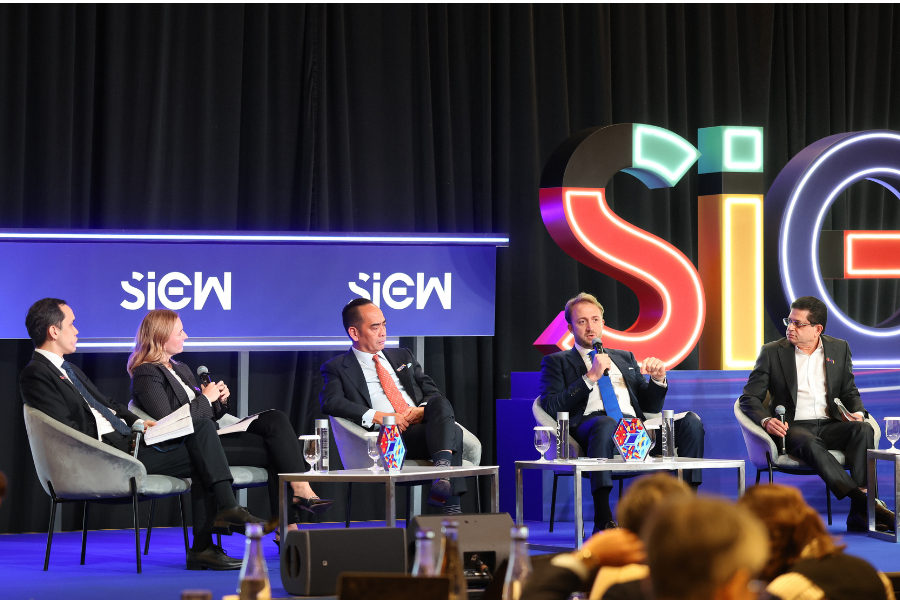
SIEW Thinktank Roundtable B, Session 1: Securing Gas Supply for Asia’s Energy Transition, gathered industry leaders to explore strategies that can address this priority.
The session, titled Securing Gas Supply for Asia's Energy Transition, was moderated by Lee Beck, Non-Resident Senior Fellow, Global Energy Center, Atlantic Council and Chief Global Policy Officer, HIF Global. Panellists included:
- Ratnesh Bedi, President, Pacific Energy Corporation
- Vincent Lam, Gas & LNG Commercial Head, Gas & Related Services, Sembcorp Industries
- Emmanuel V. Rubio, President and CEO, Meralco PowerGen Corporation (MGEN)
- Erol Saban, Executive Committee Member, Karpowership
Diversify and stress-test supply
Mr Bedi emphasised the importance of diversifying supply jurisdictions, pricing indices and shipping routes to manage potential disruptions. He cited Pacific Energy's investments in Canada, where LNG can be shipped to Northeast Asia without passing through major chokepoints.
He also encouraged buyers to consider equity investments in liquefied natural gas (LNG) projects as a way to strengthen their supply portfolios. Crucially, he urged buyers to stress-test whether contracted supplies could actually reach them during disruptions.
Supply flexibility also matters when demand changes. Mr Bedi highlighted how renewable energy deployment and government policies could affect future LNG requirements. Buyers therefore need to manage uncertainty over contracted volumes.
Balance flexibility and cost
Managing uncertain demand also requires commercial flexibility. Mr Lam said long-term contracts and diversified supply sources can provide greater price stability. But flexibility may come at a higher cost.
To manage this tradeoff, Mr Lam suggested that buyers and sellers share flexibility across their portfolios. He also highlighted the importance of closer partnerships with infrastructure providers and other industry players.
Plan for changing power needs
The need for flexibility extends beyond LNG contracts to electricity generation. Mr Rubio explained how gas-fired power can complement solar and battery storage in the Philippines, particularly when solar output declines in the evening. He also stressed the need for coordination to minimise costs for consumers.
Infrastructure planning also affects how quickly power can be delivered. Mr Saban highlighted how combining floating power generation, LNG infrastructure and fuel supply could shorten deployment timelines. Investing in equipment ahead of demand, supported by coordinated planning and demand forecasting, could also help manage costs.
Timely infrastructure delivery is one part of a wider challenge highlighted by the panel. Reliable gas supply also depends on managing delivery risks, balancing contractual flexibility with affordability, and ensuring gas can meet changing electricity needs.