By Derek Chua
Artificial intelligence (AI) is opening new opportunities to improve grid reliability, optimise energy assets and manage increasingly complex power systems. However, its effective deployment will depend on reliable data, human oversight and clear operational safeguards.
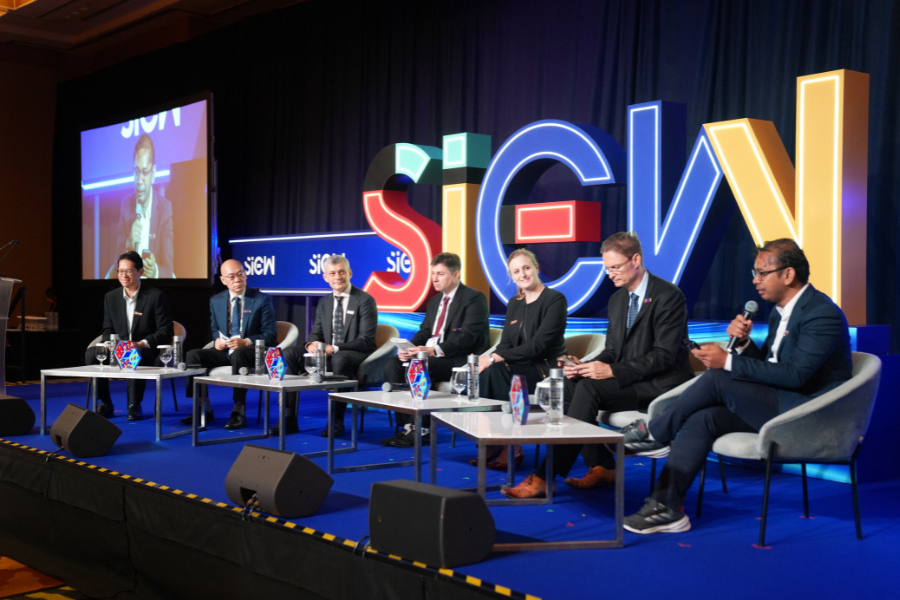
SIEW Thinktank Roundtable E Session 1 brought together industry experts to examine practical AI applications, from predictive maintenance and renewable energy forecasting to battery optimisation and real-time grid management. Moderated by Beni Suryadi, Senior Manager of APAEC, ASEAN Centre for Energy, the discussion explored how AI can support rising electricity demand while strengthening system reliability and resilience.
Moving from reactive to predictive grid management
Kevin Koh, Head, Digital Services, SP Group, highlighted how AI-enabled predictive maintenance could strengthen grid reliability amid growing electricity demand. He shared how SP Group's intelligent asset management platform combines sensor data and AI algorithms to anticipate equipment failures, achieving 90% prediction accuracy while reducing sensor costs by approximately 30%. Such applications could help utilities prioritise maintenance and asset replacement before failures occur.
Dr Šarūnas Stanaitis, CEO, Inion Software (Lithuania), discussed how AI is improving solar, wind and electricity demand forecasting across the company's portfolio of approximately 2,000 power plants. He noted that integrating more real-time data could further improve operational decisions as deployment costs decline.
Martin Hauske, Sales Director (Asia Pacific) – Grid Software, GE Vernova, emphasised that accurate grid models and reliable data are fundamental to effective AI deployment. As distributed energy resources and electric vehicles add complexity to power networks, AI could help operators forecast renewable generation, interpret operating signals and prioritise critical system alerts.
Optimising flexibility across energy systems
Beyond forecasting and maintenance, panellists explored how AI could improve the coordination of electricity supply, demand and storage.
Stéphane Leyo, Co-founder and CEO, Amplicity, explained how AI can optimise battery charging and discharging decisions by evaluating electricity prices, site demand and grid signals. He stressed the importance of customised forecasting models and market incentives that align individual site-level decisions with wider electricity system needs.
Isabelle Ireland, Head of Corporate Operations, InterContinental Energy, discussed AI's potential to manage electricity allocation between renewable generation, data centres and hydrogen production at the Australian Renewable Energy Hub. She emphasised the need to validate AI systems alongside existing operations, maintain independent critical controls and address cybersecurity risks before expanding their role in operational decision-making.
Dr Liu Qiang, Director of Energy Security Studies, Institute of Quantitative & Technological Economics and Secretary General of Global Forum on Energy Security, Chinese Academy of Social Sciences (CASS), highlighted the challenges posed by rapidly fluctuating electricity demand from AI data centres alongside variable renewable generation. He underscored the growing importance of energy storage, accurate supply-and-demand forecasting and closer coordination across the electricity system.
Building trust through reliable data and human oversight
While AI offers opportunities to improve efficiency and responsiveness, panellists stressed that its adoption must be supported by appropriate operational safeguards.
Koh highlighted the importance of transparency and explainability in AI-generated recommendations, while Hauske pointed to confidence indicators and auditable decision-making as essential to building operators' trust. Ireland similarly emphasised the importance of maintaining human oversight and independent controls over critical processes.
Leyo added that interoperable data-sharing arrangements, appropriate market incentives and collaboration between industry and governments would be necessary to ensure AI-driven optimisation benefits the wider electricity system.
AI's contribution to grid stability
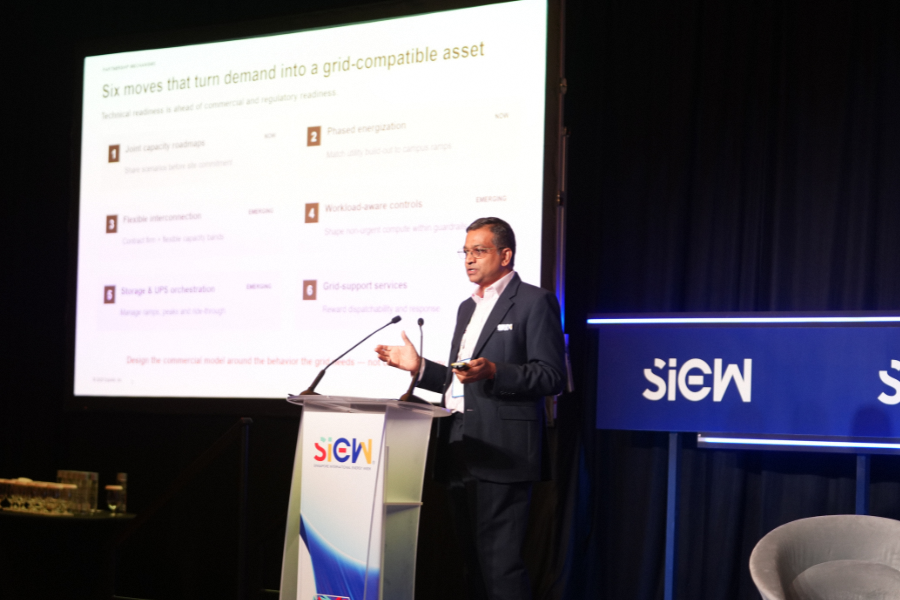
In the keynote, Samson Jeremiah, Senior Director, Design Delivery, Equinix, highlighted how data centres could play a more active role in supporting grid stability. Rather than viewing them solely as electricity consumers, he suggested that treating data centres as partners to the grid could create new opportunities for energy infrastructure design and operations.
The discussion underscored that AI's contribution to grid stability will depend on more than forecasting accuracy or optimisation capabilities. Reliable data, available system flexibility, appropriate market signals and robust safeguards will be essential to translating AI applications into operational improvements. Collaboration between utilities, technology providers, developers and regulators will also be important as adoption expands.
Stay tuned as the conversation evolves throughout the day. Follow @SIEW_sg on Telegram and X (formerly Twitter) for key insights and the latest updates.