Day 1 26 October 2026
 Day 1 Highlights
 SIEW Summit: China Shares Priorities for Building a Cleaner, More Resilient Power System
SIEW Ministerial Dialogue: Connecting Energy Systems Through Regional Cooperation, Infrastructure and Investment
Singapore and Saudi Arabia Announce Joint Intent to Establish a Crude Oil Storage Arrangement in Singapore
IEA Highlights Importance of Diversification and Partnerships to Energy Security
EMA grants Conditional Approval to Sembcorp Utilities for 1.3GW of Electricity Imports
Singapore Energy Lecture: Five Priorities for a Resilient, Competitive Energy Future
Welcome to SIEW 2026!
SIEW Summit: China Shares Priorities for Building a Cleaner, More Resilient Power System
Speaking at SIEW 2026, Shao Guoyong, Board Director, State Grid Corporation of China, outlined four priorities guiding China's efforts to build a cleaner, more secure, intelligent and interconnected electricity system.
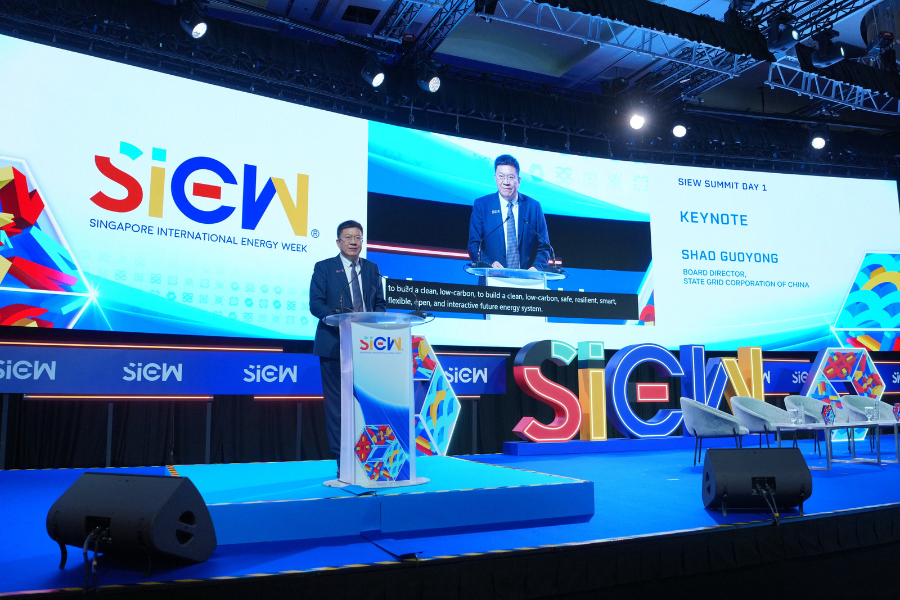
- Scaling up renewable energy: China continues to expand wind and solar capacity as part of its transition towards a low-carbon energy system. According to Mr Shao, China’s cumulative wind and solar capacity reached 1.84 billion kilowatts (1,840 gigawatts) in 2025, citing data from the country’s National Energy Administration.
- Strengthening grid infrastructure and connectivity: China is developing its transmission network through high-voltage direct current (HVDC) and ultra-high-voltage alternating current (UHVAC) technologies to support the integration and transmission of electricity across regions. Mr Shao also highlighted international cooperation on cross-border transmission infrastructure, including connections with neighbouring countries, to strengthen energy security.
- Advancing technology innovation: Research and development efforts are focused on improving power system stability, preventing grid faults and integrating renewable energy.
- Developing a more integrated electricity market: China is advancing a unified national electricity market, supported by mechanisms for electricity trading, ancillary services and capacity compensation.
Stay tuned as the conversation evolves throughout the day. Follow @SIEW_sg on Telegram and X (formerly Twitter) for the latest insights.
SIEW Ministerial Dialogue: Connecting Energy Systems Through Regional Cooperation, Infrastructure and Investment
By Jin Wang
As Asia works towards interconnected energy systems, effective implementation will require sustained cooperation between governments, regulators and industry to strengthen electricity reliability, affordability and long-term energy security.
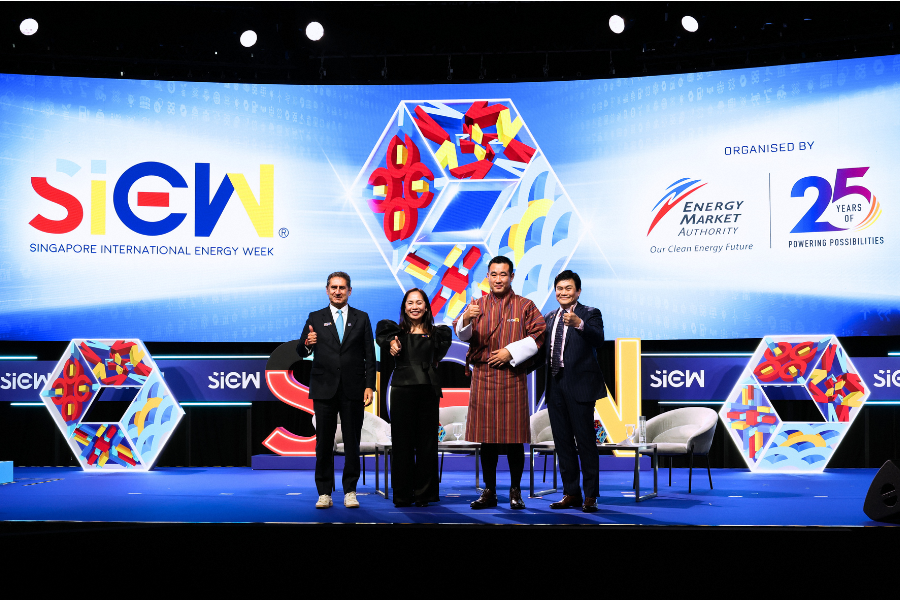
At the SIEW Ministerial Dialogue, senior representatives from the Philippines, Royal Government of Bhutan and the International Renewable Energy Agency (IRENA) discussed how countries can align national energy priorities with regional cooperation. Moderated by Roland Lim of CNA, the discussion explored the practical challenges of developing interconnected energy systems, from grid readiness and regulatory alignment to financing and renewable energy integration.
Singapore and Saudi Arabia Announce Joint Intent to Establish a Crude Oil Storage Arrangement in Singapore
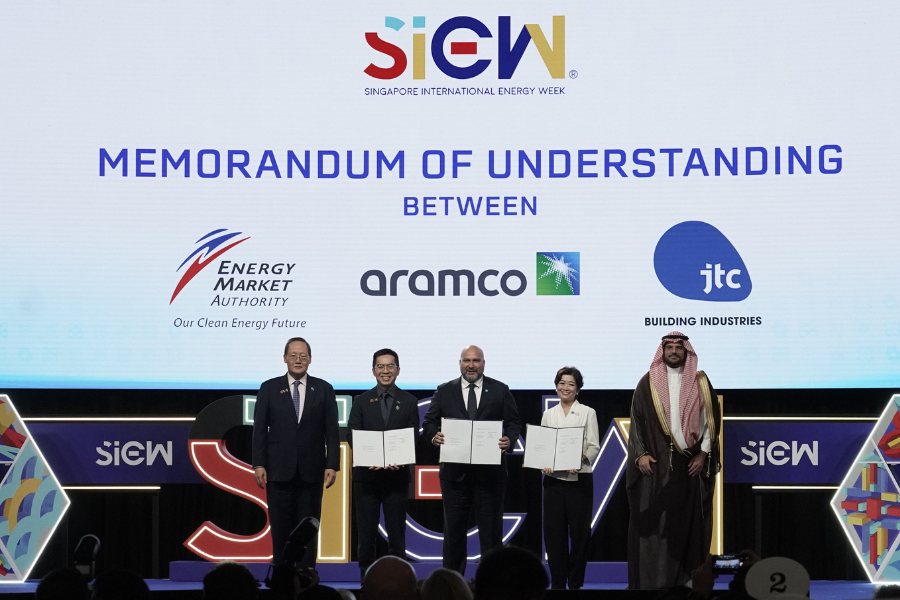
Singapore’s Ministry of Energy, Trade and Industry and the Kingdom of Saudi Arabia’s Ministry of Energy today announced their joint intent to establish a crude oil storage arrangement in Singapore. At SIEW 2026, Singapore’s Energy Market Authority and JTC Corporation exchanged a Memorandum of Understanding with the Saudi Arabian Oil Company, as a first step towards realising this arrangement.
Under the proposed arrangement, Saudi crude oil would be stored at the Jurong Rock Caverns on Singapore’s Jurong Island. Storage operations are expected to commence in the second half of 2027. The stored crude oil will support Singapore’s energy needs in the event of a supply disruption, strengthening Singapore’s energy security and resilience. The arrangement will also enhance the resilience of the Saudi crude oil supply chain in Southeast Asia.
The proposed arrangement marks a new milestone in energy cooperation between Singapore and the Kingdom of Saudi Arabia. It also reflects the two countries’ shared commitment to strengthening regional energy security and recognises Singapore’s roles as a key regional energy hub.
Singapore’s Ministry of Energy, Trade and Industry and the Kingdom of Saudi Arabia’s Ministry of Energy will work closely to advance the arrangement and coordinate its implementation with relevant entities.
Stay tuned as the conversation evolves throughout the day. Follow @SIEW_sg on Telegram and X (formerly Twitter) for the latest insights.
IEA Highlights Importance of Diversification and Partnerships to Energy Security
Delivering his Scene-Setting Presentation at SIEW 2026, Dr Fatih Birol, Executive Director of the International Energy Agency (IEA), highlighted the pressures facing global energy markets and the implications for Southeast Asia. He also outlined how renewed interest in nuclear power and regional cooperation could strengthen long-term energy resilience.
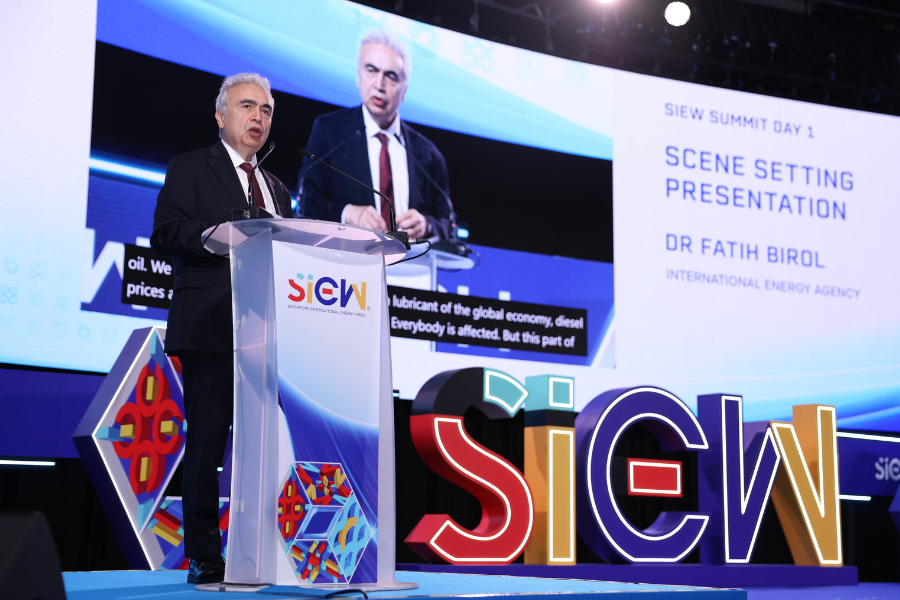
- Importance of energy diversification and trusted partnerships: The current energy landscape is placing significant pressure on global markets. Against this backdrop, Dr Birol urged countries to diversify their energy sources, suppliers and trade routes, while highlighting that trust and reliability are important considerations in international energy partnerships. Meeting growing electricity demand will require countries to draw on a diverse range of energy sources, including solar, wind, hydropower, geothermal energy and natural gas, he noted.
- Nuclear power is gaining momentum as part of the future energy mix: Dr Birol encouraged Southeast Asian countries to consider nuclear energy, highlighting its potential role in meeting growing electricity demand. Beyond conventional nuclear plants, advances in newer technologies are also expanding the options available to countries. Dr Birol emphasised the importance of selecting the right technologies and reliable international partners for nuclear development.
- ASEAN Power Grid could deliver significant benefits: Highlighting the work of the IEA Regional Cooperation Centre in Singapore, Dr Birol reaffirmed the agency's commitment to strengthening Southeast Asia's energy resilience. He identified the ASEAN Power Grid as a particularly important regional priority, noting its potential to enhance energy security, deliver economic benefits and support decarbonisation across ASEAN.
Stay tuned as the conversation evolves throughout the day. Follow @SIEW_sg on Telegram and X (formerly Twitter) for the latest insights.
EMA grants Conditional Approval to Sembcorp Utilities for 1.3GW of Electricity Imports
The Energy Market Authority (EMA) has granted a Conditional Approval to Sembcorp Utilities Pte Ltd (SCU) to import a total of 1.3 gigawatts (GW) of electricity to Singapore.
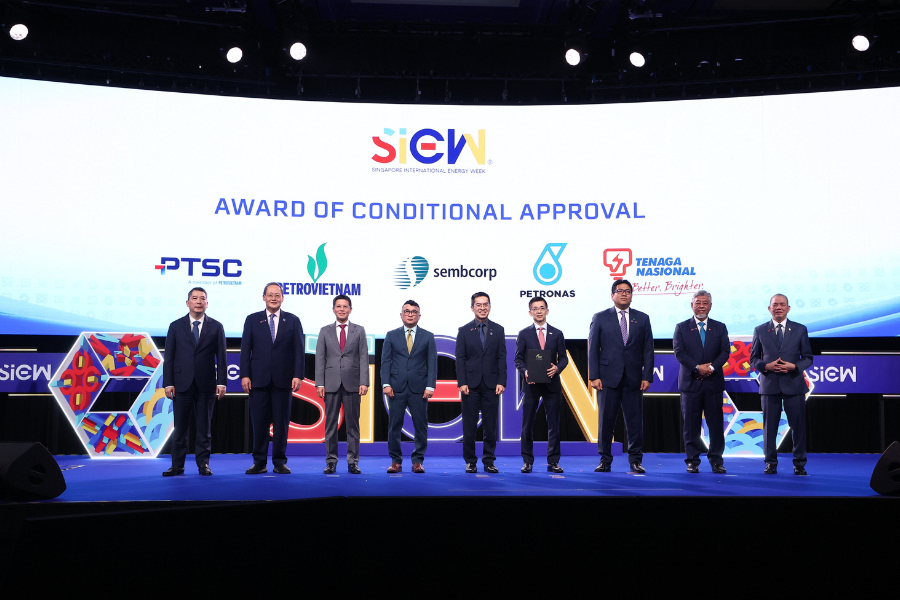
Sembcorp Utilities is working with its consortium partners MY Energy Consortium (MYEC), which comprises Petronas, Tenaga Nasional Berhad (TNB), and Petrovietnam Technical Services Corporation (PTSC) to source and integrate low-carbon electricity from regional and domestic resources, including offshore wind from Vietnam and solar power from Malaysia.
SCU, MYEC and PTSC had earlier signed a Joint Development Agreement in May 2025, at the sidelines of the 46th ASEAN Summit in Kuala Lumpur, Malaysia.
Sembcorp Utilities is working towards commencing import of electricity from the project by 2035. Over the next few years, the consortium will continue to develop the project, including to obtain all requisite approvals from relevant jurisdictions, conclude power purchase agreements with buyers, and secure sufficient financing.
Low-carbon electricity imports form a key part of Singapore’s strategy to decarbonise the power sector. To date, EMA has granted Conditional Approvals and Conditional Licences to electricity import projects from Australia, Cambodia, Indonesia, Malaysia, and Vietnam. EMA will continue to engage companies with credible and commercially viable proposals that can contribute to the decarbonisation of Singapore’s power sector.
Stay tuned as the conversation evolves throughout the day. Follow @SIEW_sg on Telegram and X (formerly Twitter) for the latest insights.
Singapore Energy Lecture: Five Priorities for a Resilient, Competitive Energy Future
Singapore is strengthening its energy resilience and expanding its power infrastructure to meet growing electricity demand. It is also pursuing diverse low-carbon energy options amid global supply disruptions.
At the opening of the Singapore International Energy Week (SIEW) 2026, Puah Kok Keong, Chief Executive, Energy Market Authority (EMA) of Singapore, highlighted the importance of partnerships in strengthening energy resilience. This year's theme, “Connecting Energy Systems, Powering Tomorrow”, reflects the importance of collaboration across the global energy community.
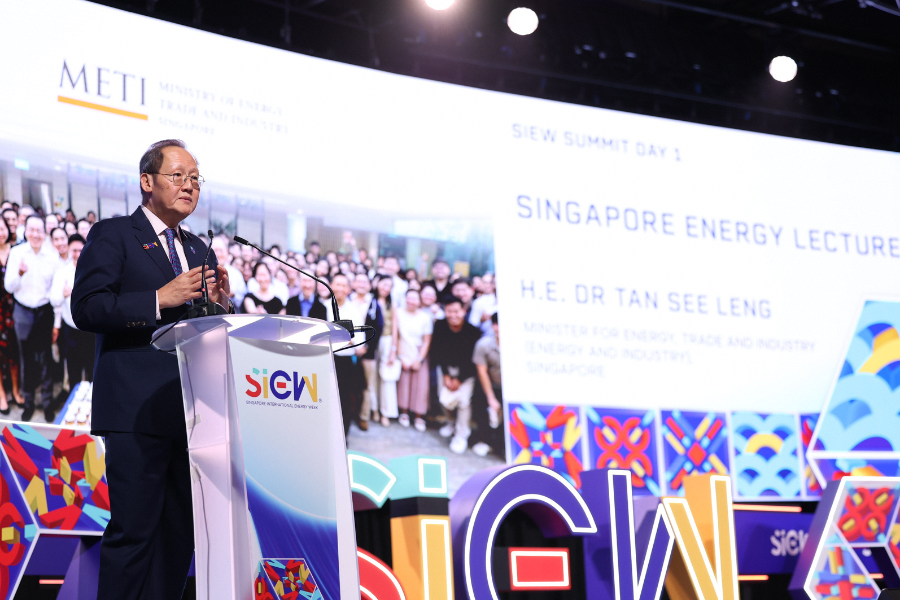
H.E. Dr Tan See Leng, Minister for Energy, Trade and Industry (Energy and Industry), Ministry of Energy, Trade and Industry, Singapore, delivered the Singapore Energy Lecture. He outlined five priorities for Singapore's energy future: Confidence, Competitiveness, Carbon, Connectivity and Cost.
Welcome to SIEW 2026!
Today marks the start of the Singapore International Energy Week (SIEW) 2026, bringing together industry leaders, policymakers and stakeholders under this year’s theme, “Connecting Energy Systems, Powering Tomorrow”.
The day opens with Welcome Remarks from Puah Kok Keong, Chief Executive, Energy Market Authority (EMA) of Singapore, followed by the Singapore Energy Lecture at 9:05am. This year’s address will be delivered by H.E. Dr Tan See Leng, Minister for Energy, Trade and Industry (Energy and Industry), Ministry of Energy, Trade and Industry, Singapore.
As the SIEW Summit unfolds, the SIEW Ministerial Dialogue will feature perspectives from the Honourable Sharon S. Garin, Secretary, Department of Energy, Republic of the Philippines; H.E. Sonam Tashi, Minister for Energy and Natural Resources, Bhutan; and Francesco La Camera, Director-General, International Renewable Energy Agency (IRENA).
The morning sessions also include a presentation by Dr Fatih Birol, Executive Director, International Energy Agency (IEA). Discussions throughout SIEW Summit Day 1 will explore regional connectivity, gas, grid developments, emerging technologies and energy financing. Catch up on all the highlights throughout the day here!
Stay tuned as the conversation evolves throughout the day. Follow @SIEW_sg on Telegram and X (formerly Twitter) for the latest insights.
Events at A Glance
SIEW 2026 Sponsors