Day 3 28 October 2026

 Day 1 Highlights
 Day 2 Highlights
 Day 3 Highlights
 Asian Downstream Summit: Building Resilience in Asia's Downstream Sector
SIEW Energy Insights: Keys to Building a Sustainable ASEAN Power Market
SIEW Energy Insights: Advancing the Frameworks for Regional Power Connectivity
SIEW Energy Insights: Electrification Push Addresses Energy Security and Climate Goals
SIEW Energy Insights: Regulation, Financing and Capabilities for Nuclear Readiness
SIEW Energy Insights: Cross-Border Power Trade Advances as Region Pushes for Grid Integration
SIEW 2026: More Strategic Energy Dialogues Ahead on Day 3
Asian Downstream Summit: Building Resilience in Asia's Downstream Sector
Asia's downstream sector must prepare for energy disruptions by expanding its fuel and technology options.
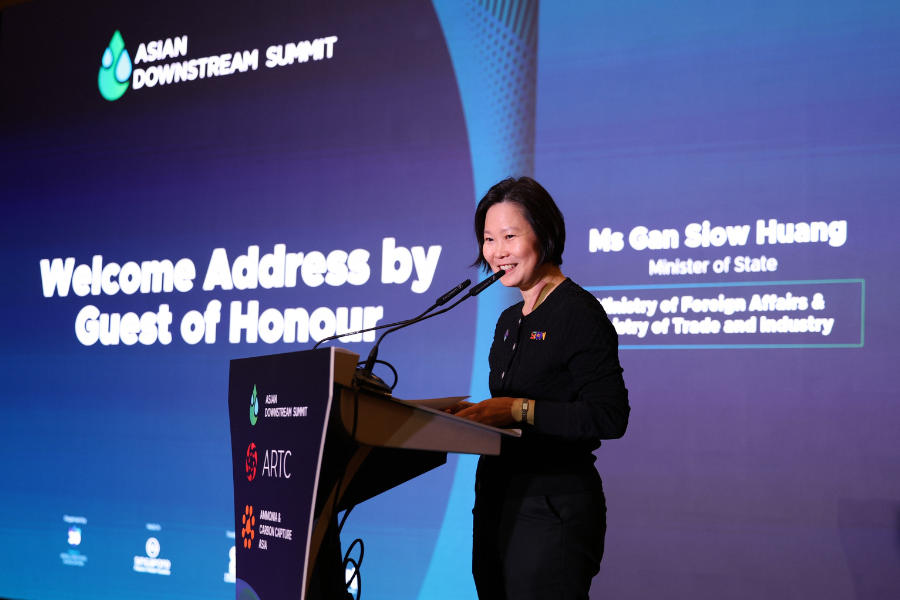
At the Asian Downstream Summit (ADS), H.E. Gan Siow Huang, Minister of State, Ministry of Foreign Affairs and Ministry of Energy, Trade and Industry, Singapore, outlined how the country is responding to this challenge. She highlighted three priorities:
- Diversifying for security and decarbonisation: H.E. Ms Gan noted that recent disruptions to global energy flows have tightened supplies and raised costs. Southeast Asia is also becoming more reliant on energy imports. Diversifying low-carbon fuels and technologies could help strengthen energy security while supporting decarbonisation.
- Investing early in drop-in fuels: Biomethane can reduce emissions while making use of existing gas infrastructure. Keppel Energy, Sembcorp Utilities and Tuas Power have been appointed as aggregators to develop biomethane supply chains to Singapore. Shell also recently delivered Singapore's first ISCC-EU-certified cargo of bio-liquefied natural gas (bio-LNG). The delivery used existing liquefied natural gas (LNG) infrastructure.
- Supporting emerging technologies: Up to S$100 million has been set aside to support the new Decarbonisation Research for Industry, Ventures, and Enterprise (DRIVE) programme. The funding is part of the S$800 million Decarbonisation Grand Challenge.
To support the testing and demonstration of low-carbon technologies, construction of the Low Carbon Technology Translational Testbed (LCT3) has begun on Jurong Island. Its first industry users are IHI Corporation, Amogy and Metha8. Their projects span sustainable aviation fuel, hydrogen production from ammonia and methanol-to-power technologies.
Stay tuned as the conversation evolves throughout the day. Follow @SIEW_sg on Telegram and X (formerly Twitter) for key insights and the latest updates.
SIEW Energy Insights: Keys to Building a Sustainable ASEAN Power Market
By Jin Wang
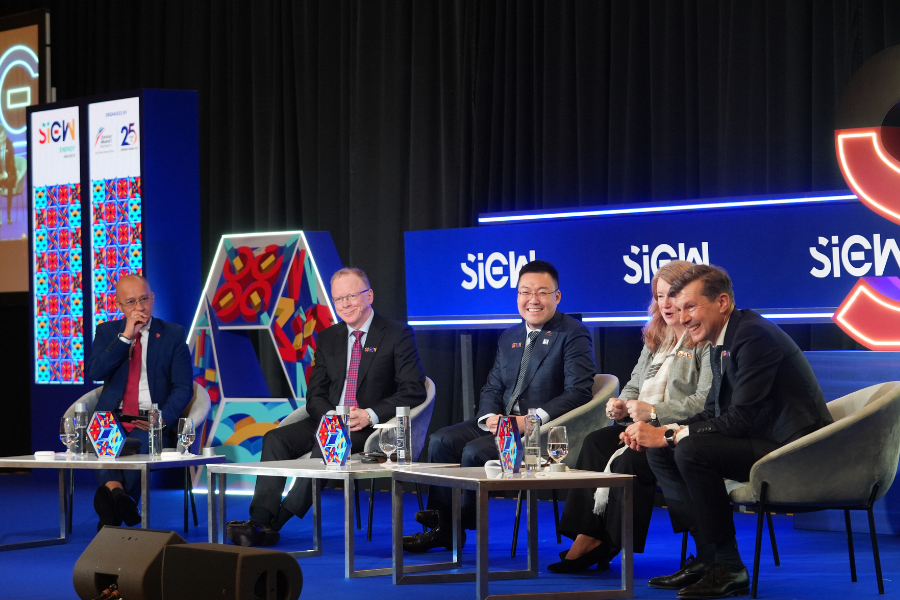
Building a sustainable ASEAN power market will require more than physical interconnections. Clear regulatory frameworks, bankable projects and sustained cross-border cooperation will be essential to turning regional electricity connectivity ambitions into commercially viable projects.
A SIEW Energy Insights panel moderated by Jason Mann, Senior Managing Director, FTI Consulting, examined how international experience could inform the development of the ASEAN Power Grid (APG), while addressing the region's distinct financing, regulatory and infrastructure challenges.
SIEW Energy Insights: Advancing the Frameworks for Regional Power Connectivity
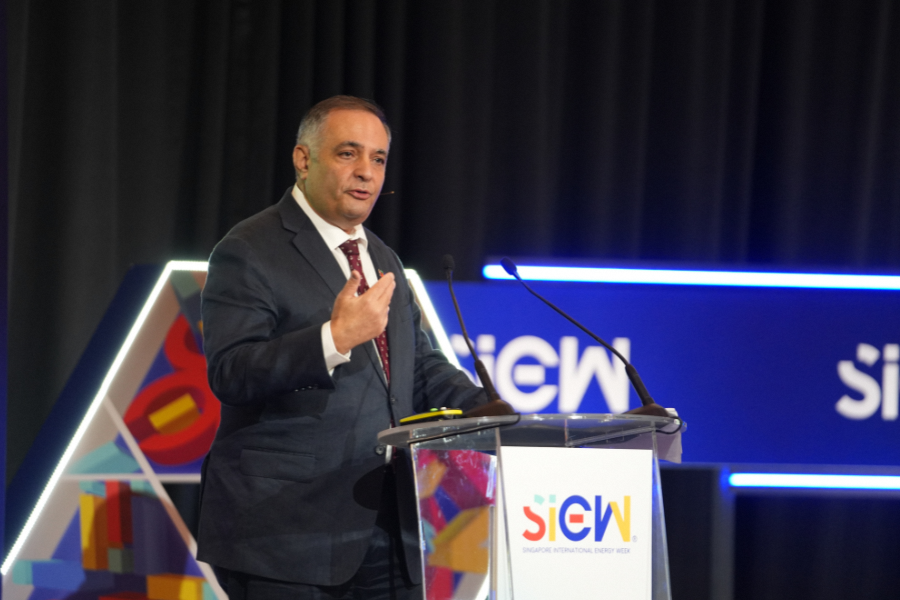
Clear legal frameworks, coordinated governance and predictable revenue models could help unlock cross-border subsea power interconnections in the Association of Southeast Asian Nations (ASEAN). These were among the preliminary findings from Phase Two of the Singapore-US Feasibility Study on Regional Energy Connectivity.
At SIEW Energy Insights, Frank A. Putzu, Senior Advisor, Pacific Northwest National Laboratory, presented findings from the study, conducted by Pacific Northwest National Laboratory and the National Laboratory of the Rockies in collaboration with Singapore's Energy Market Authority (EMA) and the Ministry of Energy, Trade and Industry.
SIEW Energy Insights: Electrification Push Addresses Energy Security and Climate Goals
By Alexandrea Ang and Derek Chua
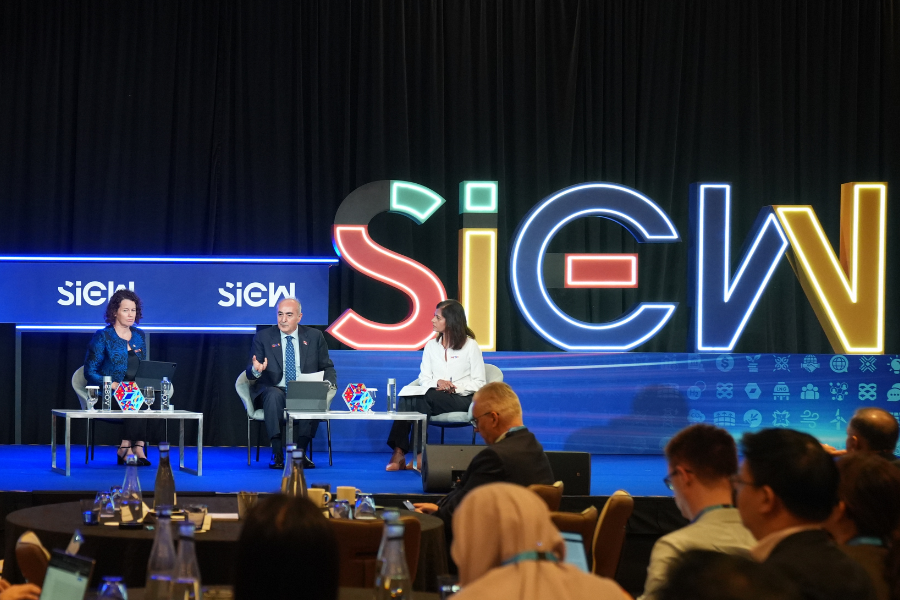
At SIEW Energy Insights, H.E. Amb Sadık Arslan, Ambassador of the Republic of Türkiye to Singapore and Emily Follett, Acting High Commissioner, Australian Department of Foreign Affairs and Trade, discussed how faster electrification, stronger grids and international cooperation could advance climate goals while strengthening energy security.
Learn more from the SIEW Energy Insights session on electrification
SIEW Energy Insights: Regulation, Financing and Capabilities for Nuclear Readiness
As Southeast Asian countries explore nuclear energy, establishing the right regulatory frameworks, workforce capabilities and financing models will be critical to enabling future deployment.
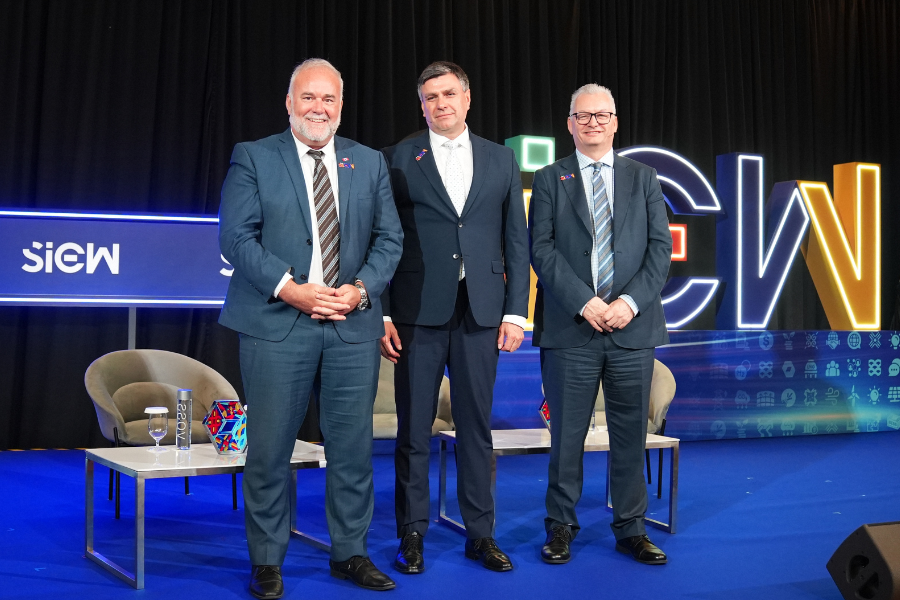
At SIEW Energy Insights, Gary Rose, Executive Vice President, Nuclear, Canada, AtkinsRéalis and President, CANDU International, and Todd Smith, Vice-President of Marketing and International Business Development, Candu International, shared lessons from established nuclear programmes. The discussion was moderated by Matt Firla-Cuchra, Partner and Global Lead, Nuclear Energy, KPMG in the UK.
- Building capabilities before deployment: Mr Rose shared that nuclear programmes require long-term planning, including experienced regulators, skilled workforces, reliable supply chains and supportive policies. These foundations are essential for managing nuclear facilities throughout their operating lifetimes.
- Matching technology to energy needs: Reactor selection should be guided by specific energy requirements. Mr Rose said that large-scale reactors may suit densely populated areas with substantial electricity demand, while small modular reactors could serve remote locations or specialised industrial applications.
- Strengthening investor confidence: Mr Smith emphasised the importance of government involvement in financing nuclear projects, particularly given their significant upfront costs.
The discussion underscored that nuclear readiness extends beyond technology selection. Developing the necessary institutional capabilities, partnerships and financing structures will be fundamental to making informed, long-term decisions.
Stay tuned as the conversation evolves throughout the day. Follow @SIEW_sg on Telegram and X (formerly Twitter) for key insights and the latest updates.
SIEW Energy Insights: Cross-Border Power Trade Advances as Region Pushes for Grid Integration
Cross-border electricity trade is advancing, but deeper grid integration requires more than infrastructure. Aligned regulations, stronger institutions and workforce capabilities will be key to sustaining progress.
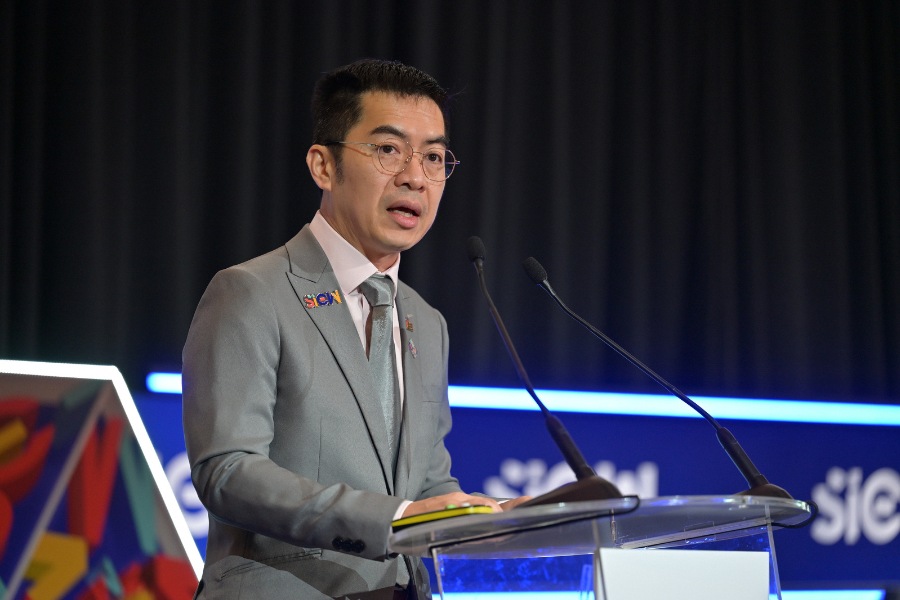
At the opening of SIEW Energy Insights, Puah Kok Keong, Chief Executive, Energy Market Authority (EMA), Singapore, highlighted the country's electricity import plans and regional cooperation. Lin Yang, Deputy Executive Secretary for Programme, United Nations Economic and Social Commission for Asia and the Pacific (ESCAP), outlined a broader approach to energy connectivity. Her vision brought together infrastructure with governance, financing and workforce development.
SIEW 2026: More Strategic Energy Dialogues Ahead on Day 3
Artificial intelligence (AI) and data centres are driving up energy demands. Can grids keep up? Day 3 of the Singapore International Energy Week (SIEW) 2026 turns the spotlight on industry perspectives, regional connectivity and the technologies shaping tomorrow’s power systems.
The morning begins with SIEW Energy Insights, featuring Welcome Remarks from Puah Kok Keong, Chief Executive, Energy Market Authority (EMA) of Singapore, and a Keynote Address by Lin Yang, Deputy Executive Secretary for Programme, United Nations Economic and Social Commission for Asia and the Pacific (ESCAP).
Sessions will explore the outlook for LNG and gas, nuclear readiness and the market frameworks needed for cross-border electricity trade. The programme also includes an update on the Singapore-U.S. Feasibility Study on Regional Energy Connectivity.
At the Spotlight U.S. Forum: Powering Data Centers & Strengthening Grids – The Next Decade, policymakers and industry leaders will discuss how ASEAN can meet growing electricity demand from AI and data centres, alongside the infrastructure and financing required. H.E. Gan Siow Huang, Minister of State, Ministry of Foreign Affairs & Ministry of Energy, Trade and Industry, Singapore, will deliver the Welcome Remarks.
In the afternoon, SIEW TechTable will showcase technologies for grids, AI and data centres, solar and battery storage, and small modular reactors (SMRs) and advanced nuclear.
Stay tuned as the conversation evolves throughout the day. Follow @SIEW_sg on Telegram and X (formerly Twitter) for key insights and the latest updates.
Events at A Glance
SIEW 2026 Sponsors