Day 1 26 October 2026

 Day 1 Highlights
 Day 1 Wrap-Up: SIEW 2026 Opens with a Focus on Connecting Tomorrow’s Energy Systems
SIEW Summit: How Flexible Gas Supply Helps Keep the Lights On
SIEW Summit: Turning Energy Ambitions into Bankable Projects
SIEW Summit: Technology, Policy and Regional Cooperation Underpin Energy Resilience
SIEW Summit: Planning Ahead for the Grid of Tomorrow
SIEW Summit: Gas Shifts from Baseload to a More Flexible Role
SIEW Summit: Open Markets Vital to Global Energy Supply
SIEW Summit: Building a Diversified Energy Mix and Stronger Grids in Asia
SIEW Summit: Accelerating Energy Integration Through Innovation
SIEW Summit: Building Resilient Energy Systems for the ASEAN Region
SIEW Summit: Strategic Approaches for a Cleaner, Resilient Power System
Singapore and Malaysia Renew MOU to Strengthen Energy Cooperation
SIEW Ministerial Dialogue: Connecting Energy Systems Through Regional Cooperation, Infrastructure and Investment
SIEW Summit: Nuclear Energy's Potential for Resilient, Low-Carbon Power
Singapore and Saudi Arabia Announce Joint Intent to Establish a Crude Oil Storage Arrangement in Singapore
IEA Highlights Importance of Diversification and Partnerships to Energy Security
EMA grants Conditional Approval to Sembcorp Utilities for 1.3GW of Electricity Imports
SIEW Summit: Saudi Arabia and Malaysia Chart Pathways to Strengthen Energy Security
Singapore Energy Lecture: Five Priorities for a Resilient, Competitive Energy Future
Welcome to SIEW 2026!
 Day 2 Highlights
 Day 3 Highlights
 Day 4 Highlights
 Day 5 Highlights
Day 1 Wrap-Up: SIEW 2026 Opens with a Focus on Connecting Tomorrow’s Energy Systems
On the opening day of Singapore International Energy Week (SIEW) 2026, H.E. Dr Tan See Leng, Minister for Energy, Trade and Industry (Energy and Industry), Ministry of Energy, Trade and Industry, Singapore, delivered the Singapore Energy Lecture, outlining five priorities for Singapore's energy future: Confidence, Competitiveness, Carbon, Connectivity and Cost.
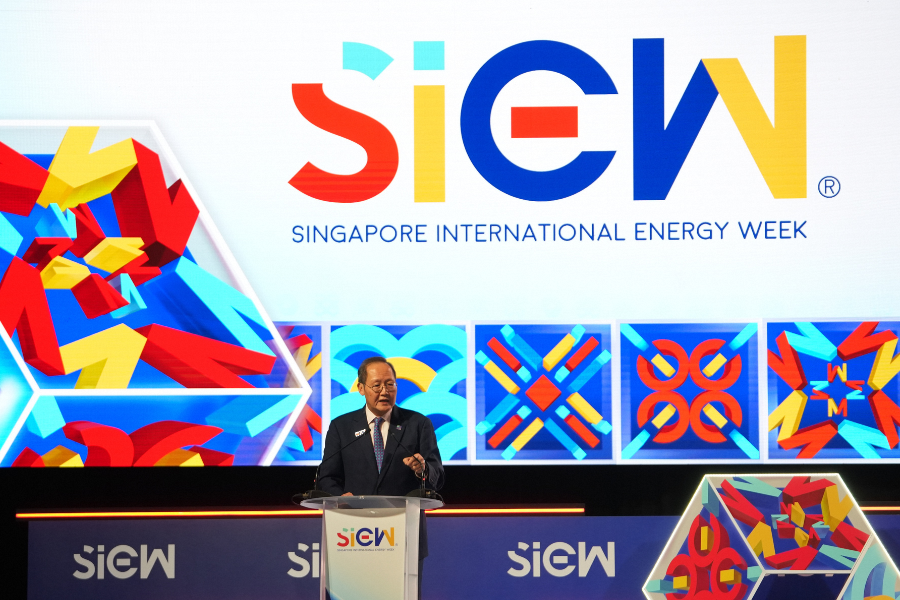
Here’s a recap of Day 1’s key announcements and highlights:
- Singapore Energy Lecture: Five Priorities for a Resilient, Competitive Energy Future
- SIEW Summit: Open Markets Vital to Global Energy Supply
- SIEW Ministerial Dialogue: Connecting Energy Systems Through Regional Cooperation, Infrastructure and Investment
- SIEW Summit Session 1: Building Resilient Energy Systems for the ASEAN Region
- SIEW Summit Session 2: Gas Shifts from Baseload to a More Flexible Role
Tomorrow, SIEW Summit Day 2 continues with more high-level energy dialogues across the Singapore-IEA Forum, Singapore-IRENA High-Level Forum and IAEA@SIEW Forum.
How is your SIEW 2026 experience thus far? Share your thoughts with us by taking a quick survey!
Stay tuned as the conversation evolves throughout the day. Follow @SIEW_sg on Telegram and X (formerly Twitter) for the latest insights.
SIEW Summit: How Flexible Gas Supply Helps Keep the Lights On
Flexible gas supplies can help Asia's power systems respond to changing electricity demand as renewable energy expands. At the Special Session: Gas as the Bridge Between Supply and a Resilient Grid, the discussion examined how long-term gas contracts can offer flexibility. It also highlighted the importance of planning ahead to ensure gas supplies are available when needed.
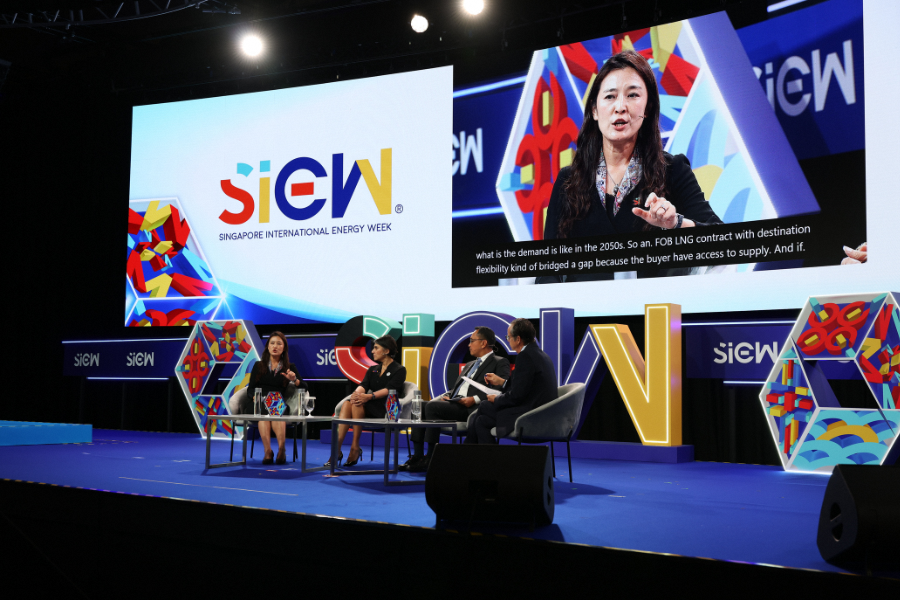
The panellists were Yingying Zhou, Vice President, Head of Asia, Cheniere Energy; Namita Shah, President, Asia and President, OneTech, TotalEnergies; and Rayendra Sidik, Vice President of Commercial, SKK Migas. Martin Houston, Chairman, Omega Oil and Gas, moderated the discussion.
Explore the insights shared during SIEW Summit Special Session
SIEW Summit: Turning Energy Ambitions into Bankable Projects
At SIEW Summit Session 5 ‘Financing Tomorrow’s Energy World’, government, financial and industry leaders discussed how to bridge the gap between available capital and bankable energy projects.
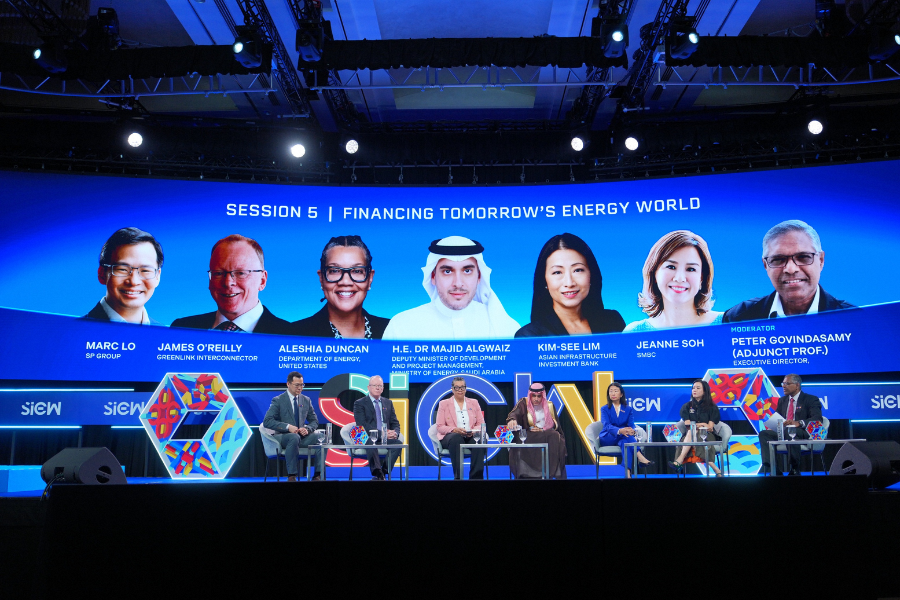
Moderated by Peter Govindasamy from the Energy Studies Institute, National University of Singapore, the session explored:
- Policy certainty is fundamental to investor confidence: H.E. Dr Majid Al-Qwaiz, Deputy Minister of Development and Project Management, Ministry of Energy, Saudi Arabia identified uncertainty as a major barrier to financing long-term energy infrastructure. He highlighted Saudi Arabia's approach to setting national energy priorities, supported by sector reforms and clear governance frameworks, to provide investors with greater confidence.
- Better project preparation can unlock private capital: Kim-See Lim, Chief Investment Officer, Public Sector (Region 1) & Financial Institutions and Funds (Global) Clients, Asian Infrastructure Investment Bank (AIIB), emphasised the need to strengthen early-stage project development, rather than focusing solely on securing financing agreements. She highlighted how multilateral development banks can support project preparation and provide tailored lending arrangements to address investment risks in emerging markets.
- Financing structures must reflect different project risks: Jeanne Soh Managing Director, Head, Structured Finance, Asia, SMBC, noted that bankable projects require predictable cash flows, clear risk allocation and strong regulatory frameworks. She highlighted blended finance and platform financing that bundles smaller renewable energy projects as approaches to mobilising additional private capital. Aleshia Duncan, Deputy Assistant Secretary for International Cooperation in the Office of Nuclear Energy, U.S. Department of Energy, similarly emphasised technology demonstration, predictable licensing and commercial risk-sharing to improve the investment viability of advanced nuclear technologies.
- Strong governance and execution capabilities are critical: James O'Reilly, Chief Executive Officer, Greenlink Interconnector, highlighted how unclear regulations, permitting challenges and weak coordination can delay projects before they reach the financing stage. Drawing on Greenlink's experience, he stressed the importance of credible revenue frameworks, effective construction risk management and strong project governance in securing financing.
- Grid investment must keep pace with electricity demand: SP Group Chief Financial Officer Marc Lo highlighted the increasing scale and speed of grid investment required to support demand from AI, data centres and advanced manufacturing. Beyond capital availability, he emphasised the importance of execution capabilities, long-term operational reliability and managing financial risks across investment cycles.
Stay tuned as the conversation evolves throughout the day. Follow @SIEW_sg on Telegram and X (formerly Twitter) for the latest insights.
SIEW Summit: Technology, Policy and Regional Cooperation Underpin Energy Resilience
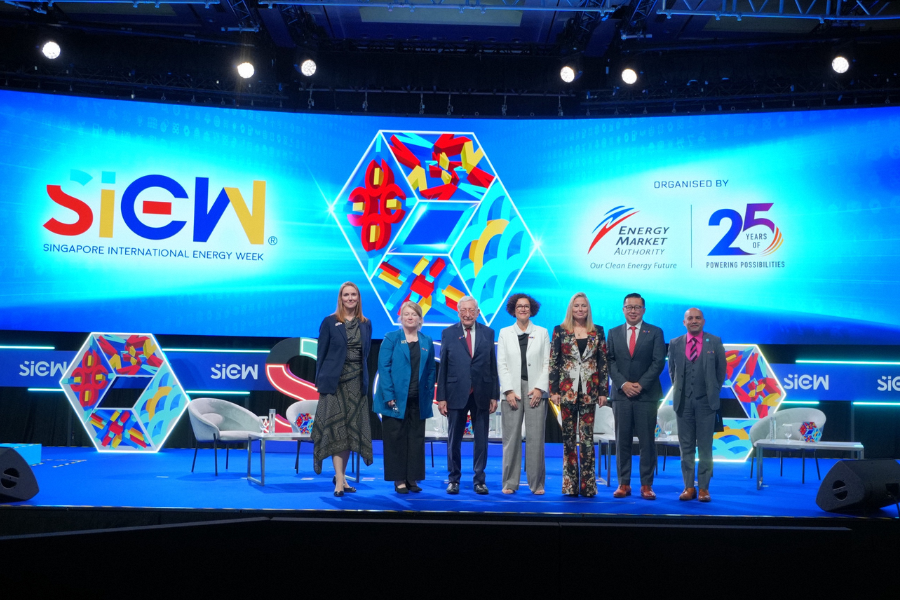
Artificial intelligence (AI), nuclear energy and regional power grids could help strengthen energy security and reliability. Turning that promise into progress calls for clear policies, strong cybersecurity and cross-border cooperation. These were among the key themes explored during Session 4: Technology for Resilient Energy Systems at the SIEW Summit.
SIEW Summit: Planning Ahead for the Grid of Tomorrow
By Derek Chua
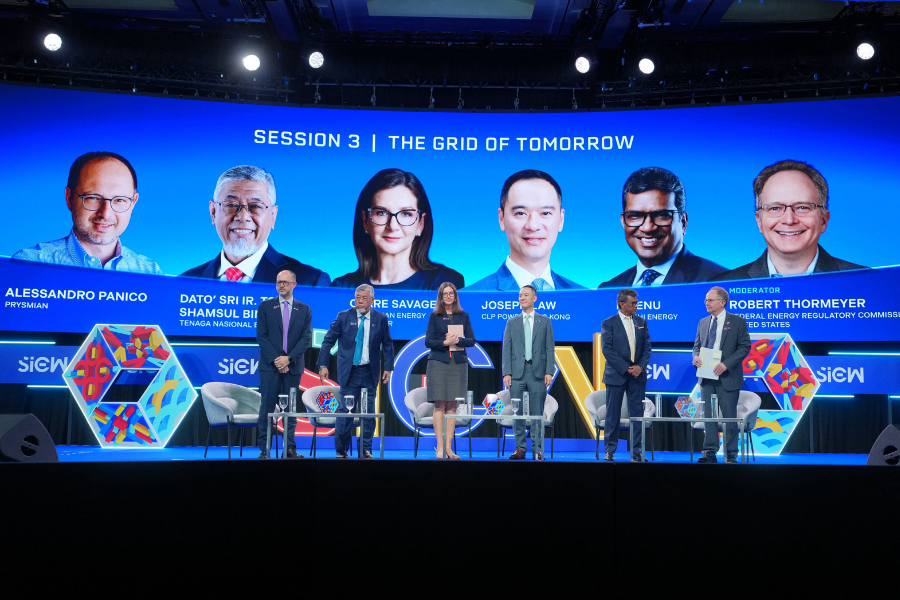
SIEW Summit Session 3: The Grid of Tomorrow brought together regulators, utilities and industry leaders to explore how technological innovation, forward-looking infrastructure planning and regional collaboration can support the energy transition, while ensuring reliable and affordable electricity for consumers.
SIEW Summit: Gas Shifts from Baseload to a More Flexible Role
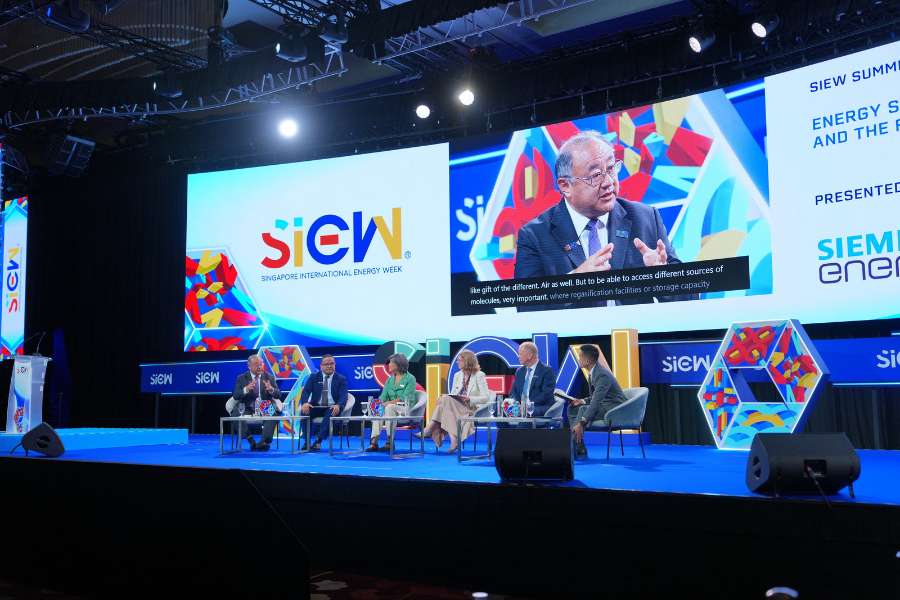
Natural gas is expected to remain an important part of the energy mix, but its role is evolving. As renewable energy deployment expands, gas-fired generation is increasingly valued for supporting electricity systems during prolonged periods of low renewable output. This shift raises questions about infrastructure readiness, investment and energy security.
At SIEW Summit Session 2: Energy Security and the Future of Gas panellists Thorbjörn Fors of Siemens Energy, Leong Wei Hung of SLNG, Anna Collyer of the Australian Energy Market Commission, Judy Chang of the United States Federal Energy Regulatory Commission, and Carlos Alves of Autoridade Nacional do Petróleo explored these challenges. The discussion was moderated by Kenneth Foo, Global Director, Gas and LNG Price Reporting, S&P Global Energy.
SIEW Summit: Open Markets Vital to Global Energy Supply
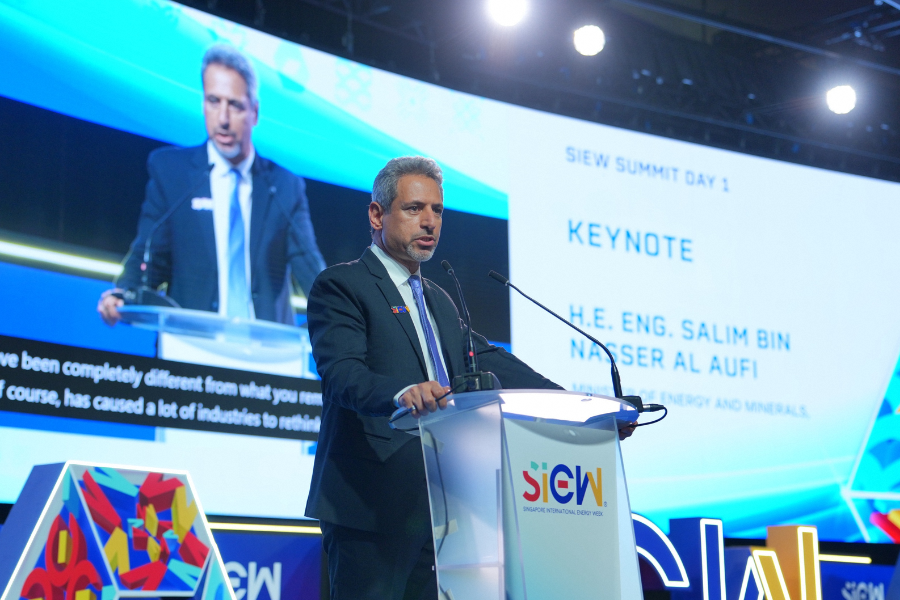
Open markets are vital to building stronger, more resilient global energy systems. This was the central message from H.E. Eng. Salim Bin Nasser Al Aufi, Minister of Energy and Minerals, Oman, in his keynote address at SIEW Summit. He stressed the importance of keeping energy trade flowing despite geopolitical tensions.
SIEW Summit: Building a Diversified Energy Mix and Stronger Grids in Asia
A diversified energy mix, greater efficiency and stronger regional grids will be critical to maintaining energy security, reliability and affordability. During a SIEW Summit Fireside Chat, Eric Gray, Chief Executive Officer, Power, GE Vernova, joined moderator Roland Lim, Presenter, CNA, to discuss how the region can strengthen its power systems while integrating renewables, gas and emerging nuclear technologies.
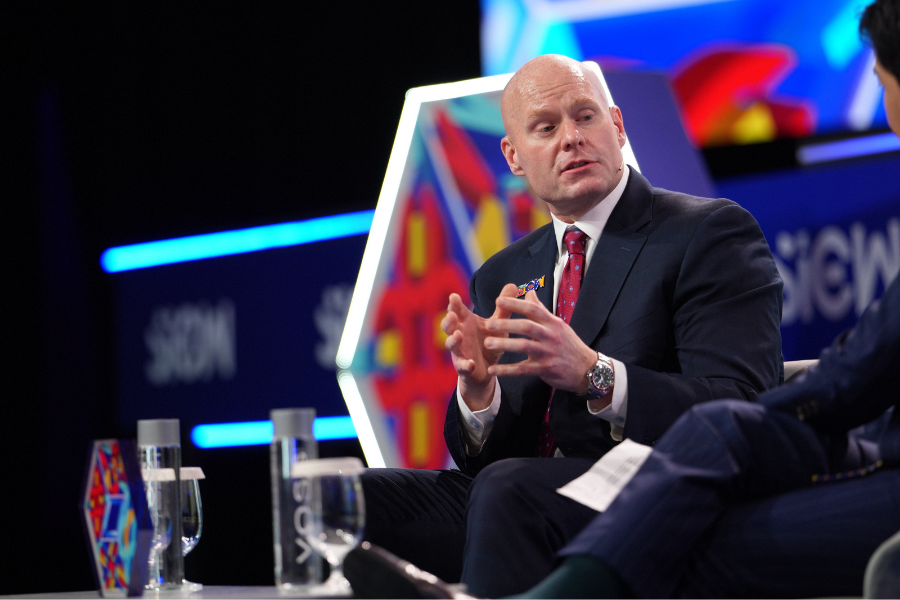
- Diversification is key to energy security: GE Vernova’s Mr Gray emphasised that countries should avoid overreliance on any single form of electricity generation. While renewables should be deployed as quickly and affordably as possible, they must be complemented by flexible and dispatchable generation to maintain grid reliability.
- Gas-fired power generation remains important as renewables expand: GE Vernova is increasing its gas turbine manufacturing capacity to meet growing global demand. Mr Gray noted that gas turbines could potentially operate on alternative fuels such as hydrogen and ammonia, although securing sufficient fuel supplies at scale remains a challenge.
- Nuclear could play a larger role in the coming decade: Looking beyond near-term investments in gas generation, Mr Gray identified nuclear power as a potential contributor to the future energy mix. He highlighted the promise of small modular reactors (SMRs), including GE Vernova's work on a project in Canada. However, deployment will depend on establishing robust regulatory frameworks, permitting processes and a skilled workforce. He also welcomed Singapore's efforts to build the capabilities needed to assess nuclear energy options.
- Regional interconnection and workforce capacity will be critical: Mr Gray highlighted how stronger grids and greater cross-border electricity trade could support ASEAN's decarbonisation goals. Advancing these projects will require sustained government-to-government cooperation. He also identified skilled manpower as a major constraint, with power infrastructure projects competing globally with data centres and advanced manufacturing for resources.
The discussion underscored the importance of addressing both immediate and longer-term energy needs. While flexible gas generation and efficiency improvements can support near-term demand growth, nuclear technologies, stronger grids and regional cooperation could provide additional options over time.
Stay tuned as the conversation evolves throughout the day. Follow @SIEW_sg on Telegram and X (formerly Twitter) for the latest insights.
SIEW Summit: Accelerating Energy Integration Through Innovation
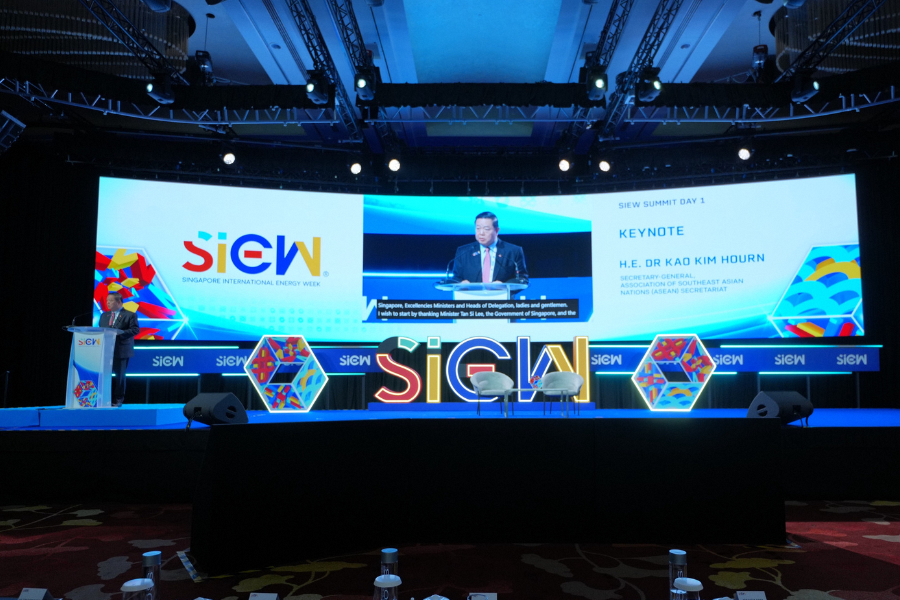
At SIEW Summit, leaders from ASEAN and China's energy sector shared perspectives on strengthening energy security, accelerating low-carbon development and building more interconnected energy systems:
- H.E. Dr Kao Kim Hourn, Secretary-General, ASEAN, outlined three keys for regional energy resilience: improving energy security preparedness, advancing the ASEAN Power Grid and mobilising financing for cross-border infrastructure. He emphasised the need to translate regional commitments into practical projects, supported by coordinated regulations, diversified energy sources and stronger public-private partnerships.
- Zhong Guodong, President, China Huaneng Group, highlighted the company's efforts to advance green energy development, invest in low-carbon technologies and expand international energy cooperation. Drawing on Huaneng's experience in renewables, advanced nuclear technology and carbon capture, he emphasised the importance of technology sharing, common standards and cross-border collaboration in supporting energy security and decarbonisation.
- Li Rui, Vice President, China Southern Power Grid, shared how integrated electricity markets and digital technologies can strengthen grid resilience while accommodating growing renewable energy generation and electricity demand from artificial intelligence (AI). He highlighted the role of coordinated market mechanisms, virtual power plants and demand-side flexibility in improving resource allocation and supporting regional energy integration.
Stay tuned as the conversation evolves throughout the day. Follow @SIEW_sg on Telegram and X (formerly Twitter) for the latest insights.
SIEW Summit: Building Resilient Energy Systems for the ASEAN Region
By Sylvia Ho
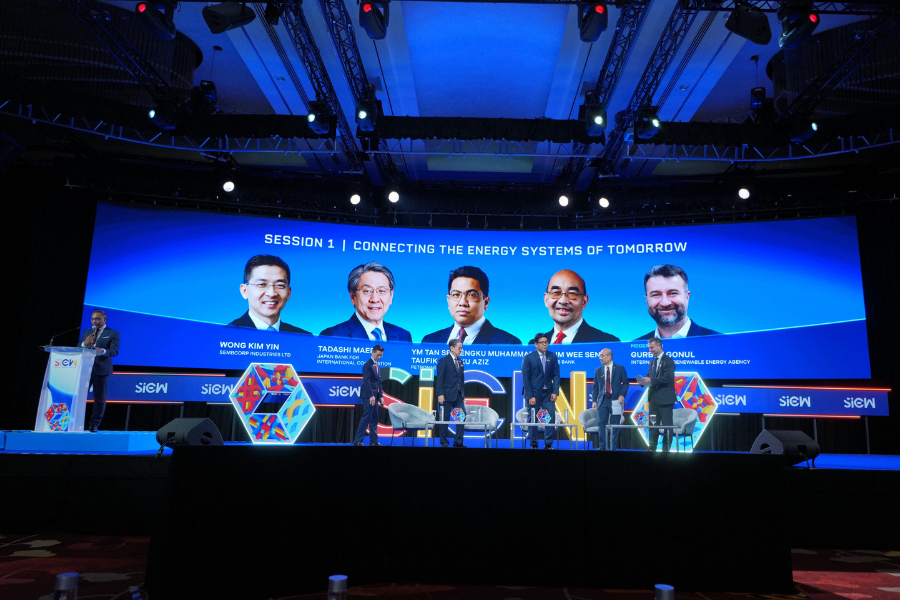
At SIEW Summit Session 1, “Connecting the Energy Systems of Tomorrow”, Gurbuz Gonul, Director, Country Engagement & Partnerships, International Renewable Energy Agency (IRENA), moderated a discussion on strengthening energy security, advancing the ASEAN Power Grid and encouraging investment for connected energy systems. Panellists examined how regional cooperation and investments can strengthen energy resilience while ensuring affordability.
SIEW Summit: Strategic Approaches for a Cleaner, Resilient Power System
Speaking at SIEW 2026, Shao Guoyong, Board Director, State Grid Corporation of China, outlined the strategic approaches guiding China's efforts to build a cleaner, more secure, intelligent and interconnected energy system.
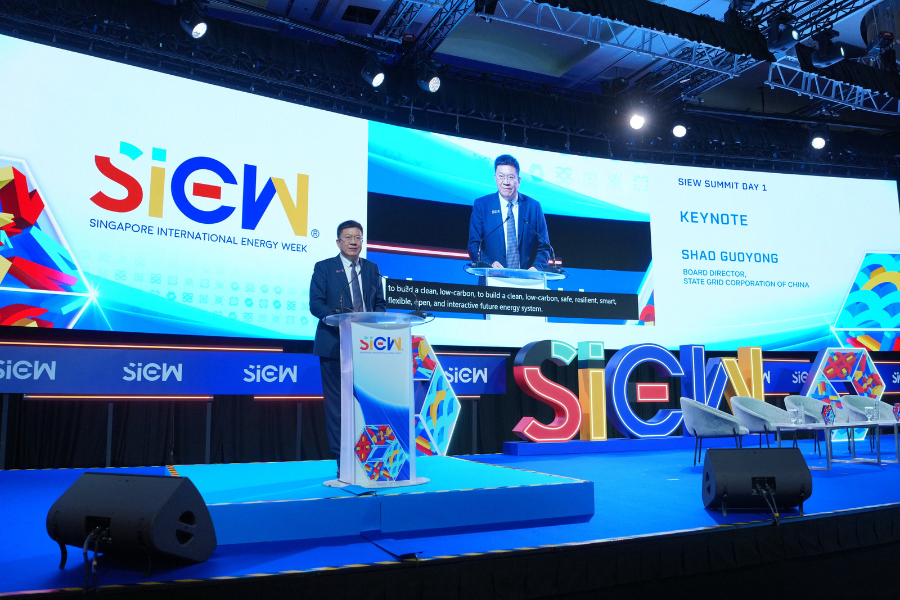
- Scaling up renewable energy: China continues to expand wind and solar capacity as part of its transition towards a low-carbon energy system. According to Mr Shao, China’s cumulative wind and solar capacity reached 1.84 billion kilowatts (1,840 gigawatts) in 2025, citing data from the country’s National Energy Administration.
- Strengthening grid infrastructure and connectivity: China is developing its transmission network through high-voltage direct current (HVDC) and ultra-high-voltage alternating current (UHVAC) technologies to support the integration and transmission of electricity across regions. Mr Shao also highlighted international cooperation on cross-border transmission infrastructure, including connections with neighbouring countries, to strengthen energy security.
- Advancing technology innovation: Research and development efforts are focused on improving power system stability, preventing grid faults and integrating renewable energy.
- Developing a more integrated electricity market: China is advancing a unified national electricity market, supported by mechanisms for electricity trading, ancillary services and capacity compensation.
Stay tuned as the conversation evolves throughout the day. Follow @SIEW_sg on Telegram and X (formerly Twitter) for the latest insights.
Singapore and Malaysia Renew MOU to Strengthen Energy Cooperation
The Energy Market Authority (EMA) of Singapore and Energy Commission of Malaysia (Suruhanjaya Tenaga – ST) signed a renewal of their Memorandum of Understanding (MOU) on the sidelines of SIEW 2026, to further strengthen bilateral cooperation in the energy sector.
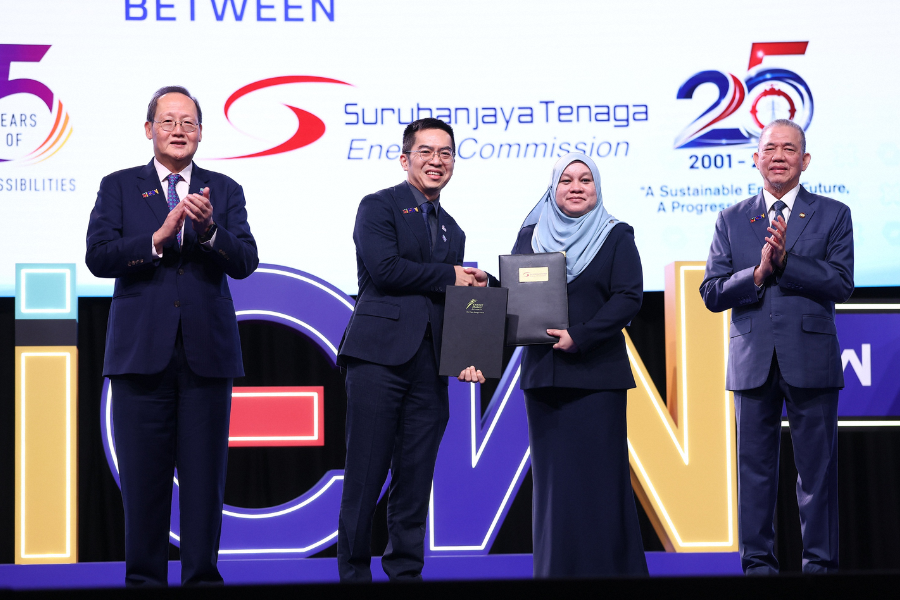
EMA and ST first signed the MOU in October 2020. Since then, both regulators have strengthened their longstanding partnership through regular bilateral dialogues and technical exchanges. The renewal of the MOU is especially meaningful as both regulators celebrate their 25th anniversaries this year.
The renewed MOU provides a framework for both regulators to strengthen technical cooperation, regulatory exchanges and knowledge sharing. The areas of cooperation include the planning and reliability of electricity and piped gas systems, regulation of wholesale and retail electricity markets, implementation of cross-border electricity trading projects, Renewable Energy Certificates (RECs), and interconnection capacity.
The MOU will also strengthen collaboration on solar and energy storage systems.
Stay tuned as the conversation evolves throughout the day. Follow @SIEW_sg on Telegram and X (formerly Twitter) for the latest insights.
SIEW Ministerial Dialogue: Connecting Energy Systems Through Regional Cooperation, Infrastructure and Investment
By Jin Wang
As Asia works towards interconnected energy systems, effective implementation will require sustained cooperation between governments, regulators and industry to strengthen electricity reliability, affordability and long-term energy security.
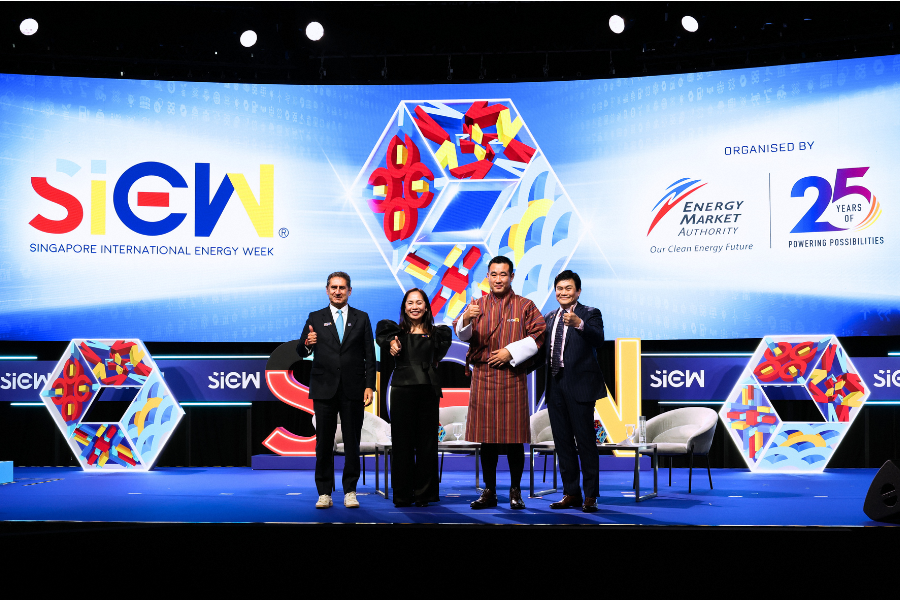
At the SIEW Ministerial Dialogue, senior representatives from the Philippines, Royal Government of Bhutan and the International Renewable Energy Agency (IRENA) discussed how countries can align national energy priorities with regional cooperation. Moderated by Roland Lim of CNA, the discussion explored the practical challenges of developing interconnected energy systems, from grid readiness and regulatory alignment to financing and renewable energy integration.
SIEW Summit: Nuclear Energy's Potential for Resilient, Low-Carbon Power
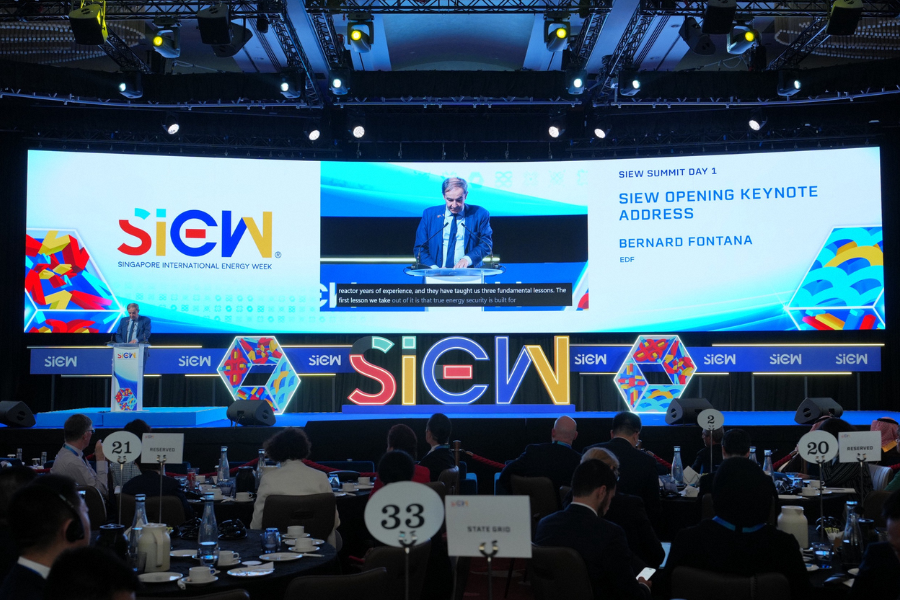
Nuclear energy could play a greater role in meeting Asia's growing electricity demand while supporting energy security and decarbonisation. Realising this potential will require more than technological advances. Countries will also need long-term planning, strong institutions and international cooperation.
These were key messages from Bernard Fontana, Chief Executive Officer, EDF, and Rafael Mariano Grossi, Director General, International Atomic Energy Agency (IAEA), at the SIEW Opening Keynote Address at SIEW Summit Day 1.
Singapore and Saudi Arabia Announce Joint Intent to Establish a Crude Oil Storage Arrangement in Singapore
Singapore’s Ministry of Energy, Trade and Industry and the Kingdom of Saudi Arabia’s Ministry of Energy today announced their joint intent to establish a crude oil storage arrangement in Singapore. At SIEW 2026, Singapore’s Energy Market Authority and JTC Corporation exchanged a Memorandum of Understanding with the Saudi Arabian Oil Company, as a first step towards realising this arrangement.
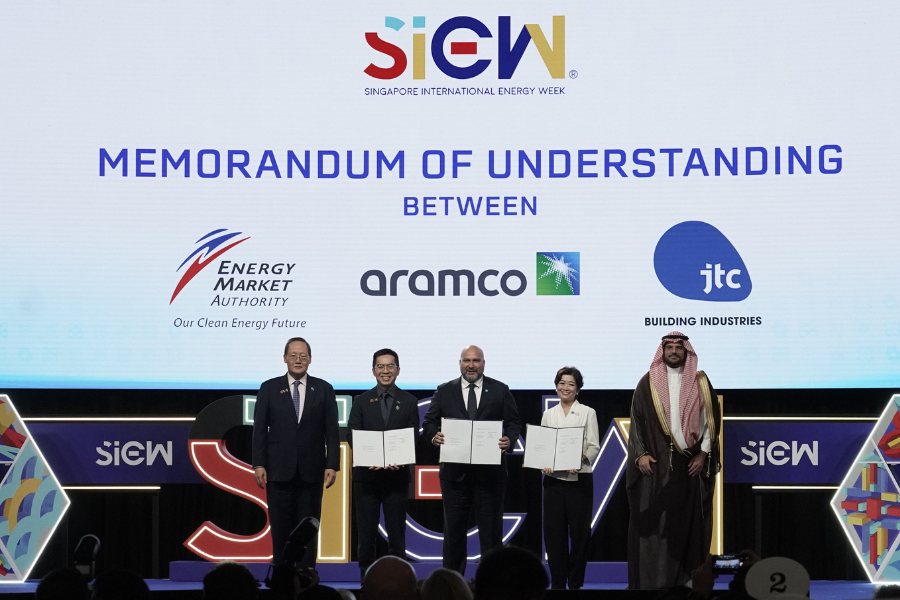
Under the proposed arrangement, Saudi crude oil would be stored at the Jurong Rock Caverns on Singapore’s Jurong Island. Storage operations are expected to commence in the second half of 2027. The stored crude oil will support Singapore’s energy needs in the event of a supply disruption, strengthening Singapore’s energy security and resilience. The arrangement will also enhance the resilience of the Saudi crude oil supply chain in Southeast Asia.
The proposed arrangement marks a new milestone in energy cooperation between Singapore and the Kingdom of Saudi Arabia. It also reflects the two countries’ shared commitment to strengthening regional energy security and recognises Singapore’s roles as a key regional energy hub.
Singapore’s Ministry of Energy, Trade and Industry and the Kingdom of Saudi Arabia’s Ministry of Energy will work closely to advance the arrangement and coordinate its implementation with relevant entities.
Stay tuned as the conversation evolves throughout the day. Follow @SIEW_sg on Telegram and X (formerly Twitter) for the latest insights.
IEA Highlights Importance of Diversification and Partnerships to Energy Security
Delivering his Scene-Setting Presentation at SIEW 2026, Dr Fatih Birol, Executive Director of the International Energy Agency (IEA), highlighted the pressures facing global energy markets and the implications for Southeast Asia. He also outlined how renewed interest in nuclear power and regional cooperation could strengthen long-term energy resilience.
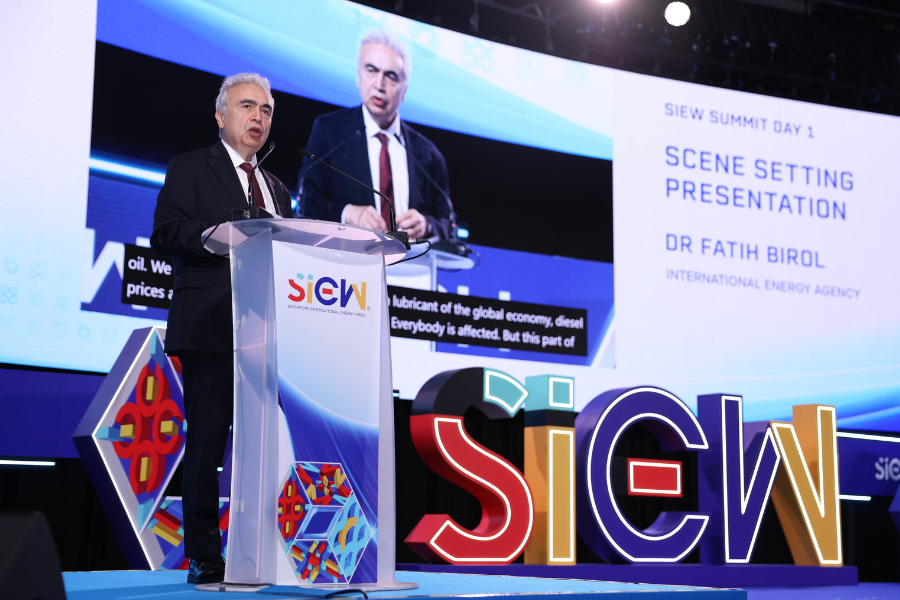
- Importance of energy diversification and trusted partnerships: The current energy landscape is placing significant pressure on global markets. Against this backdrop, Dr Birol urged countries to diversify their energy sources, suppliers and trade routes, while highlighting that trust and reliability are important considerations in international energy partnerships. Meeting growing electricity demand will require countries to draw on a diverse range of energy sources, including solar, wind, hydropower, geothermal energy and natural gas, he noted.
- Nuclear power is gaining momentum as part of the future energy mix: Dr Birol encouraged Southeast Asian countries to consider nuclear energy, highlighting its potential role in meeting growing electricity demand. Beyond conventional nuclear plants, advances in newer technologies are also expanding the options available to countries. Dr Birol emphasised the importance of selecting the right technologies and reliable international partners for nuclear development.
- ASEAN Power Grid could deliver significant benefits: Highlighting the work of the IEA Regional Cooperation Centre in Singapore, Dr Birol reaffirmed the agency's commitment to strengthening Southeast Asia's energy resilience. He identified the ASEAN Power Grid as a particularly important regional priority, noting its potential to enhance energy security, deliver economic benefits and support decarbonisation across ASEAN.
Stay tuned as the conversation evolves throughout the day. Follow @SIEW_sg on Telegram and X (formerly Twitter) for the latest insights.
EMA grants Conditional Approval to Sembcorp Utilities for 1.3GW of Electricity Imports
The Energy Market Authority (EMA) has granted a Conditional Approval to Sembcorp Utilities Pte Ltd (SCU) to import a total of 1.3 gigawatts (GW) of electricity to Singapore.
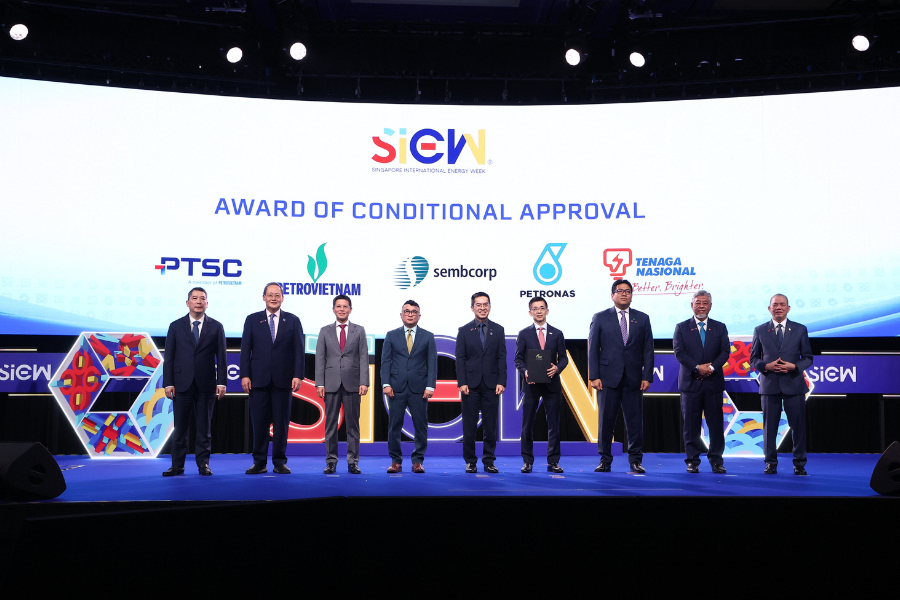
Sembcorp Utilities is working with its consortium partners MY Energy Consortium (MYEC), which comprises Petronas, Tenaga Nasional Berhad (TNB), and Petrovietnam Technical Services Corporation (PTSC) to source and integrate low-carbon electricity from regional and domestic resources, including offshore wind from Vietnam and solar power from Malaysia.
SCU, MYEC and PTSC had earlier signed a Joint Development Agreement in May 2025, at the sidelines of the 46th ASEAN Summit in Kuala Lumpur, Malaysia.
Sembcorp Utilities is working towards commencing import of electricity from the project by 2035. Over the next few years, the consortium will continue to develop the project, including to obtain all requisite approvals from relevant jurisdictions, conclude power purchase agreements with buyers, and secure sufficient financing.
Low-carbon electricity imports form a key part of Singapore’s strategy to decarbonise the power sector. To date, EMA has granted Conditional Approvals and Conditional Licences to electricity import projects from Australia, Cambodia, Indonesia, Malaysia, and Vietnam. EMA will continue to engage companies with credible and commercially viable proposals that can contribute to the decarbonisation of Singapore’s power sector.
Stay tuned as the conversation evolves throughout the day. Follow @SIEW_sg on Telegram and X (formerly Twitter) for the latest insights.
SIEW Summit: Saudi Arabia and Malaysia Chart Pathways to Strengthen Energy Security
Stronger partnerships and regional connectivity can help countries withstand energy supply disruptions. At the Ministerial Keynote Address during SIEW 2026, two ministers outlined their approaches to strengthening energy security.
H.R.H. Prince Abdulaziz bin Salman Al-Saud, Minister of Energy, Kingdom of Saudi Arabia, focused on supply preparedness and cooperation with Singapore. YAB Datuk Amar Haji Fadillah bin Haji Yusof, Deputy Prime Minister and Minister of Energy Transition and Water Transformation, Malaysia, emphasised regional electricity connectivity and investment.
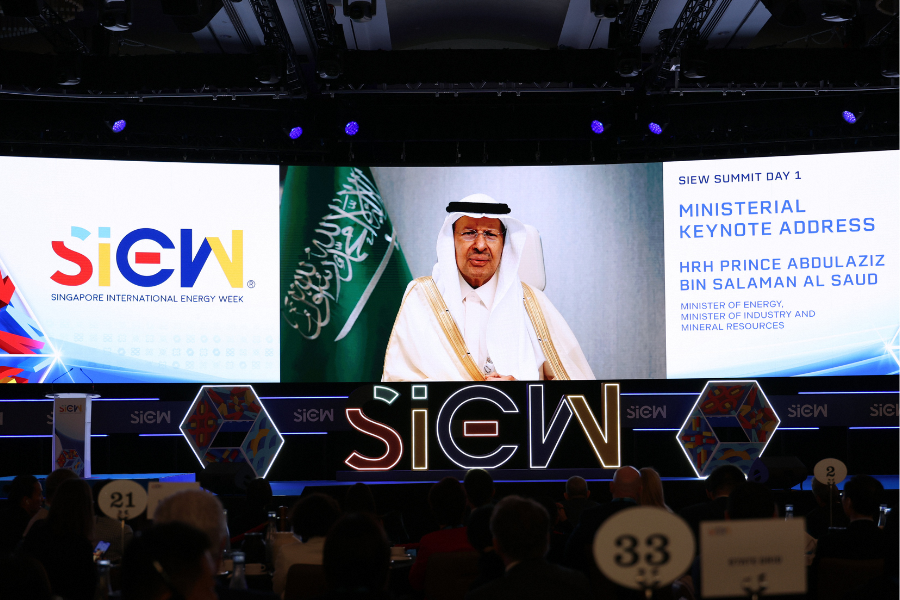
Discover more from the two SIEW Summit Ministerial Keynote Addresses
Singapore Energy Lecture: Five Priorities for a Resilient, Competitive Energy Future
Singapore is strengthening its energy resilience and expanding its power infrastructure to meet growing electricity demand. It is also pursuing diverse low-carbon energy options amid global supply disruptions.
At the opening of the Singapore International Energy Week (SIEW) 2026, Puah Kok Keong, Chief Executive, Energy Market Authority (EMA) of Singapore, highlighted the importance of partnerships in strengthening energy resilience. This year's theme, “Connecting Energy Systems, Powering Tomorrow”, reflects the importance of collaboration across the global energy community.
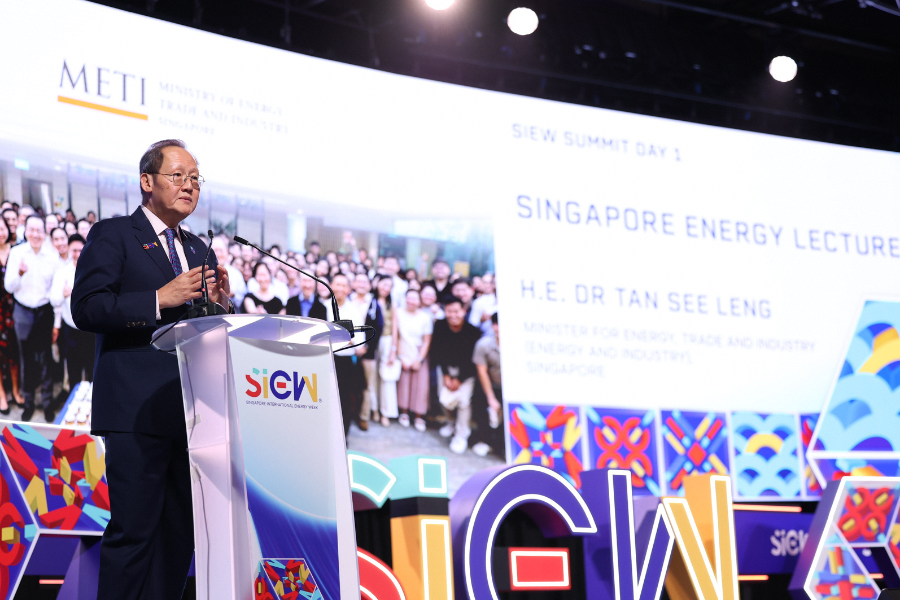
H.E. Dr Tan See Leng, Minister for Energy, Trade and Industry (Energy and Industry), Ministry of Energy, Trade and Industry, Singapore, delivered the Singapore Energy Lecture. He outlined five priorities for Singapore's energy future: Confidence, Competitiveness, Carbon, Connectivity and Cost.
Welcome to SIEW 2026!
Today marks the start of the Singapore International Energy Week (SIEW) 2026, bringing together industry leaders, policymakers and stakeholders under this year’s theme, “Connecting Energy Systems, Powering Tomorrow”.
The day opens with Welcome Remarks from Puah Kok Keong, Chief Executive, Energy Market Authority (EMA) of Singapore, followed by the Singapore Energy Lecture at 9:05am. This year’s address will be delivered by H.E. Dr Tan See Leng, Minister for Energy, Trade and Industry (Energy and Industry), Ministry of Energy, Trade and Industry, Singapore.
As the SIEW Summit unfolds, the SIEW Ministerial Dialogue will feature perspectives from the Honourable Sharon S. Garin, Secretary, Department of Energy, Republic of the Philippines; H.E. Sonam Tashi, Minister for Energy and Natural Resources, Bhutan; and Francesco La Camera, Director-General, International Renewable Energy Agency (IRENA).
The morning sessions also include a presentation by Dr Fatih Birol, Executive Director, International Energy Agency (IEA). Discussions throughout SIEW Summit Day 1 will explore regional connectivity, gas, grid developments, emerging technologies and energy financing. Catch up on all the highlights throughout the day here!
Stay tuned as the conversation evolves throughout the day. Follow @SIEW_sg on Telegram and X (formerly Twitter) for the latest insights.
SIEW Live 2026
SIEW Live: Dr Tan See Leng, Minister for Energy, Trade and Industry (Energy and Industry), Singapore
SIEW Live: Gan Siow Huang, Minister of State, Ministry of Foreign Affairs & METI, Singapore
SIEW Live: YAB Datuk Amar Haji Fadillah bin Haji Yusof, Deputy Prime Minister, Malaysia
SIEW Live: Tan Ching Yee, Chairman, Energy Market Authority
Media Releases
27 October 2026
NEA COMMISSIONS STUDIES TO STRENGTHEN CAPABILITIES IN NUCLEAR SAFETY, REGULATION AND ENVIRONMENTAL PROTECTION
27 October 2026
EMA Appoints Panel of Consultants to Strengthen Nuclear Capability Building Efforts
Events at A Glance
SIEW 2026 Sponsors