Day 2 27 October 2026

 Day 1 Highlights
 Day 2 Highlights
 SIEW 2026 Day 2 Wrap-Up: Revisit the Highlights and Key Energy Dialogues
IAEA@SIEW Forum: Innovation, Infrastructure and Readiness for Advanced Nuclear Technologies
IAEA@SIEW Forum: Building the Foundations for Nuclear Energy Deployment
IAEA@SIEW Forum: Growing Nuclear Interest Brings Opportunities and Deployment Challenges
IAEA@SIEW Forum: Singapore Advances Nuclear Readiness and Asian Cooperation
Singapore-IRENA High-Level Forum: Turning Regional Grid Ambitions into Investment-Ready Projects
Singapore-IRENA High-Level Forum: New Financing Models to Accelerate Renewables Development
Singapore-IRENA High-Level Forum Explores Key Enablers for Clean Energy Investments
Singapore-IRENA High-Level Forum: Financing and Regional Connectivity Key to Renewable Growth
Singapore-IRENA High-Level Forum: Turning Regional Energy Connectivity into Action
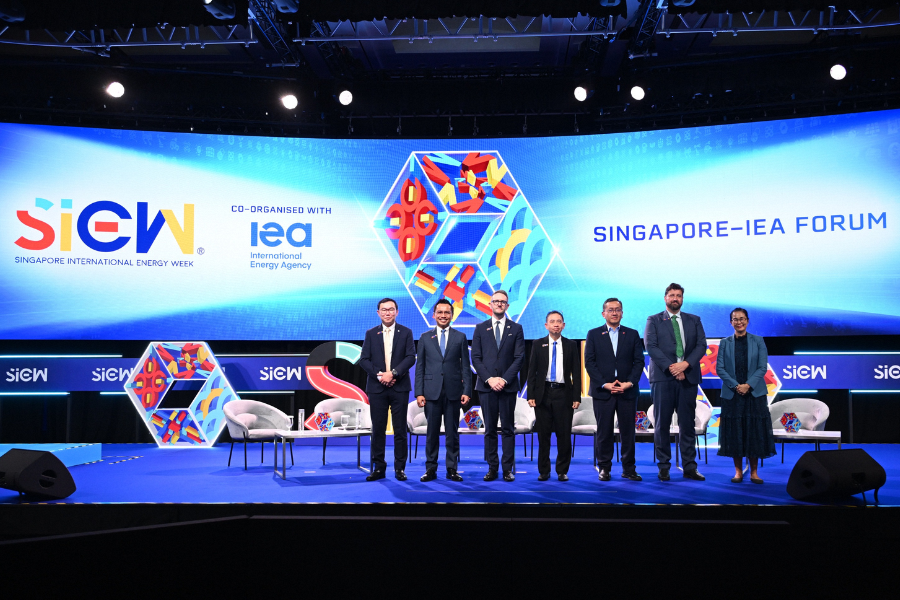
Singapore-IEA Forum: Building a More Secure Energy Future for Southeast Asia
Singapore-IEA Forum: Securing Gas Supply While Keeping Energy Options Open
Singapore and New Zealand to Strengthen Bilateral Energy Cooperation
Singapore and France to Deepen Cooperation on Energy Market Regulation
Singapore-IEA Forum: Tackling Southeast Asia's Energy Security Challenges
Singapore-IEA Forum: Strengthening Energy Security and Connectivity
Asia Gas Markets Conference: Securing Gas Supplies, Powering Growth and Advancing Decarbonisation
Asia Clean Energy Summit: Solar Innovation, Regional Connectivity to Power Clean Energy Progress
SIEW Summit: Building Reliable Clean Energy Systems
SIEW Summit: Diversify, Electrify, Connect for Stronger Energy Security
SIEW Summit: Global Partnerships Advance Regional Grids, Renewables and Nuclear Readiness
SIEW Energy Showcase: Powering Tomorrow’s Connected Energy Systems
SIEW 2026 Day 2: Strategic Insights into Grids, Renewables and Nuclear
 Day 3 Highlights
 Day 4 Highlights
 Day 5 Highlights
SIEW 2026 Day 2 Wrap-Up: Revisit the Highlights and Key Energy Dialogues
Day 2 of the Singapore International Energy Week (SIEW) 2026 brought together policymakers and industry experts at the Singapore-IEA Forum, Singapore-IRENA High-Level Forum and IAEA@SIEW Forum, with discussions spanning energy security, investment and nuclear readiness.
Here’s a recap of Day 2’s highlights:
- SIEW Summit: Diversify, Electrify, Connect for Stronger Energy Security
- Singapore-IEA Forum: Building a More Secure Energy Future for Southeast Asia
- Asia Clean Energy Summit: Solar Innovation, Regional Connectivity to Power Clean Energy Progress
- Singapore-IRENA High-Level Forum: Financing and Regional Connectivity Key to Renewable Growth
Looking ahead, Day 3 will feature SIEW Energy Insights, the Spotlight U.S. Forum and SIEW TechTable. Join us tomorrow for more updates.
How is your SIEW 2026 experience thus far? Share your thoughts with us by taking a quick survey!
Follow @SIEW_sg on Telegram and X (formerly Twitter) for the latest insights and updates.
IAEA@SIEW Forum: Innovation, Infrastructure and Readiness for Advanced Nuclear Technologies
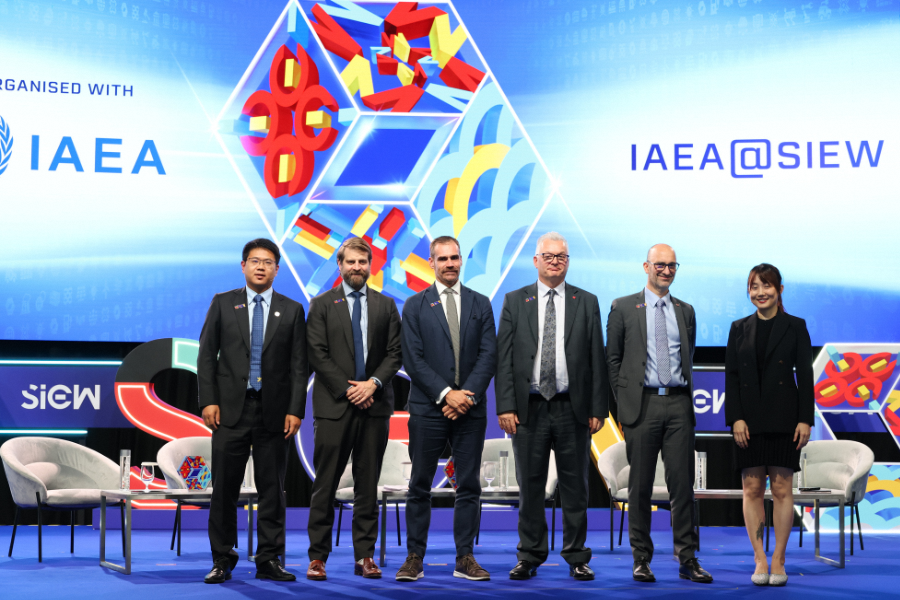
Deploying advanced nuclear technologies requires more than choosing the right reactor. Countries must also prepare for the long-term commitments that nuclear energy entails.
The IAEA@SIEW Forum Session 2 brought together industry leaders to examine the practical challenges of nuclear deployment. The discussion was moderated by Audrey Tan, Assistant News Editor (Environment), The Straits Times. The panel featured:
- Benjamin Reinke, Deputy Chief Commercial Officer, X-Energy
- Gary Rose, Executive Vice President, Nuclear, Canada, AtkinsRéalis, and President, CANDU International, Candu Energy Inc.
- Tom Greatrex, Chief Executive, Nuclear Industry Association, UK
- Lei Huang, Deputy General Manager, Hainan Nuclear Power Co., Ltd
- Antoine Guelfi, Head of BD, International Nuclear Development, EDF
Closing the session, Wei Huang emphasised the need for coordinated action on nuclear development. The International Atomic Energy Agency (IAEA) Director of Planning, Information and Knowledge Management underscored the importance of safety, security and non-proliferation.
IAEA@SIEW Forum: Building the Foundations for Nuclear Energy Deployment
Countries considering nuclear energy must look beyond technology to develop the regulatory frameworks, financing structures and skilled workforce needed for safe deployment.
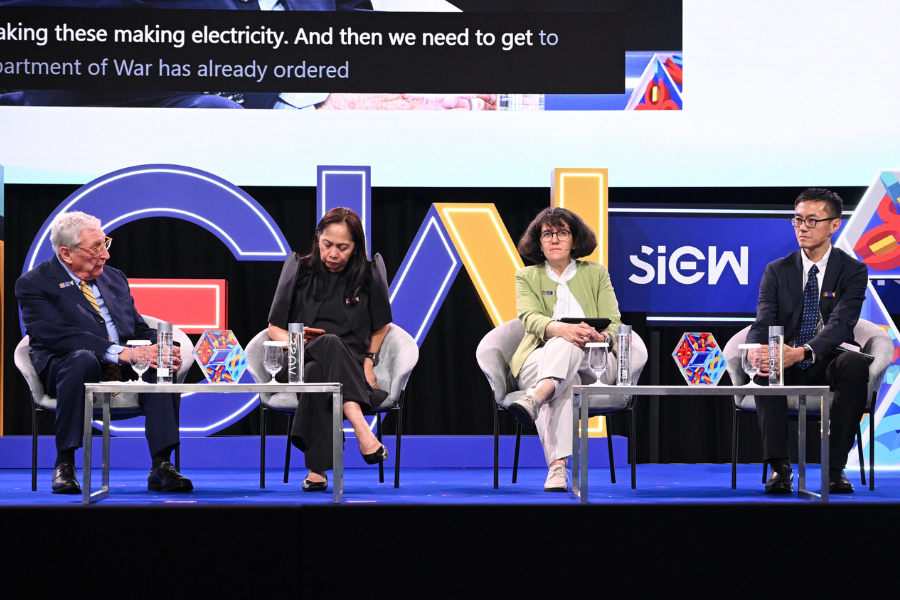
At the IAEA@SIEW Forum session 1 moderated by Wei Huang, Director, Division of Planning, Information and Knowledge Management, International Atomic Energy Agency (IAEA), examined how governments, regulators and industry can build these foundations while managing risks and strengthening investor confidence:
- Singapore is strengthening nuclear readiness before making a deployment decision: Eugene Toh, Assistant Chief Executive, Energy Technologies Division, Energy Market Authority (EMA), reiterated that Singapore has not decided whether to adopt nuclear energy. Its assessment will be guided by science, data and evidence. Preparations include nuclear manpower development programmes, a joint master's programme by the National University of Singapore and Nanyang Technological University, and a planned IAEA Integrated Nuclear Infrastructure Review (INIR) Phase 1.
- National policies must balance ambition with safety: The Honourable Sharon S. Garin, Secretary, Department of Energy, Philippines, shared that the country has incorporated nuclear energy into its energy plan for the 2030s and passed legislation establishing an independent nuclear regulator. Site selection, supplier partnerships and workforce development remain priorities, with safety and transparency guiding progress.
- Regulation and international cooperation can support timely deployment: Stéphanie Guénot Bresson, Commissioner, France's Nuclear Safety and Radiation Protection Authority (ASNR), explained that early dialogue between regulators and developers helps address safety considerations before licensing. International knowledge-sharing and community engagement are also important for maintaining public confidence.
- Tech development must be matched by supply chains and financing: Theodore J. Garrish, Assistant Secretary for Nuclear Energy, U.S. Department of Energy, outlined efforts to advance new reactor designs, upgrade existing facilities and restart closed plants. He identified domestic fuel enrichment, workforce availability and financing for smaller developers as key challenges.
- Reducing project risks is essential to attracting private capital: Kim Han Gon, President, i-SMR Development Agency, described how South Korea's government-supported consortium is working to establish a reference design with clearer evidence on costs, schedules and performance. Ganesh Padmanabhan, Managing Director and Head of Project Finance, DBS Bank, added that government support, public-private partnerships and export credit could help make nuclear projects more bankable.
Follow @SIEW_sg on Telegram and X (formerly Twitter) for the latest insights and updates.
IAEA@SIEW Forum: Growing Nuclear Interest Brings Opportunities and Deployment Challenges
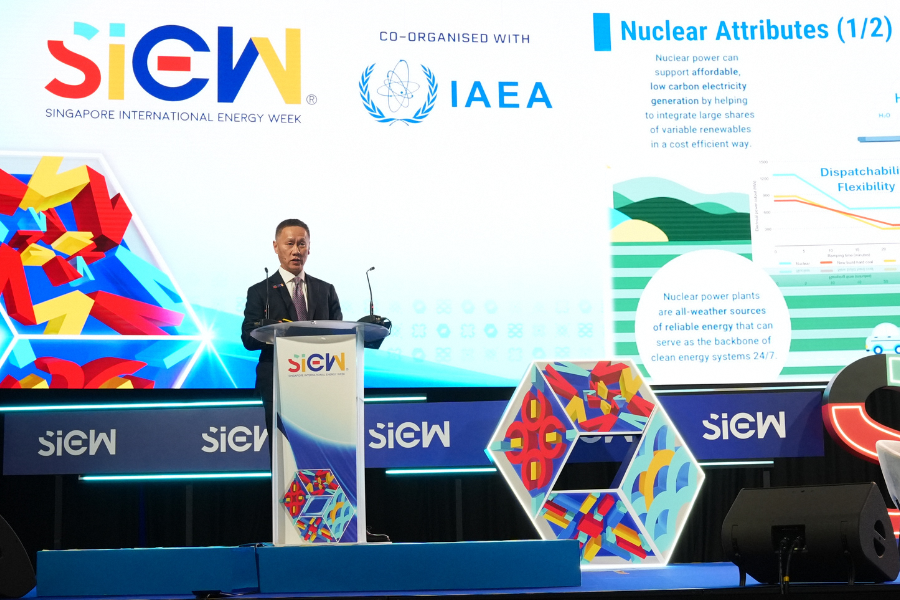
Growing interest in nuclear energy is creating opportunities to expand reliable, low-carbon power, including through emerging reactor technologies. But turning that interest into new projects will require supportive policies, effective regulation and sustainable financing.
At the IAEA@SIEW Forum, Wei Huang examined developments in global nuclear energy and what countries need to consider as they explore its potential. Mr Huang is Director, Division of Planning, Information and Knowledge Management, Department of Nuclear Energy, International Atomic Energy Agency (IAEA).
Explore new developments in global nuclear energy shared during the Forum
IAEA@SIEW Forum: Singapore Advances Nuclear Readiness and Asian Cooperation
Concerns over energy security and the need for cleaner power are renewing interest in nuclear energy across Asia. At the inaugural IAEA@SIEW Forum, this growing interest brought nuclear readiness and regional cooperation into focus.
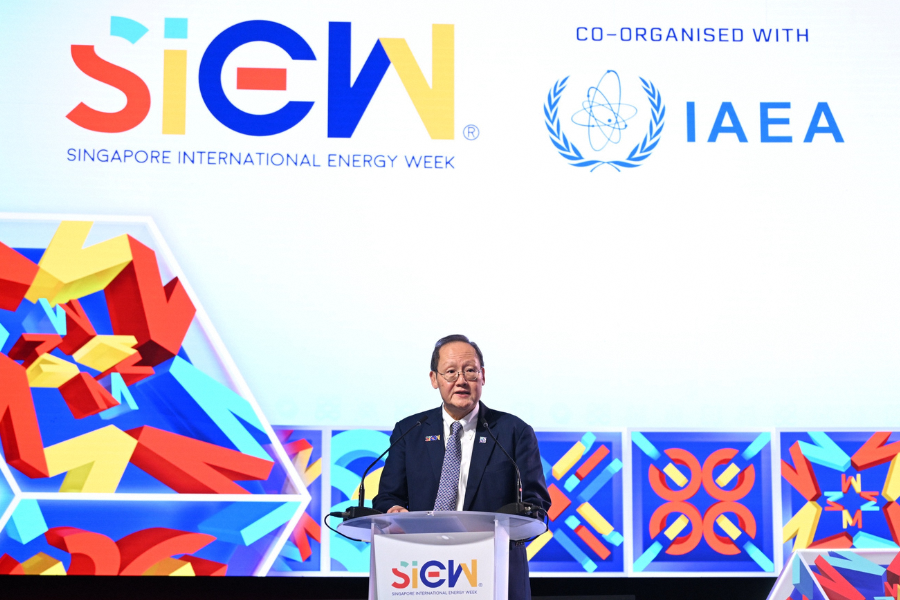
The discussion was framed by welcome remarks from H.E. Dr Tan See Leng, Minister for Energy, Trade and Industry (Energy and Industry), Singapore. It continued with an opening address by Rafael Mariano Grossi, Director General, International Atomic Energy Agency (IAEA).
Singapore-IRENA High-Level Forum: Turning Regional Grid Ambitions into Investment-Ready Projects
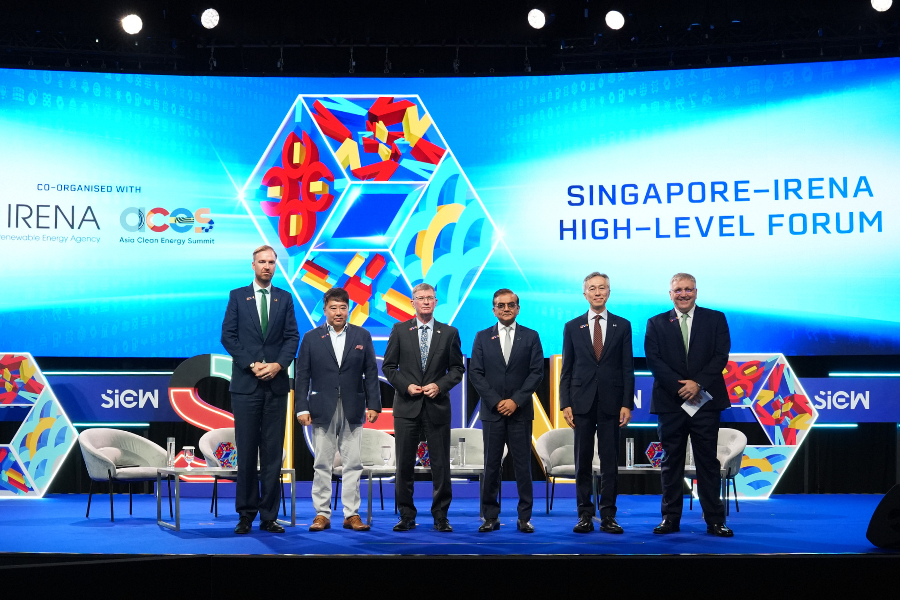
What will it take to turn regional power grid ambitions into investment-ready projects? At the Singapore-IRENA High-Level Forum, panellists discussed how regulation, financing and flexible technologies could advance cross-border energy connectivity.
The focus was Session 2, ‘Connecting the Systems: Financing the Grids and Infrastructure and Greening Industries That Power Tomorrow’.
The panel brought together Frank Phuan, Founder and Chief Executive Officer, Equator Renewables Asia; Randolph Brazier, Global Head of Clean Power Systems, HSBC; and Girish Tanti, Co-Founder, Suzlon Group.
Joining them were Hideaki Iwasaki, Director General, Sectors Department 1 (Energy and Transport Sectors), Asian Development Bank (ADB); and Erik Westergaard, Deputy and Acting Chair, Electricity Authority (New Zealand). Timothy Histed, Acting Head of East Asia Pacific, Multilateral Investment Guarantee Agency (MIGA), moderated the discussion.
Singapore-IRENA High-Level Forum: New Financing Models to Accelerate Renewables Development
By Sylvia Ho
Mobilising capital is only part of the challenge in scaling renewable energy. Clear policies, predictable regulations, effective risk allocation and innovative financing structures are equally important in moving projects from development to financial close.
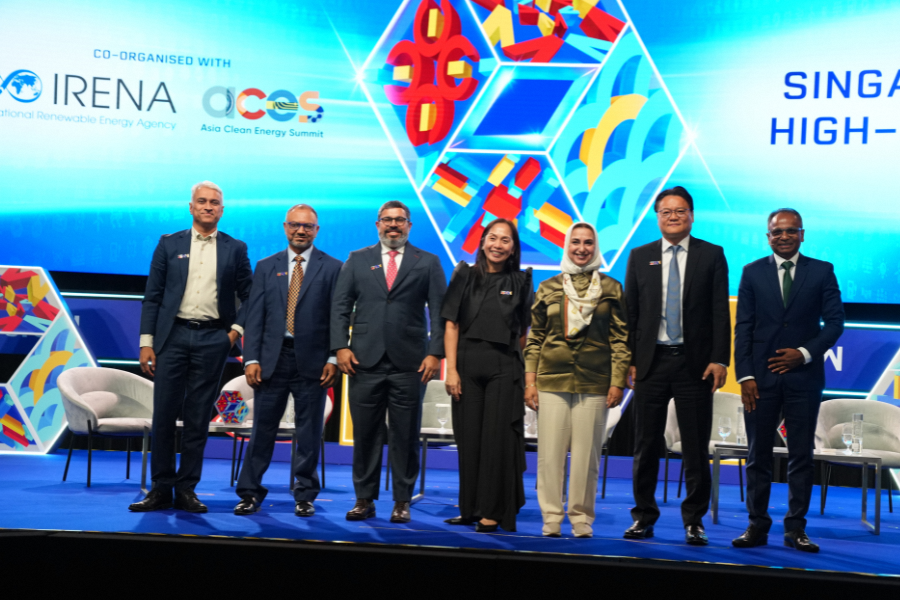
At the Singapore-IRENA High-Level Forum session 1 ‘From Projects to Capital — Unlocking Finance for Renewable Energy Projects’, policymakers, project developers and financial institutions discussed practical approaches to improving project bankability and strengthening investor confidence. The session was moderated by Lavan Thiru, Executive Director, Infrastructure Asia.
Singapore-IRENA High-Level Forum Explores Key Enablers for Clean Energy Investments
Attracting private investment into the energy transition requires more than renewable energy potential. Consistent policies, stronger grid infrastructure and affordable electricity are equally important to turn clean energy ambitions into commercially viable projects.
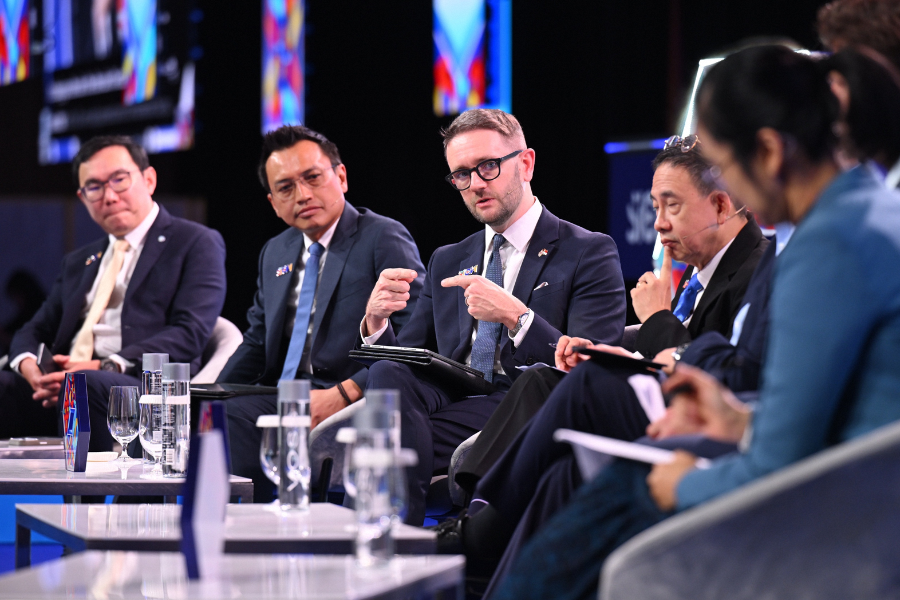
At the Singapore–IRENA High-Level Forum, Chris Stark, Head of UK’s Mission for Clean Power, Department for Energy Security and Net Zero and Datuk Haji Sharbini Suhaili, Group Chief Executive Officer, Sarawak Energy Berhad shared perspectives on enabling investment and strengthening energy connectivity. The fireside chat was moderated by Gurbuz Gonul, Director, Country Engagement & Partnerships, IRENA.
- Policy certainty is critical to unlocking private investment: Mr Stark highlighted how the UK is using longer-term Contracts for Difference, regulated transmission investment and cap-and-floor mechanisms for long-duration energy storage to attract private capital. He emphasised that consistent policies and regulatory certainty have been instrumental in accelerating private investment and clean energy deployment.
- Regional interconnections can expand access to renewable energy: Datuk Haji Sharbini Suhaili outlined Sarawak's efforts to develop the Borneo Grid as part of the wider ASEAN Power Grid. Building on its electricity interconnections with West Kalimantan since 2016 and Sabah since December 2025, Sarawak is exploring further interconnections with Brunei, Singapore and Peninsular Malaysia. He emphasised the importance of clear policy direction and regional cooperation in enabling countries to share their renewable energy resources.
- Complementary energy sources can strengthen reliability and affordability: Datuk Haji Sharbini highlighted Sarawak's approach of combining hydropower with solar generation, using hydropower reservoirs to help balance intermittent solar output. Sarawak is also developing combined-cycle gas plants to support supply reliability as it transitions away from older coal-fired generation.
Follow @SIEW_sg on Telegram and X (formerly Twitter) for the latest insights and updates.
Singapore-IRENA High-Level Forum: Financing and Regional Connectivity Key to Renewable Growth
Unlocking Southeast Asia's renewable energy potential requires more than investment in generation capacity. At Singapore-IRENA High-Level Forum, speakers examined how predictable regulations, effective financing solutions and stronger regional connectivity can help bring projects to fruition.
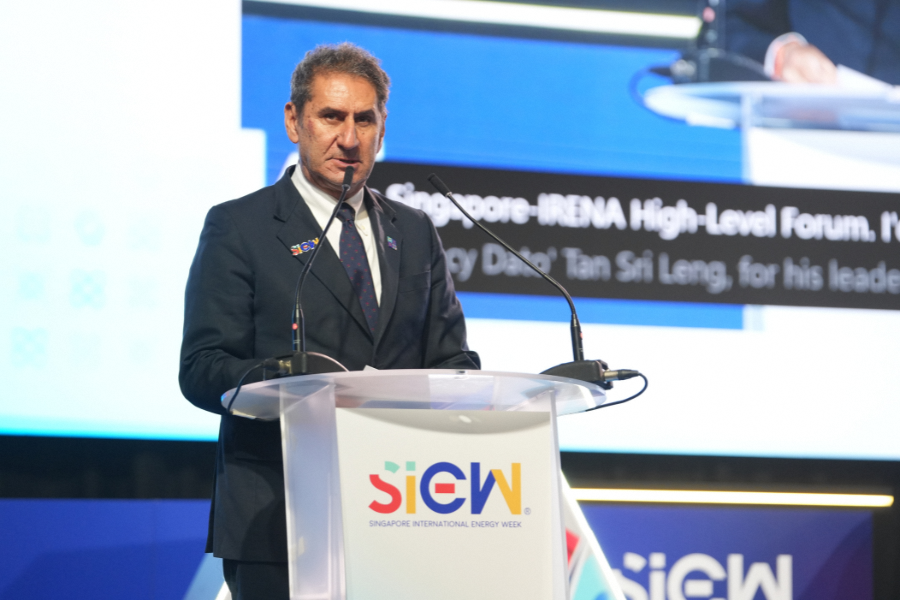
In his Opening Address, Francesco La Camera, Director-General of the International Renewable Energy Agency (IRENA), emphasised the need to advance renewable energy deployment across the region through coordinated policies, investment in interconnected grids and stronger partnerships.
Get the latest insights from Singapore-IRENA High-Level Forum
Singapore-IRENA High-Level Forum: Turning Regional Energy Connectivity into Action
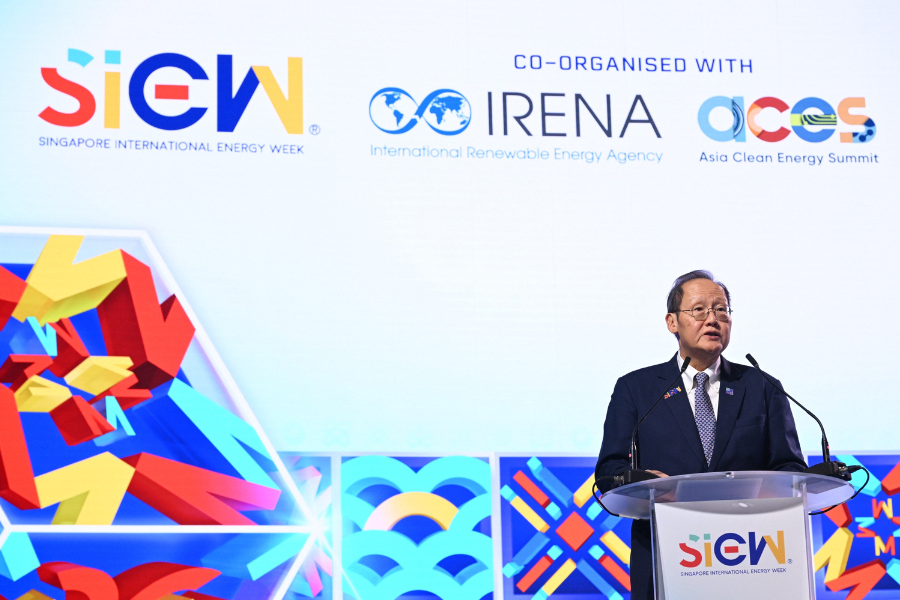
Southeast Asia's renewable energy potential is significant, but unlocking it will require stronger regional connectivity, bankable projects and closer cooperation. In his Welcome Remarks at the Singapore-IRENA High-Level Forum, H.E. Dr Tan See Leng, Minister for Energy, Trade and Industry (Energy and Industry), Singapore, outlined three key areas to accelerate renewable energy deployment and advance the ASEAN Power Grid:
- Accelerating renewable energy deployment: The ASEAN region will need to add around 26 gigawatts (GW) of renewable energy capacity annually to meet its 2030 renewable power capacity target. H.E. Dr Tan emphasised that projects must be commercially viable and bankable to unlock the region's renewable energy potential.
- Advancing the ASEAN Power Grid: H.E. Dr Tan highlighted the need for predictable regulatory frameworks and cross-border coordination to advance the APG. He cited the Energy Market Authority's (EMA) latest Conditional Approval for Sembcorp Utilities to import up to 1.3 GW of low-carbon electricity from and through Peninsular Malaysia, building on two earlier projects in August 2026.
- Harnessing the potential of renewable energy: Greater access to renewable energy and other low-carbon alternatives can help industries reduce emissions and remain competitive. H.E. Dr Tan added that this can also create new opportunities for investment in cleaner industrial processes, technologies and supply chains, supporting the region’s transition towards a lower-carbon economy.
Follow @SIEW_sg on Telegram and X (formerly Twitter) for the latest insights and updates.
Singapore-IEA Forum: Building a More Secure Energy Future for Southeast Asia
By Jin Wang
Strengthening electricity security across ASEAN will require more than connecting national power grids to enable cross-border electricity trade. Reliable national grids are essential to supporting regional electricity flows. Closer regulatory and commercial cooperation will also be needed to make interconnection work.
At the Singapore-IEA Forum Session 2 ‘Strengthening Electricity Security through the ASEAN Power Grid’, panellists explored how regional interconnection could support a more secure electricity supply.
The panel brought together Matt Garbutt, Chief Executive Officer, Australian Energy Regulator; Chris Stark, Head of the UK's Mission for Clean Power, UK Department for Energy Security and Net Zero; Tham Chee Aun, Group Chief Executive Officer, Ditrolic; Jimmy Khoo, CEO, SP PowerGrid Ltd; Ir. Ahmad Sazree Abd Aziz, Chief Distribution Network Officer, Tenaga Nasional Bhd; and Rakhmad Dewanto, Director Corporate Planning and Business Development, PT PLN (Persero). The discussion was moderated by Tan Sue-Ern, Head of the International Energy Agency (IEA) Regional Cooperation Centre, Singapore.
Singapore-IEA Forum: Securing Gas Supply While Keeping Energy Options Open
A more secure gas supply will depend on diversified sources and flexible contracts. At the Singapore-IEA Forum, supply disruptions and price volatility highlighted energy security vulnerabilities across Southeast Asia. The region must meet growing electricity demand while keeping costs manageable and making room for cleaner energy.
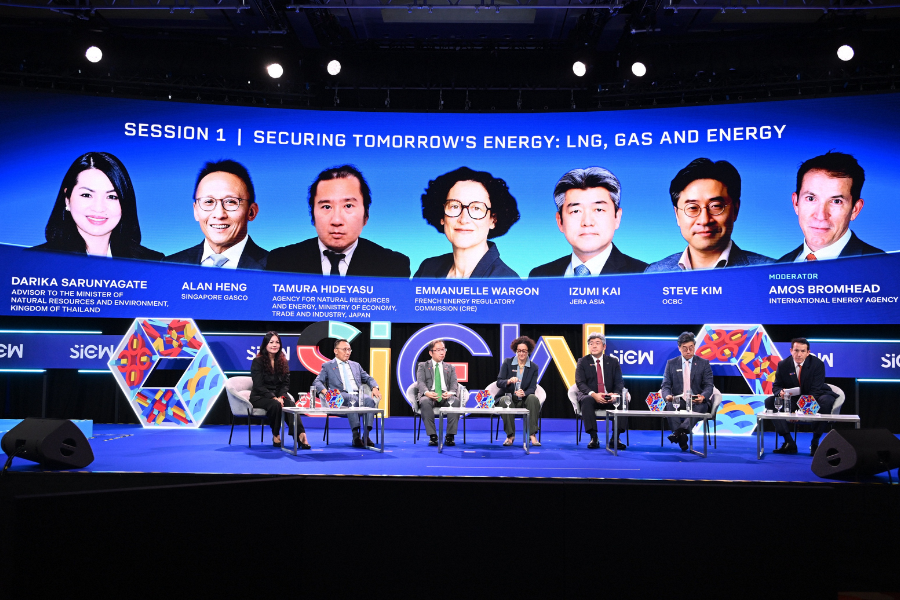
Session 1, on Securing Tomorrow’s Energy: LNG, Gas and Energy Security, featured six panellists, with Amos Bromhead, Chief of Staff at the International Energy Agency (IEA), guiding the discussion. Panellists included:
- Darika Sarunyagate, Advisor to the Minister of Natural Resources and Environment, Kingdom of Thailand
- Emmanuelle Wargon, Chair, French Energy Regulatory Commission (CRE)
- Tamura Hideyasu, Deputy Commissioner for International Affairs from Agency for Natural Resources and Energy, Japan’s Ministry of Economy, Trade and Industry (METI)
- Izumi Kai, Managing Executive Officer, Chief Executive Officer, JERA Asia
- Steve Kim, Head of Structured & Project Finance, Global Corporate Banking, OCBC
- Alan Heng, Chief Executive Officer, Singapore GasCo
Singapore and New Zealand to Strengthen Bilateral Energy Cooperation
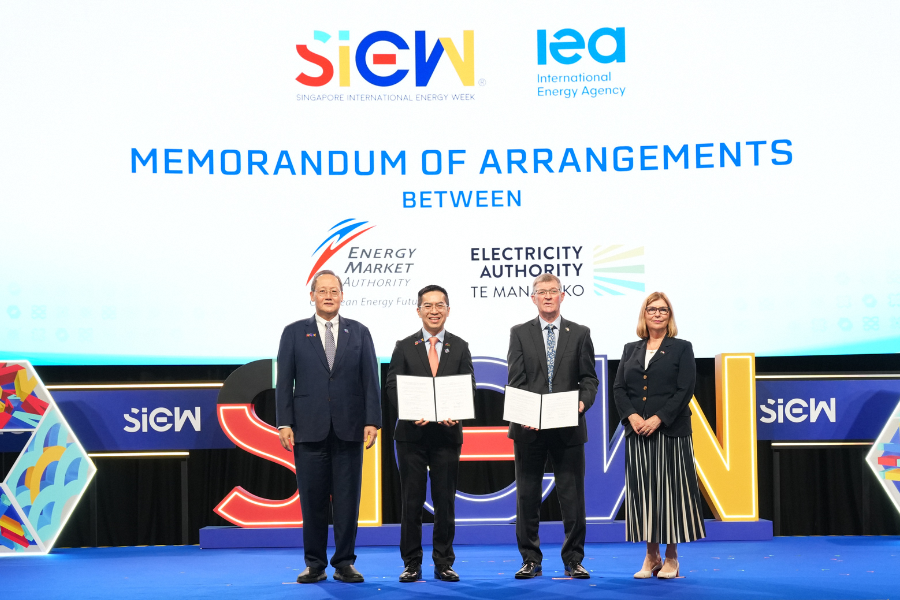
The Energy Market Authority (EMA) of Singapore and New Zealand’s Electricity Authority Te Mana Hiko will deepen cooperation on electricity market regulation and the transition to a low-carbon energy future, under a Memorandum of Arrangements (MOA).
Signed on the sidelines of SIEW 2026, the MOA brings together the regulatory experience and expertise of both agencies. New Zealand’s experience in operating an electricity system with a high share of renewable energy provides useful opportunities for exchanges as Singapore advances the decarbonisation of its power sector.
The MOA also covers cooperation and knowledge sharing in the planning and regulation of electricity markets, as well as the management and integration of low-carbon energy technologies.
Under the partnership, EMA and the Electricity Authority will pursue a range of activities to support closer exchanges between the two agencies. These include staff training, joint research, workshops and seminars, as well as the sharing of knowledge and regulatory experiences.
Follow @SIEW_sg on Telegram and X (formerly Twitter) for the latest insights and updates.
Singapore and France to Deepen Cooperation on Energy Market Regulation
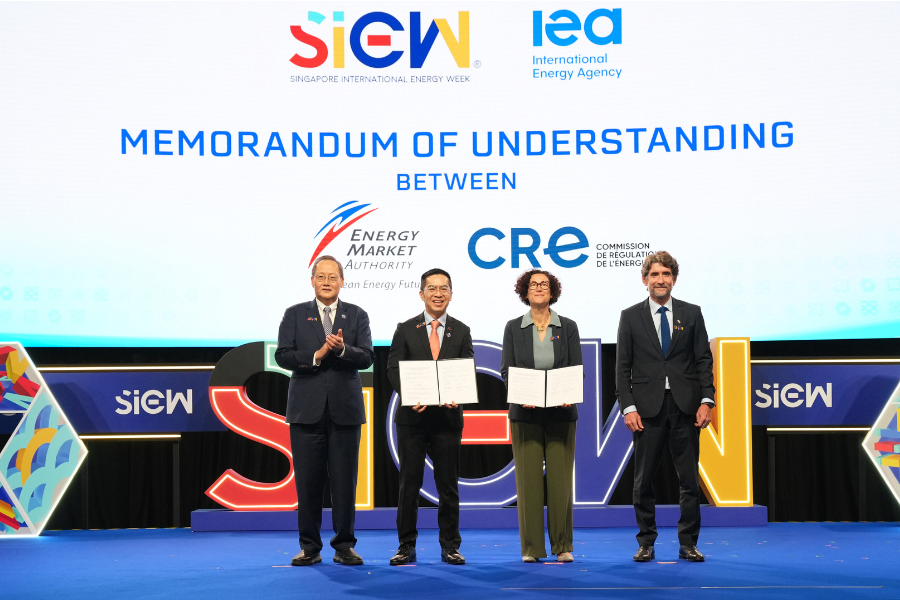
The Energy Market Authority (EMA) of Singapore and French Energy Regulator (Commission de régulation de l’énergie - CRE) have inked a Memorandum of Understanding (MOU) to deepen their cooperation on energy market regulation and benefit from each other’s experience on regional interconnectivity, and low-carbon energy technologies.
Signed on the sidelines of SIEW 2026, the MOU will strengthen the cooperation between EMA and CRE in regulation of electricity and gas markets. It will also tap on France’s extensive experience in cross-border electricity interconnections and integrated electricity markets in Europe. This provides opportunities for both parties to share insights on the regulatory and market frameworks needed to support greater electricity connectivity and the energy transition.
The partnership will be supported by a range of practical exchanges, including knowledge and experience sharing, technical cooperation through training, and study visits, as well as joint workshops and seminars. EMA and CRE will also facilitate high-level dialogues and seek opportunities to collaborate at regional and international platforms, including the Association of Southeast Asian Nations (ASEAN) and SIEW.
Follow @SIEW_sg on Telegram and X (formerly Twitter) for the latest insights and updates.
Singapore-IEA Forum: Tackling Southeast Asia's Energy Security Challenges
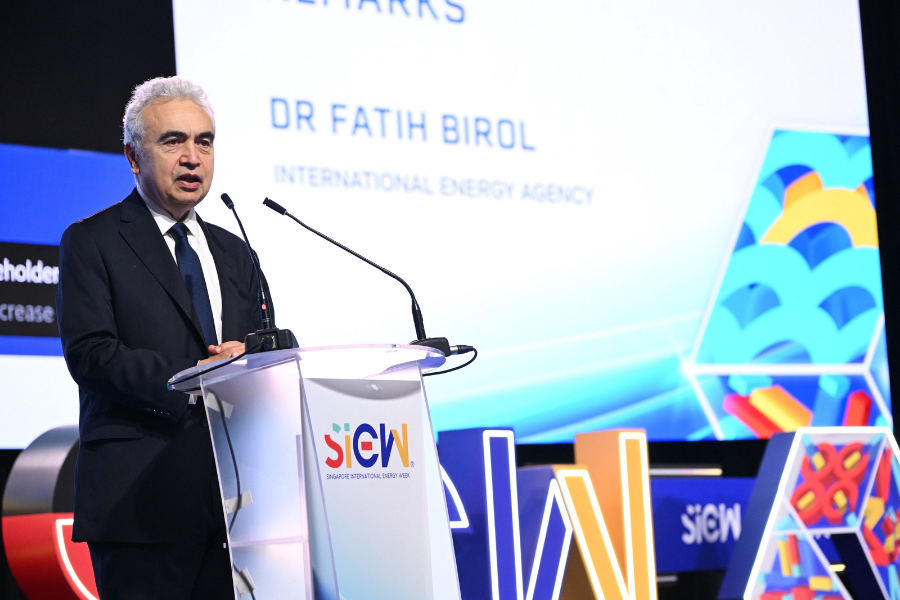
Energy security in Southeast Asia increasingly depends on diversified energy sources, resilient supply chains and stronger regional cooperation.
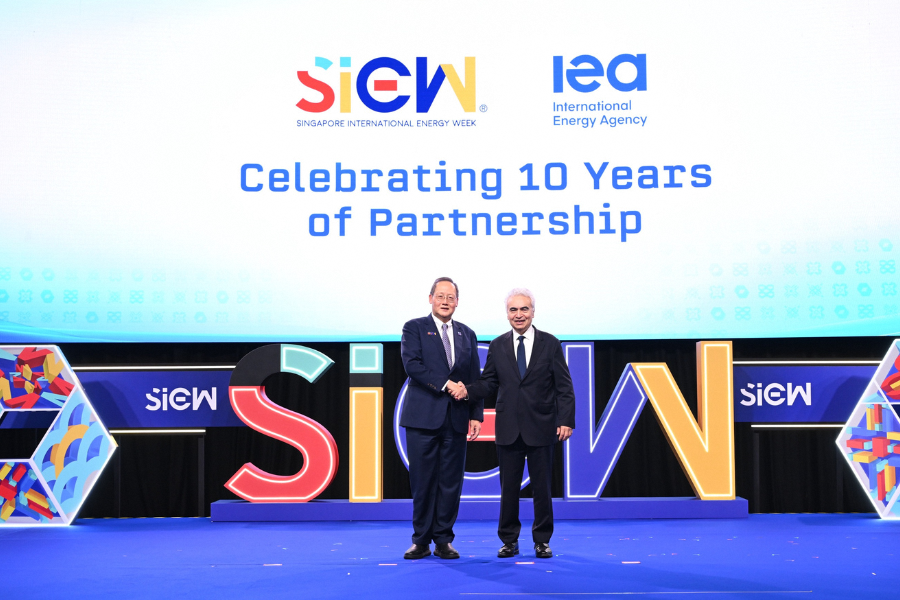
At the 10th Singapore-International Energy Agency (IEA) Forum, Dr Fatih Birol, Executive Director, IEA, and the Honourable Sharon S. Garin, Secretary, Department of Energy, Republic of the Philippines, outlined priorities for strengthening regional energy resilience amid growing geopolitical uncertainty.
Singapore-IEA Forum: Strengthening Energy Security and Connectivity
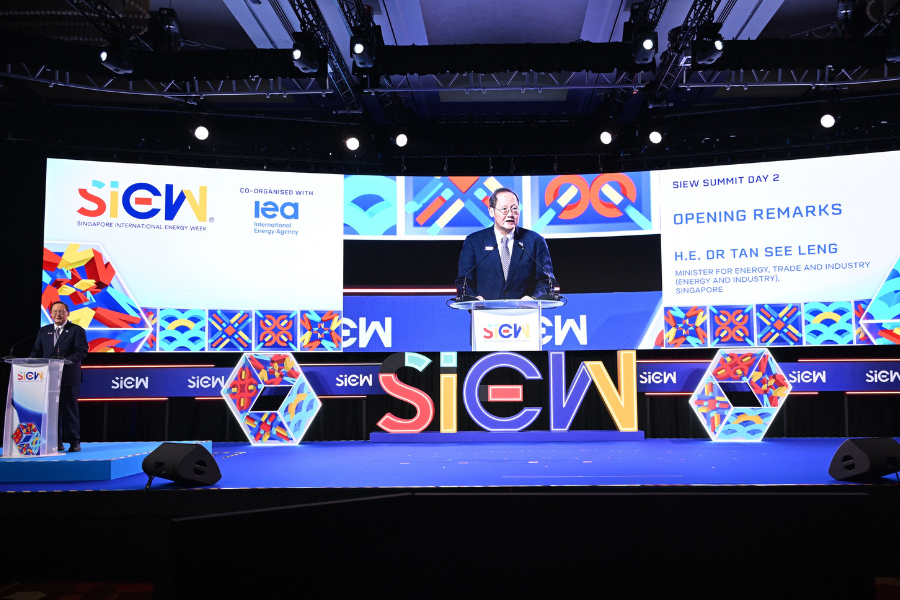
Singapore and the International Energy Agency (IEA) are entering the next decade of their partnership with a focus on strengthening regional energy resilience and advancing cross-border electricity trade.
Delivering the opening remarks at the 10th Singapore-IEA Forum, H.E. Dr Tan See Leng, Minister for Energy, Trade and Industry (Energy and Industry), Singapore, highlighted key focus areas for future cooperation: enhancing energy security and supporting the regulatory frameworks needed to realise the ASEAN Power Grid (APG) vision.
Asia Gas Markets Conference: Securing Gas Supplies, Powering Growth and Advancing Decarbonisation
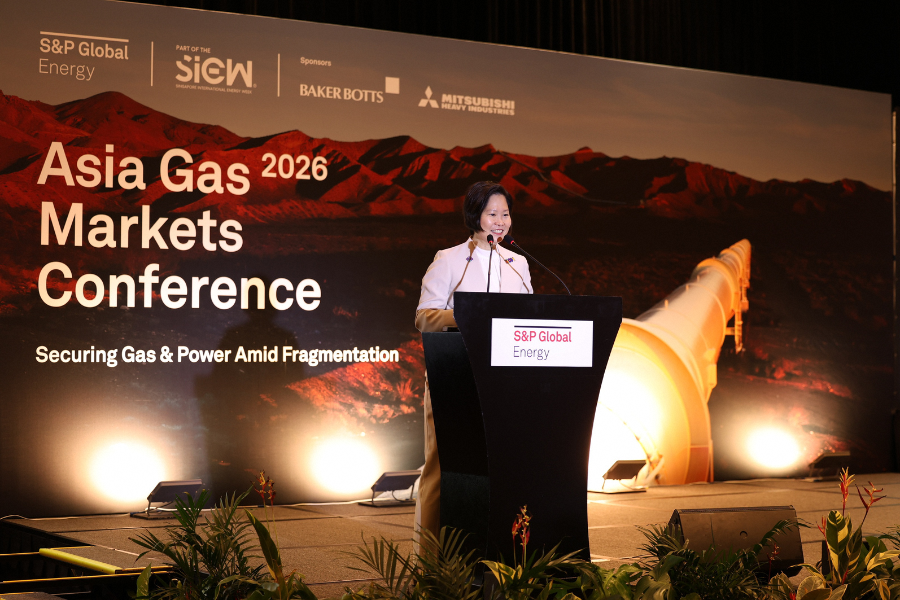
As Asia faces growing electricity demand and continued uncertainty in global energy supplies, closer government-industry cooperation will be critical to strengthening energy security, expanding gas infrastructure and advancing decarbonisation.
In her Opening Remarks at the Asia Gas Markets Conference on 27 October 2026, H.E. Gan Siow Huang, Minister of State, Ministry of Foreign Affairs and Ministry of Trade and Industry, Singapore, outlined three priorities for the gas industry: securing reliable liquefied natural gas (LNG) supplies, meeting rising energy demand and developing lower-carbon alternatives.
Explore more from her Welcome Remarks at Asia Gas Markets Conference
Asia Clean Energy Summit: Solar Innovation, Regional Connectivity to Power Clean Energy Progress
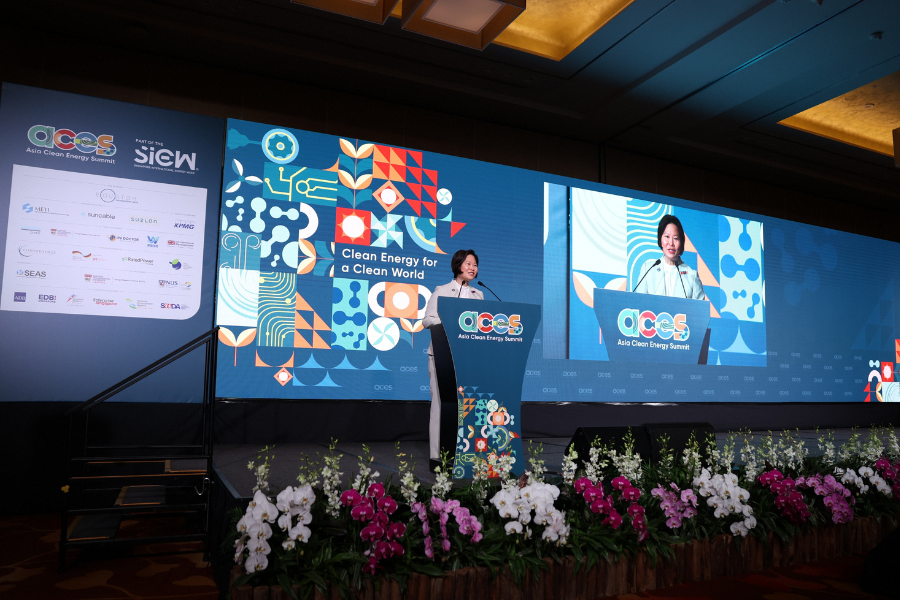
Asia's clean energy transition will require innovative ways to expand renewable energy deployment. As renewable generation grows, stronger regional electricity connections will be needed to integrate clean energy across borders.
At the Asia Clean Energy Summit (ACES) 2026 Opening Ceremony, Er Edwin Khew, Chairman, Sustainable Energy Association of Singapore (SEAS), highlighted the need for stronger grids and regional cooperation. The opening address by H.E. Gan Siow Huang, Minister of State, Ministry of Foreign Affairs and Ministry of Energy, Trade and Industry, Singapore, then turned to Singapore's latest solar initiatives and progress on electricity imports.
SIEW Summit: Building Reliable Clean Energy Systems
By Sylvia Ho
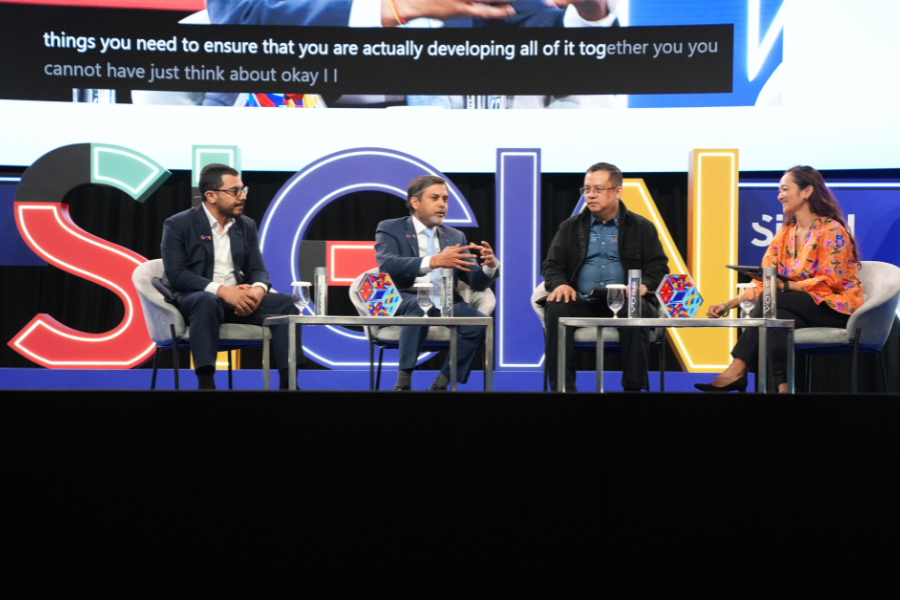
Renewable energy investment must extend beyond generation capacity to the infrastructure, expertise and policy frameworks that make projects viable and power supplies reliable. This was central to the discussions at SIEW Summit Day 2 fireside chat, moderated by Fauziah Marzuki, Head of Asia Pacific, BloombergNEF (BNEF).
Sushil Purohit, Group Chief Executive Officer, Gentari; Abdulla Zayed, Executive Director, Business & Project Development, Masdar; and H.E. Felix William B. Fuentebella, Undersecretary of Energy, Department of Energy, Republic of the Philippines, examined what is needed to turn renewable energy ambitions into deliverable projects.
SIEW Summit: Diversify, Electrify, Connect for Stronger Energy Security
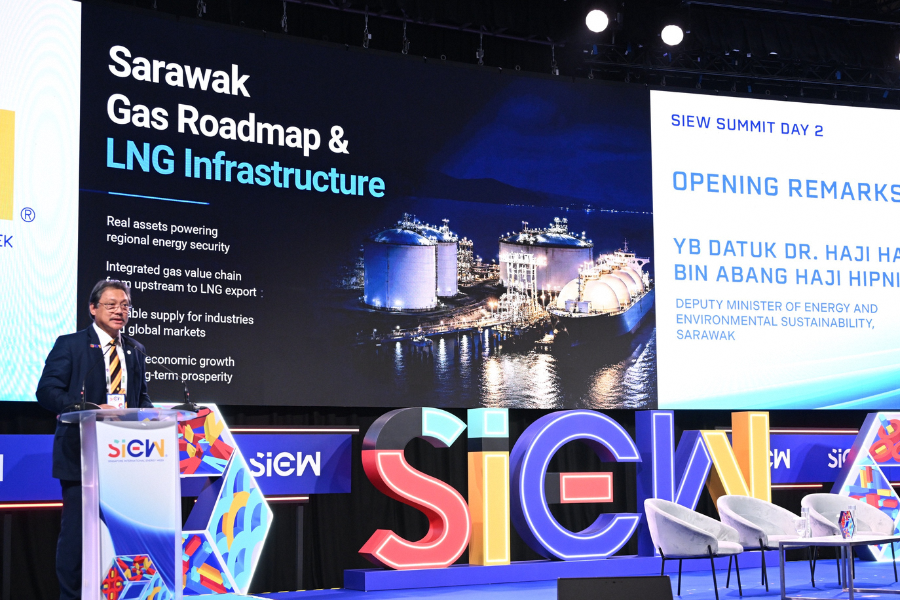
Energy security increasingly depends on diversified energy sources, resilient infrastructure and stronger regional connectivity. Four energy leaders addressed these issues in their opening remarks on Day 2 of the SIEW Summit.
Shri Shripad Yesso Naik, India's Minister of State for Power and New and Renewable Energy, and YB Datuk Dr. Haji Hazland bin Abang Haji Hipni, Sarawak's Deputy Minister of Energy and Environmental Sustainability, outlined how diversifying energy sources and strengthening infrastructure can improve energy resilience.
As electricity demand grows, regional power connectivity is becoming more important. Dr Fatih Birol, Executive Director, International Energy Agency (IEA), emphasised the role of the ASEAN Power Grid in supporting energy security and competitiveness.
Alongside regional connectivity, electricity systems will need to accommodate more renewable energy. Francesco La Camera, Director-General, International Renewable Energy Agency (IRENA), highlighted the importance of investment in grids, storage and system flexibility to support this expansion.
SIEW Summit: Global Partnerships Advance Regional Grids, Renewables and Nuclear Readiness
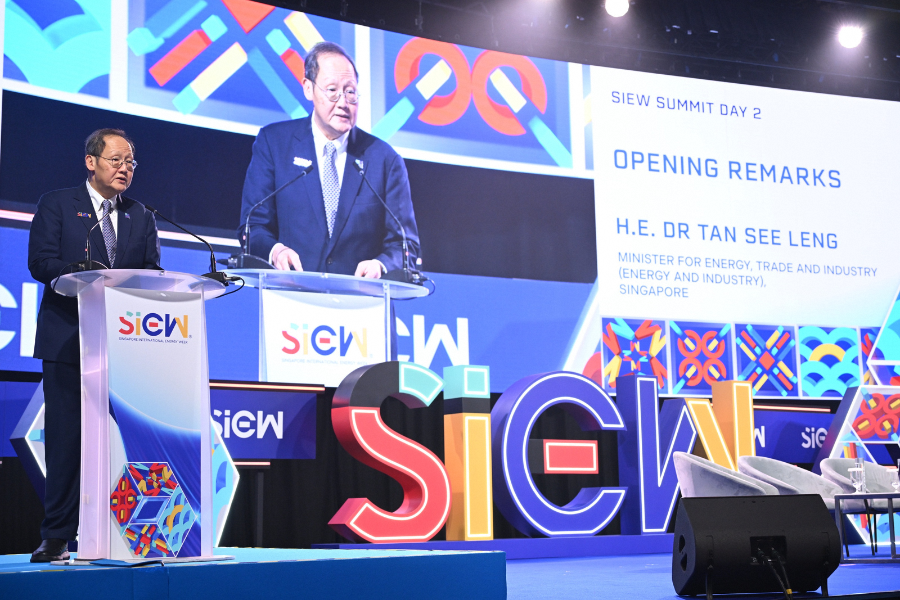
Singapore’s partnerships with leading international energy organisations are helping to strengthen regional grid connectivity and mobilise renewable energy investment. They are also supporting the assessment of emerging nuclear technologies.
In his opening remarks at SIEW Summit Day 2, H.E. Dr Tan See Leng, Minister for Energy, Trade and Industry (Energy and Industry), Singapore, marked a milestone for the event. For the first time, three leading international energy organisations are participating in the Summit on the same day. These are the International Energy Agency (IEA), International Renewable Energy Agency (IRENA) and International Atomic Energy Agency (IAEA).
Their participation brings international expertise in energy security, renewable energy and nuclear technologies into the same regional conversation.
Read how international partnerships are supporting regional energy cooperation
SIEW Energy Showcase: Powering Tomorrow’s Connected Energy Systems
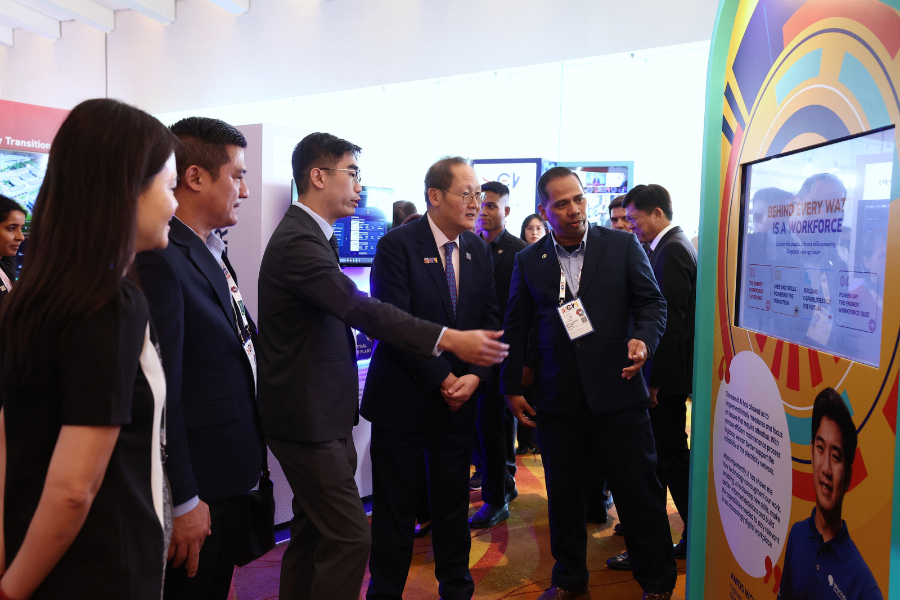
Commemorating EMA’s 25th anniversary, the SIEW Energy Showcase spotlights the latest innovations, technologies and developments driving a secure, resilient and future-ready energy system. Don’t miss all the key exhibits and energy showcases this week when you’re at SIEW 2026!
How is your SIEW 2026 experience thus far? Share your thoughts with us by taking a quick survey.
Follow @SIEW_sg on Telegram and X (formerly Twitter) for the latest insights and updates.
SIEW 2026 Day 2: Strategic Insights into Grids, Renewables and Nuclear
On Day 2 at the Singapore International Energy Week (SIEW) 2026, global leaders across the energy value chain will convene to discuss the industry's most important priorities—from energy security and regional connectivity to renewables and nuclear readiness.
The SIEW Summit Day 2 opens with remarks by H.E. Dr Tan See Leng, Minister for Energy, Trade and Industry (Energy and Industry), Singapore. This will be followed by in-depth perspectives from the world’s leading energy authorities: the International Energy Agency (IEA), International Renewable Energy Agency (IRENA) and International Atomic Energy Agency (IAEA).
- Singapore-IEA Forum will examine how ASEAN can strengthen gas supply resilience and electricity security, including through the ASEAN Power Grid.
- Singapore-IRENA High-Level Forum will explore how to mobilise investment for renewable energy projects, low-carbon infrastructure and green industries.
- The inaugural IAEA@SIEW Forum will spotlight the safety, policy and infrastructure foundations needed by countries considering nuclear energy.
H.E. Gan Siow Huang, Minister of State, Ministry of Foreign Affairs & Ministry of Energy, Trade and Industry, Singapore, will deliver an opening keynote at the Asia Clean Energy Summit (ACES). Regional thought leaders will discuss the enabling technologies, policies and financing innovation for a clean energy transition.
The Asia Gas Markets Conference will also kick off today, with the Opening Remarks from H.E. Gan. This year’s agenda will deliver insights into redefining the LNG trade flows and its alternative supply routes, the gas markets outlook in both developed and emerging countries, and the importance of data centre in a transformative power sector.
Stay tuned as the conversation evolves throughout the day. Follow @SIEW_sg on Telegram and X (formerly Twitter) for the latest insights.
SIEW Live 2026
SIEW Live: Dr Tan See Leng, Minister for Energy, Trade and Industry (Energy and Industry), Singapore
SIEW Live: Gan Siow Huang, Minister of State, Ministry of Foreign Affairs & METI, Singapore
SIEW Live: YAB Datuk Amar Haji Fadillah bin Haji Yusof, Deputy Prime Minister, Malaysia
SIEW Live: Tan Ching Yee, Chairman, Energy Market Authority
Media Releases
27 October 2026
NEA COMMISSIONS STUDIES TO STRENGTHEN CAPABILITIES IN NUCLEAR SAFETY, REGULATION AND ENVIRONMENTAL PROTECTION
27 October 2026
EMA Appoints Panel of Consultants to Strengthen Nuclear Capability Building Efforts
Events at A Glance
SIEW 2026 Sponsors